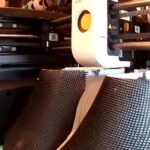
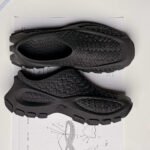
A German footwear company has launched a shop that sells the shoe file instead of the shoe. Sneakprint’s new ShoeFactory platform lets customers scan their feet with a phone, adjust a sandal design in a browser and receive personalized STL files to print themselves. Its first available model, the Easy Slide, is listed at €64.99 including VAT.
Launched on October 9, 2026, the service changes the usual division of work in custom 3D-printed footwear. The company handles measurement and digital design; the customer—or a printing service they choose—handles physical production. No finished sandals arrive in the mail. That makes ShoeFactory a practical test of whether consumers will pay for individualized shoe geometry, even when manufacturing is their responsibility.
What ShoeFactory actually sells
The first product is the Easy Slide, a customizable slipper-style sandal. The official storefront lists it for €64.99 and says customers can adjust the text, sole thickness, width and height. Once the configuration is complete, the buyer receives the STL files by email and can print the design more than once.
The distinction between a digital product and physical footwear is central to the offer. Sneakprint is not promising to print, inspect and ship a completed pair for €64.99. The price buys the personalized files. Materials, printer access, preparation and the risk of a failed print are separate considerations for the buyer.
ShoeFactory also advertises a Chic Loafer at €75.99, but labels that design launching soon. It should not be counted as an available second model. At launch, the Easy Slide is the product customers can configure and purchase.
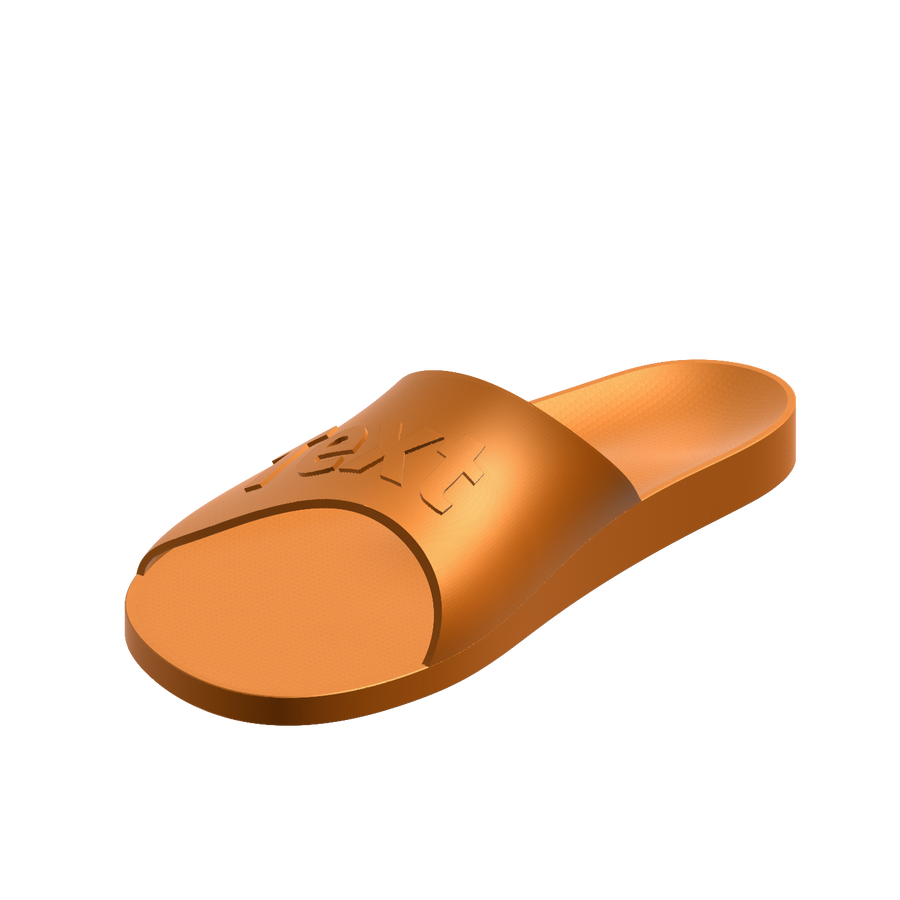
Image: Sneakprint / ShoeFactory
From smartphone foot scan to printable STL
The process begins with a foot scan in the mobile browser. ShoeFactory uses measurement technology from Volumental, the foot-scanning company also active in footwear fitting systems. Customers do not need a dedicated app, but a scan is required before they can complete checkout. The service says the measurement process takes a couple of minutes.
After payment, the customer receives a link to the online configurator. There they can personalize the selected design, then request the final printable files. The company’s FAQ says the resulting ZIP contains separate STL files for the left and right shoe, calculated from the corresponding foot scans. The platform typically sends the configurator link within about a minute and the files within one or two minutes after the design is finalized. These are the company’s stated processing times, not independently measured service levels.
Left and right customization matters because two feet are not necessarily identical. A generic shoe file scaled up or down by a percentage cannot capture the same shape information as a model recalculated from separate measurements. That does not guarantee a perfect finished fit, but it makes the digital fitting stage materially different from downloading a standard sandal model.
The storefront describes its STL files as optimized geometry. Buyers can choose internal density and infill settings in their slicer, which means the final cushioning and flexibility are not fixed solely by the purchased file. The printable geometry is personalized; the finished physical result still depends on the printing setup.
Which 3D printers and materials are supported?
ShoeFactory’s site lists the Bambu Lab X1 and P1, Prusa MK4, Creality K1 and Anycubic Kobra among supported printer families. Its published minimum requirements are a 220 × 220 × 250 mm build volume, a 0.4 mm nozzle, a heated bed and a direct-drive extruder. The company recommends flexible materials such as TPU; its site also mentions elastomeric polyurethane in connection with the printing process.
Those requirements are important. Someone who has never printed flexible filament may need additional time to dial in extrusion, adhesion and print orientation. A printer that handles decorative PLA objects reliably is not automatically ready to produce comfortable footwear. ShoeFactory’s published hardware list is a compatibility claim, not an independent certification that every supported machine will produce an equally good pair.
The service also says customers can use an outside print provider if they do not own a machine. That opens the door to buyers without a home printer, but it changes the total cost. A €64.99 file plus outsourced production is a different purchase from a €64.99 pair of finished sandals. Our guide to finished shoes, custom-fit pairs and STL files compares what buyers receive through each route.
The practical trade-off: personalized geometry without a finished product
Conventional custom footwear businesses keep manufacturing under their control. A company measures the customer, prints or assembles the product and delivers the result. ShoeFactory removes that final production step from its own offering. The buyer gets more freedom over materials and repeat prints but also takes on responsibility for getting the file made.
That has real advantages for experienced makers. A buyer who already prints TPU can experiment with print settings and create replacements from the same purchased file. ShoeFactory says the files may be printed repeatedly. The model also avoids shipping a physical pair from the footwear company’s factory to every customer.
But there are clear limits. File access does not establish the final pair’s durability, grip, abrasion resistance or all-day comfort. Material choice, printer calibration and post-processing can all affect those properties. We have not printed or tested the Easy Slide, so we cannot recommend it for demanding outdoor use or claim that it outperforms conventional sandals.
For buyers new to 3D printing, the biggest hidden question is not whether the phone scan works. It is whether they can reliably turn the file into wearable footwear. Before paying, they should check access to compatible equipment, the cost of flexible material, and the support available if a print fails.
How Sneakprint’s new platform differs from its earlier sneakers
Sneakprint is not new to scan-based footwear. Its earlier RetroTech sneakers combined conventional uppers with individually printed footbeds or midsoles and were delivered as finished products. We previously mentioned the company in our August 2025 3D-printed sneaker roundup.
ShoeFactory is a different commercial model. The customer purchases a digital asset and produces the footwear independently. That is the new development worth covering, rather than another broad claim that foot scanning makes shoes customizable. Our guide to foot scans for 3D-printed shoes explains the measurement process and its limitations in more detail.
What buyers should verify before ordering
There are two policy details worth checking carefully. First, the current official FAQ says there is no short customization deadline after purchase; it describes a statutory limitation period instead. Some third-party launch reports describe a 90-day design window. The current manufacturer FAQ is the better authority for buyers, but policies can change, so read the terms when ordering.
Second, the company says Volumental performs the scan and that Sneakprint passes the resulting foot models to a calculation service, ShapeDiver. Foot geometry is personal data. Buyers should review the privacy explanation and linked policy before scanning, especially if they are uncomfortable with storing biometric-style measurements in third-party services.
The practical checklist is straightforward: verify printer access, flexible-material capability, total production cost, the digital-product refund terms and the scan-data policy. A low digital-file price is not the total cost of a wearable pair.
What this launch means for 3D-printed footwear
ShoeFactory’s launch is small: one available sandal design and a second model still in development. Yet it is a distinct experiment in how footwear can be sold. Instead of selling factory capacity and shipping, the company is charging for the combination of measurement, parametric design and printable geometry.
It will be worth watching whether customers accept that division of responsibility and whether outside designers join the platform. For now, the verified development is the live Easy Slide storefront and its scan-to-STL workflow. There is no public evidence here of mass adoption, measured fit improvements or superior long-term wear.
Sources and verification: ShoeFactory official store and technical requirements; official FAQ (checked October 13, 2026); VoxelMatters’ October 9 launch coverage; 3Druck’s October 9 report. Hardware, turnaround and fit claims are attributed to the company. 3DShoes has not purchased, printed or wear-tested the files.