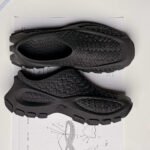
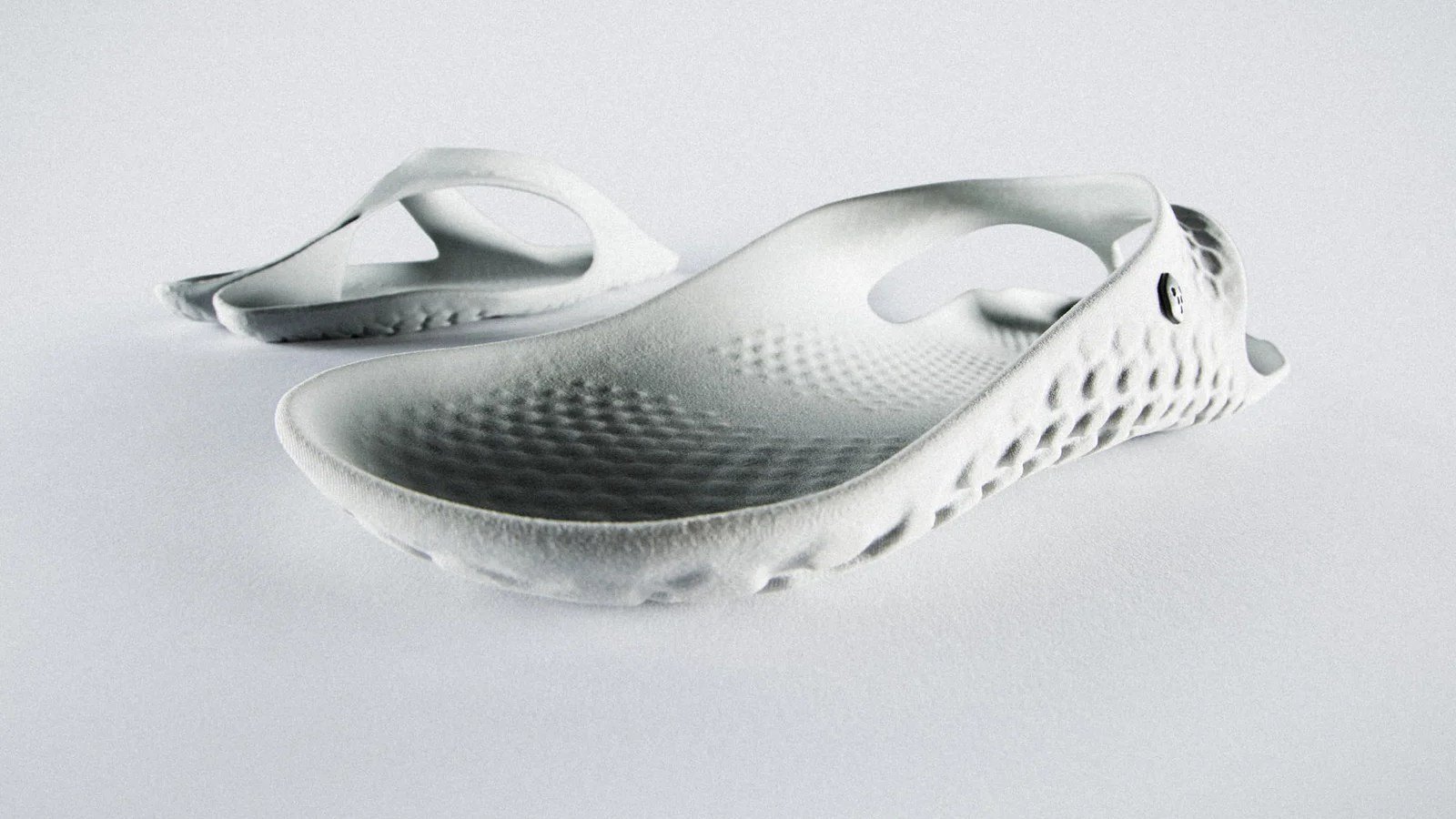
Vivobarefoot’s Tabi Gen 02 is not a new October shoe. The custom-fit, 3D-printed sandal arrived earlier in 2026. What changed this month is the level of detail available about why its predecessor struggled and how Vivobarefoot, Carbon and OECHSLER divided the work of making the replacement. A October 19 interview with the partners adds unusually specific production context, including a failed material choice, a manufacturing handoff and a realistic delivery window. The interview is labeled sponsored, so its performance and business claims should be read as statements by participants, not independent test results.
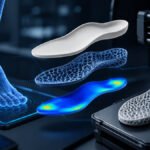
The distinction matters to anyone following personalized footwear. Getting an accurate scan and producing a shoe-shaped object are only two steps. The printed material must feel acceptable against skin, the production process must repeat reliably, and the customer must be willing to wait for an individually made pair. Those are the practical problems the new disclosures illuminate.
Why the first printed Tabi needed a different process
In the interview, Vivobarefoot co-founder Asher Clark says the earlier Tabi Gen 01 used selective laser sintering (SLS) and drew 120 sales in 21 days from two scanning locations, plus more than 1,300 paid reservations. These are company-reported figures; they do not establish profitability or continuing demand. More revealing is Clark’s explanation of the first material: for a sandal worn close to bare skin, he considered it too heavy, abrasive and costly.
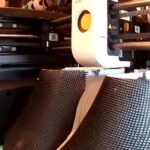
Gen 02 instead uses Carbon’s Digital Light Synthesis (DLS) production platform, with OECHSLER manufacturing the finished product. DLS cures liquid resin using light, while SLS fuses powder. Neither process is inherently better for every shoe. The relevant question here is whether the resulting polymer and geometry meet the demands of a flexible, low-profile sandal. A lighter structure is only useful if grip, wear life and comfort remain acceptable. For more on the technology supplier behind this process, see our Carbon DLS footwear company profile.
3DShoes covered the original Tabi Gen 02 introduction in May. This follow-up is about what the partners subsequently disclosed about production constraints, rather than repeating that launch.
Three companies, three different jobs
The October account describes a useful division of responsibilities. Vivobarefoot owns the customer-facing scan-to-design experience. Carbon’s pre-development team in Erlangen, Germany, evaluated materials and design approaches before the project moved into manufacturing. OECHSLER runs the Carbon printing equipment and handles production and finishing. The partners describe the handoff as part of making a repeatable product rather than a one-off laboratory sample.
OECHSLER’s Andreas Knoechel says printing represents at most half the work; post-processing and quality control take the rest. That is a more grounded description of additive footwear production than treating the moment a printer stops as the end of manufacturing. Parts still need finishing, inspection and acceptance checks before they can be shipped to a customer. The partners do not publish a per-pair labor breakdown, rejection rate or verified unit cost.
There is also a material-name discrepancy worth keeping visible. The May launch coverage identified a Carbon BL6 polyurethane foam, while the October interview identifies Carbon EPU Pro. Carbon’s current footwear page discusses EPU Pro in its materials portfolio and confirms the Vivobarefoot partnership, but does not independently reconcile which formulation applies to every Tabi Gen 02 production run. We therefore cannot present a single resin designation as settled across all sources.
What a customer actually has to do
The official VivoBiome scanning instructions require an in-person scan on a Volumental scanner. Customers save their scan using an email address, then retrieve it to place an order. VivoBiome explicitly says mobile scanning is not yet precise enough for its bespoke sandal workflow, although it is developing other options. This is not a smartphone-only custom-shoe order.
Location information needs care. The October interview mentions London, Bristol and Tokyo as scanning locations. VivoBiome’s live scanning-location page, checked October 26, instead lists London, Bristol and Prague; Tokyo is not listed there. Other marketing pages may lag behind that live location list. Prospective buyers should rely on thelive scanning-location page before traveling, not assume a third location is operating.
VivoBiome’s own FAQ says delivery typically takes four to six weeks from order, depending on the queue. It also describes a manufacturing-defect process and case-by-case handling of fit complaints where the required scanning steps and details were followed. Those conditions matter more to a real buyer than the promise of a perfect fit. A scan may personalize geometry, but it cannot by itself guarantee comfort or eliminate the need for after-sales support.
Where the evidence stops
The partners report improved weight, flexibility and comfort compared with Gen 01. They have not published a controlled independent wearer study or comparable standardized durability figures in the sources checked here. Clark also acknowledges that grip, abrasion resistance and long-wear comfort remain under refinement. Claims about zero waste or full circularity would require evidence about failed prints, support materials, energy, transport and an actual collection-and-recycling pathway. The mere fact that a sandal is printed in one piece does not prove those outcomes.
The company has nevertheless demonstrated a tangible workflow: an in-store scan becomes a custom digital design, Carbon’s process produces the geometry, and OECHSLER finishes a physical pair. That is different from a downloadable customer-printable sandal file, where the buyer supplies the printer and accepts much of the production risk.
For the industry, the signal is not that custom printed footwear has suddenly scaled. It is that the participants are documenting where scaling becomes difficult: material choice, finishing time, access to scanning, and repeatability. Future updates should be judged by measurable reductions in delivery time, wider verified scanning access and transparent wear data—not by another promise that personalization will change everything.
Sources and verification: VoxelMatters’ October 19, 2026 sponsored partner interview; official VivoBiome platform; official scanning and delivery FAQ; Carbon’s official footwear page. Checked October 26, 2026. Photographs: actual Vivobarefoot Tabi Gen 02 press/product images previously used by 3DShoes, reproduced here with brand credit. No firsthand testing, material certification or current checkout total is claimed.