

FUSED footwear is a small, operating 3D-printed shoe brand run from Hong Kong by Dutch designer Philippe Holthuizen. Unlike the large footwear brands that print only a midsole or outsource production to an industrial partner, FUSED designs and manufactures complete, one-piece shoes with extrusion-based 3D printing. Customers order physical footwear, not a downloadable file or an unbuilt concept.
That makes FUSED useful in a directory of real printed-footwear companies: it provides a different answer to the question of who can actually make a shoe. Holthuizen describes the business as a one-person operation and dates its development to 2017. The brand’s own history explains his previous CAD-design work for United Nude and his goal of controlling design, production and sales without a conventional footwear factory.
What FUSED makes and sells
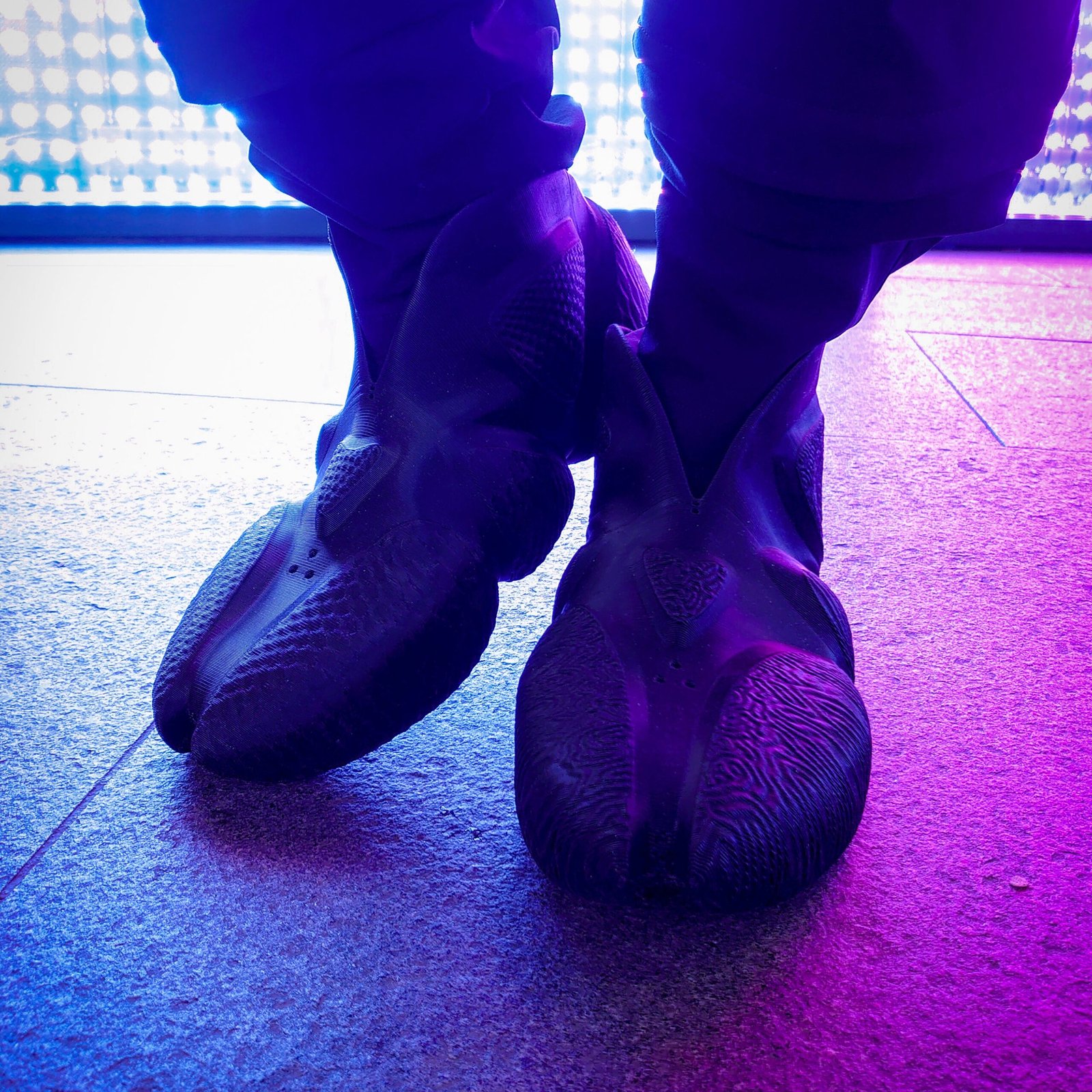
FUSED’s official shop lists made-to-order designs including Kodo, Oki, Gaiba, Eirean, Hota and other silhouettes. The products are not simply renderings: each has an order page with size and color selections. Designs vary in their openings, sole pods and upper patterns. The company’s anime and science-fiction influences are visible in models such as the Gaiba, which the brand connects to Bio Booster Armor Guyver.
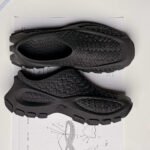
For example, the Gaiba product page describes a slip-on sneaker with a split-toe-inspired front and different pod textures on the left and right shoes. The page offers white, black and mixed-color options, although the live checkout—not a profile—determines availability and final pricing. The actual Gaiba appears in the official product photograph above.
How the shoes are printed
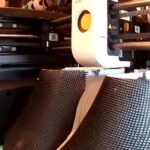
FUSED’s technical explanation says the company uses modified fused-deposition-modeling (FDM) printers and flexible thermoplastic elastomer (TPE) filament. That means a heated nozzle lays down material in successive paths rather than curing liquid resin with projected light. The brand has disclosed examples of nozzle size and printing parameters for its own equipment, but those should not be treated as universal settings for all TPE shoes.
The one-piece construction includes a printed upper, sole and internal lattice geometry. The Gaiba page describes shock-absorbing lattice structures within the pods and midsole. That is a design description supplied by the manufacturer, not a measured independent cushioning comparison with conventional sneakers.
This manufacturing route differs from the Carbon Digital Light Synthesis platform used in many light-cured lattice midsoles. Readers can instead use the published fully printed versus hybrid shoe comparison to understand the basic construction difference.
Who designs, prints and ships the product?
Holthuizen’s contact page states that he handles design, printing, packing and website operations himself. The brand’s About page says it operates from Hong Kong. Product pages also state that orders are shipped from Hong Kong, generally with a stated two-to-four-week delivery expectation. That is a seller estimate, not a guarantee of arrival in every country; import duties and carrier delays can change the total experience.
Its Return 2 Recycle program describes accepting worn FUSED shoes back and offering a discount on another pair. This is a specific company-operated take-back program. It should not be translated into a claim that any household recycling facility can process a used printed shoe. FUSED’s own care guidance advises avoiding heat because the TPE can deform.
Warranty language needs particular care. The current Gaiba page displays both a 12-month warranty statement and a separate 30-day warranty statement in different sections. Those conflict. We cannot responsibly select one as the binding policy. Our comparison of FITASY and FUSED warranty terms documents the wording and explains what buyers should save before ordering. Buyers should request the applicable written terms before ordering, especially for made-to-order or international shipments.
Why FUSED matters beyond a novel design
Large-scale printed-footwear announcements often emphasize production capacity, proprietary resins or major brand collaborations. FUSED is a different model: a small designer-owned operation selling real finished shoes directly. That demonstrates the commercial possibility of small-batch production without proving that the method is cheaper, faster, more sustainable or more comfortable in every situation.
It also makes the limitations visible. The company itself describes its footwear as experimental and continuously refined. Actual fit, outsole wear, long-term durability and service quality vary with model and use; no independent pair was purchased or tested for this profile. For consumers comparing an on-demand finished pair with a personalized digital design, our three footwear buying models guide distinguishes those transactions.
Company information and verified sources
Brand: FUSED footwear. Founder and designer: Philippe Holthuizen. Established: 2017, according to the founder. Operating location: Hong Kong. Official website: fusedfootwear.com. Role: designer, small-scale manufacturer and direct seller of complete 3D-printed footwear. Process: FDM extrusion using flexible TPE filament. Examples: Gaiba, Kodo, Oki, Eirean and Hota. Policies: made-to-order shipping and a take-back scheme are described on the official site; the contradictory warranty wording needs seller confirmation.
Sources checked November 2, 2026: the official company history, manufacturing description, live catalog and Gaiba product page. All photographs are credited to FUSED; no firsthand review or permission to reuse beyond limited factual editorial illustration is claimed. Browse other verified companies in the 3DShoes company directory.