Introduction
adidas is no longer just designing shoes—it’s engineering performance systems.
With the introduction of adidas Project R.A.P (Radical Athlete Perception), the brand is moving beyond traditional footwear manufacturing toward data-driven, 3D-printed performance footwear. Instead of producing standardized products for the mass market, adidas is exploring a future where footwear is tailored to the individual athlete.
This isn’t just another sneaker release. Project R.A.P is a new platform for designing and manufacturing sports shoes, combining athlete data, perception science, and additive manufacturing.
In this article, we’ll break down:
- What adidas Project R.A.P actually is
- How it works behind the scenes
- Why it could redefine 3D printed sports shoes
- What we still don’t know
What Is adidas Project R.A.P? (Radical Athlete Perception Explained)
At its core, adidas Project R.A.P is not a product—it’s a development platform.
“Radical Athlete Perception” reflects a shift in focus. Instead of optimizing only measurable metrics like speed or energy return, adidas is prioritizing something equally critical:
How the shoe feels during movement
Project R.A.P integrates three core components:
- Athlete data (movement patterns, pressure mapping, biomechanics)
- Perception science (comfort, responsiveness, sensory feedback)
- Additive manufacturing (3D printing)
The objective is to deliver:
- Bespoke fit
- Tailored support
- Customized cushioning and stiffness
These capabilities position Project R.A.P as a system for building performance footwear, not just a single model.
Key takeaway:
This is a shift from product-based design to platform-based innovation.
How adidas Project R.A.P Works: From Data to 3D-Printed Shoes
Unlike traditional footwear production, which relies on molds and standardized templates, Project R.A.P follows a digital-first workflow.
1. Athlete Data Collection
adidas gathers performance data such as:
- Movement patterns
- Pressure distribution
- Biomechanics during play
This data forms the foundation of the design.
2. Perception-Based Analysis
This is where Project R.A.P differentiates itself.
Instead of focusing purely on measurable output, adidas evaluates:
- Comfort vs responsiveness
- Stability vs flexibility
- Athlete feedback during movement
3. Digital Design & Simulation
Using advanced CAD systems, adidas translates insights into structure:
- Geometry tuning for stiffness
- Zone-specific cushioning
- Structural optimization
This enables rapid iteration without physical prototypes.
4. Additive Manufacturing (3D Printing)
The finalized design is produced using 3D printing:
- Layer-by-layer construction
- No molds required
- Performance driven by geometry
This is the core innovation behind 3D printed sports shoes.
5. Hybrid Assembly (Likely Configuration)
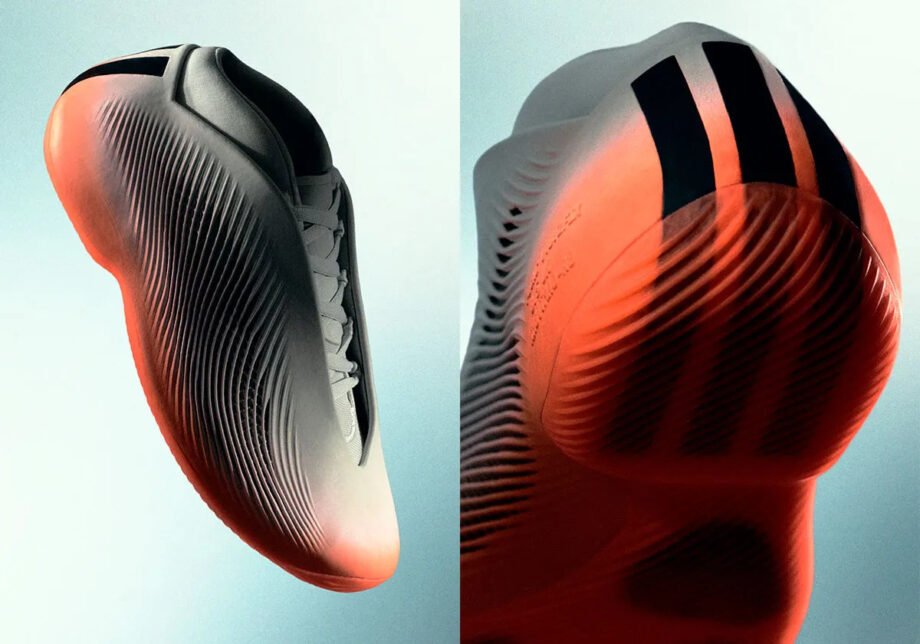
Based on available visuals, the shoe appears to use:
- A 3D-printed external structure
- A traditional internal bootie with laces
Full construction details are still undisclosed.
First Look: adidas’ 3D-Printed Basketball Shoe
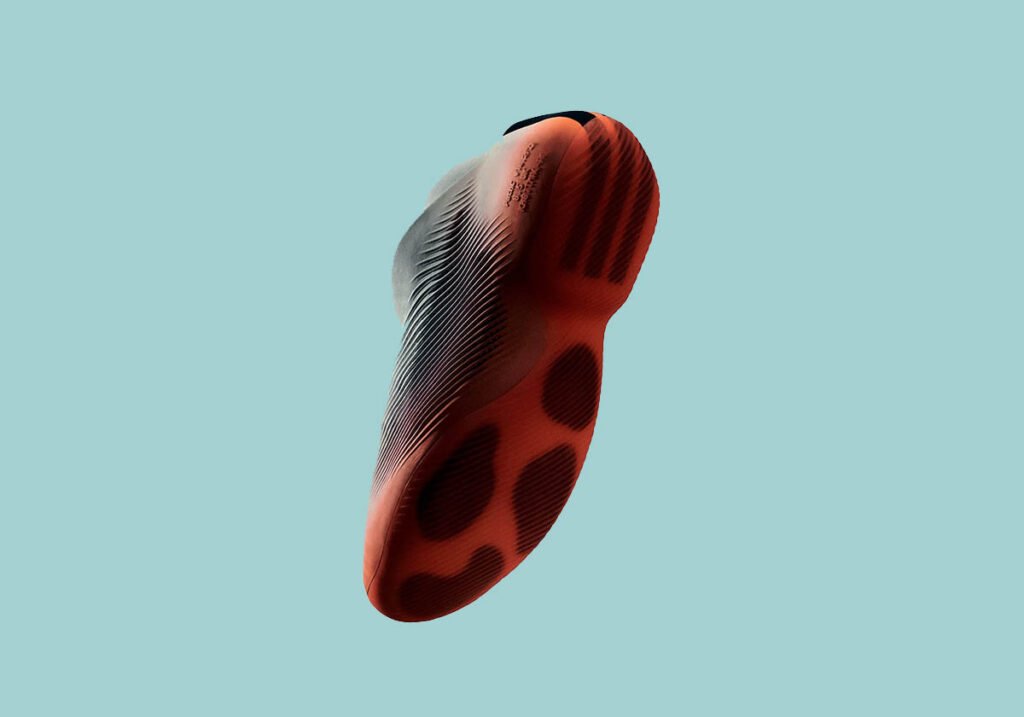
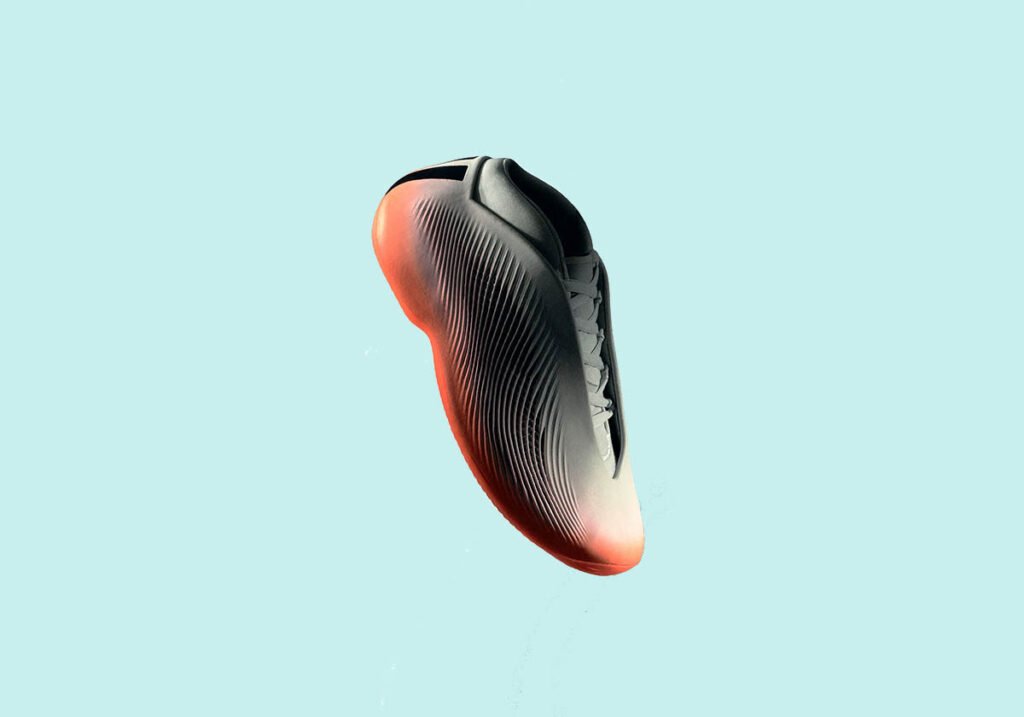
The first application of Project R.A.P is a performance basketball shoe.
What’s Confirmed:
- Built for basketball performance
- Features:
- Bespoke fit
- Tailored support
- Tuned cushioning and stiffness
- Already made an on-court debut
- Release expected in the coming months
What’s Inferred:
- Low-cut design
- Structured outer shell
- Inner textile bootie
- Multi-zone sole
What’s Still Unknown:
- Official product name
- Materials used
- Weight and durability
- Retail pricing
This is an early-stage reveal, not a full product release.
3D-Printed vs Traditional Basketball Shoes: What’s the Difference?
Traditional performance footwear relies heavily on foam systems like Boost or Zoom.
3D printing introduces a completely different approach.
Traditional Shoes
- Foam-based cushioning
- Fixed material properties
- Mold-based production
3D-Printed Shoes
- Geometry-driven performance
- Tunable support zones
- Digital manufacturing
Advantages of 3D Printing
- Precise stiffness tuning
- Potential for custom fit
- Reduced reliance on molds
Limitations
- Slower production (can take ~24 hours per pair in similar models)
- Scaling challenges
- Higher production costs
Bottom line:
3D printing enables precision performance tuning, but scaling remains the challenge.
Why “Athlete Perception” Changes Everything
Project R.A.P introduces a new dimension to performance footwear: perception.
Traditionally, performance is measured through:
- Energy return
- Impact absorption
- Traction
Project R.A.P expands that to include how the athlete experiences the shoe.
Why perception matters:
- Comfort influences confidence
- Confidence affects performance
- Feel impacts movement decisions
Objective vs Perceived Performance
| Objective Metrics | Perception-Based Metrics |
|---|---|
| Lab-tested data | Athlete experience |
| Measurable outputs | Sensory feedback |
| Quantitative | Subjective feel |
adidas supports this approach with advanced testing environments that include:
- Motion tracking systems
- Wearable sensors
- Force plates
adidas’ 3D Printing Evolution: From Concept to Performance
Project R.A.P is the result of years of development.
Timeline:
- 2017 — Futurecraft 4D
First major 3D-printed midsole - 2024 — CLIMACOOL Concepts
Fully printed design exploration - 2026 — CLIMACOOL LACED
First scalable retail model - 2026 — Project R.A.P
Performance-focused platform
Key Insight:
adidas has evolved from experimental → scalable → performance-ready.
adidas vs Nike vs New Balance: The 3D Footwear Race
The race toward 3D-printed footwear is accelerating.
adidas
- Focus: performance + customization
- Strategy: platform-driven innovation
Nike
- Focus: experimental releases
- Example: Zellerfeld collaborations
New Balance
- Focus: hybrid construction
- Example: TripleCell midsoles
Industry Direction:
- Digital manufacturing
- Personalized products
- On-demand production
This is not a trend—it’s a manufacturing shift.
What We Still Don’t Know About adidas Project R.A.P
Despite the strong positioning, key details remain undisclosed:
- Materials used
- Manufacturing locations
- Retail pricing
- Production scale
- Durability data
- Performance testing results
This reinforces an important point:
Project R.A.P is promising, but still unproven at scale.
The Future of 3D-Printed Performance Footwear
Project R.A.P points toward a broader shift in the industry.
Potential:
- Fully customized shoes
- On-demand manufacturing
- Reduced waste (potential)
Challenges:
- Production scalability
- Cost efficiency
- Long-term durability
Adoption path:
- Elite athletes
- Limited consumer releases
- Wider market adoption
Is adidas Project R.A.P the Future of Basketball Shoes?
Project R.A.P is one of adidas’ most ambitious innovations to date.
Strengths:
- High customization potential
- Strong technological differentiation
- Forward-thinking design
Risks:
- Limited data availability
- Manufacturing complexity
- Unknown long-term performance
Verdict:
Early-stage, but high potential.
Conclusion
adidas Project R.A.P marks a shift from product-driven design to system-driven innovation.
Instead of building one shoe for everyone, adidas is exploring how to build better shoes for each individual athlete.
By combining:
- Athlete data
- Perception science
- 3D printing
The brand is redefining what performance footwear can be.
If successful, Project R.A.P could reshape not just basketball, but the entire footwear industry.
Want more deep dives like this?
Follow your 3DShoes.com content hub and explore:
- 3D printed footwear innovations
- Sneaker tech breakdowns
- Future manufacturing trends
If you found this useful, share it—this space is just getting started.
FAQ
A platform that combines athlete data, perception science, and 3D printing to create customized performance footwear.
They offer customization and structural advantages, but long-term performance data is still limited.
adidas has stated they will be available in the coming months, though no exact date has been confirmed.
It enables geometry-based design, allowing precise control over cushioning, stiffness, and support.