



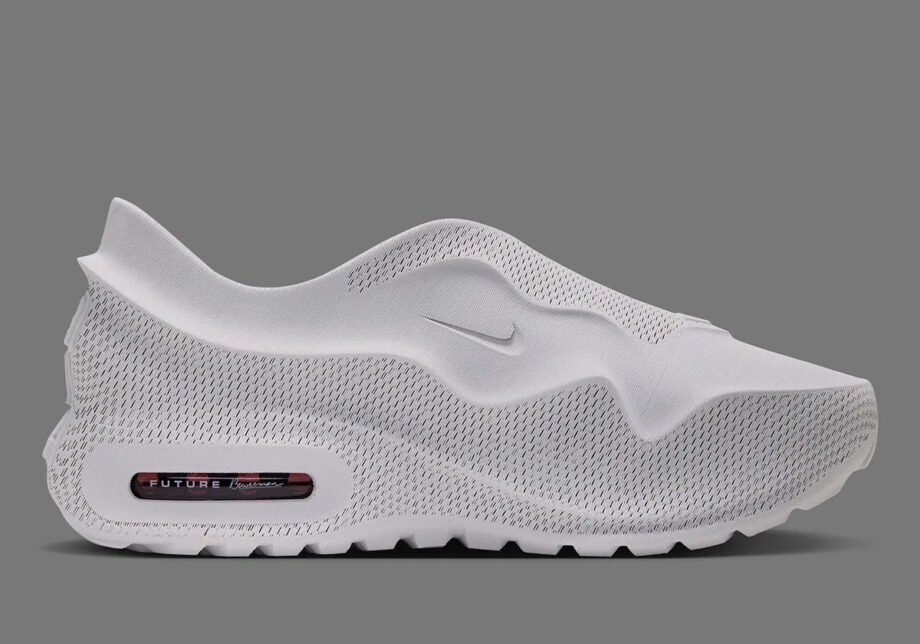
The Air Max 1000.3 has surfaced as the latest revision of Nike and Zellerfeld’s 3D printed Air Max platform, with new product imagery showing a Pure Platinum version accented by Burgundy Crush. What has Nike changed in the third iteration, and what does the update indicate about its approach to additive footwear?
Nike Moves Its 3D Printed Air Max Into Another Revision
The Nike Air Max 1000.3 follows the original Air Max 1000 and the subsequent Air Max 1000.2, continuing a development cycle built around revisions rather than complete redesigns.
Nike introduced the Air Max 1000 with Zellerfeld in 2024 as a 3D printed reinterpretation of the Air Max 1. The partnership placed a printed structure around visible Air cushioning, combining additive manufacturing with one of Nike’s most established footwear technologies.
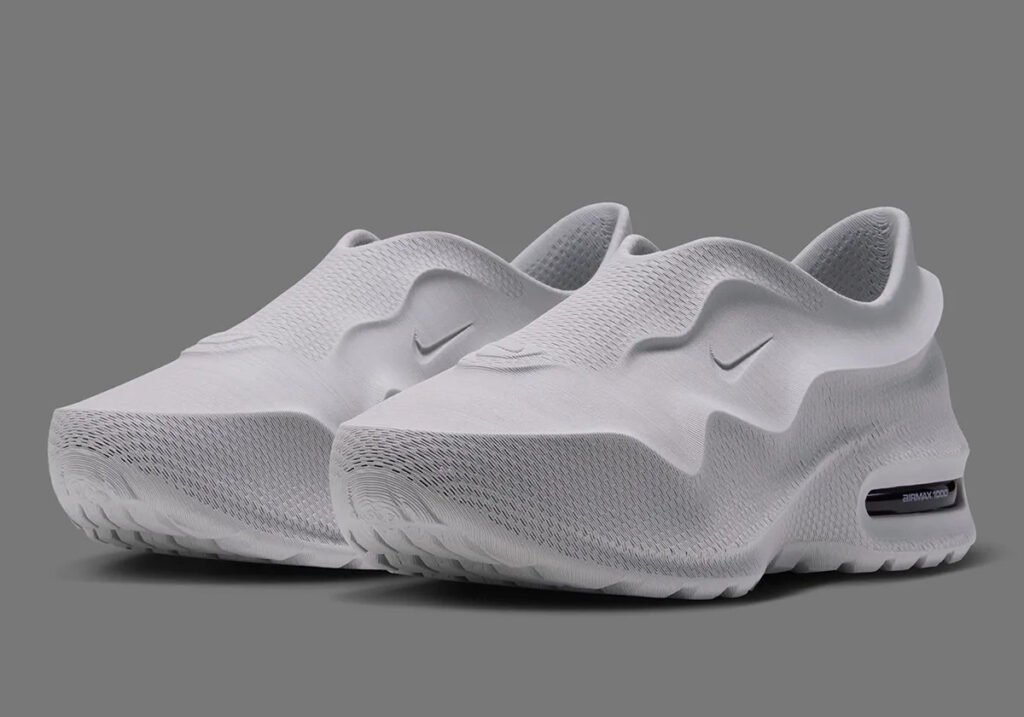
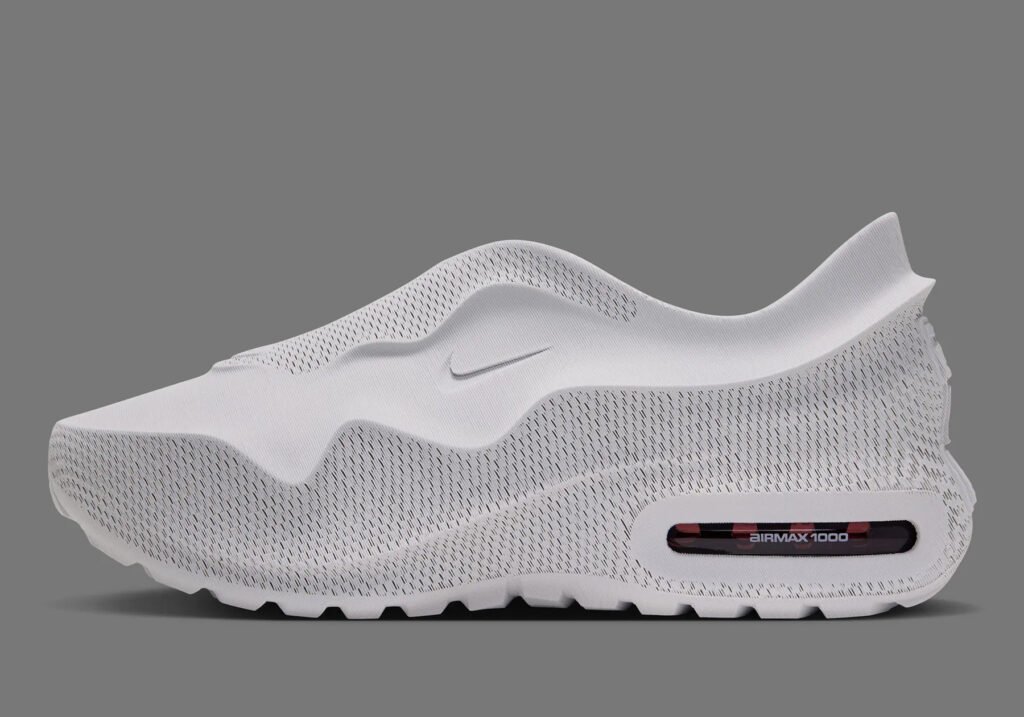
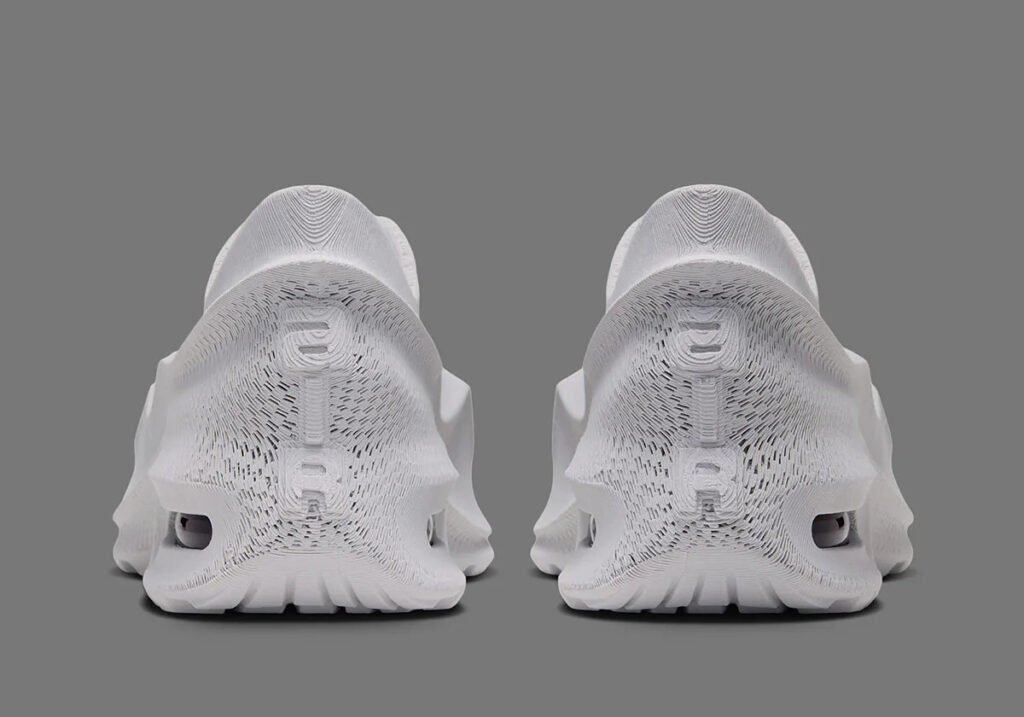
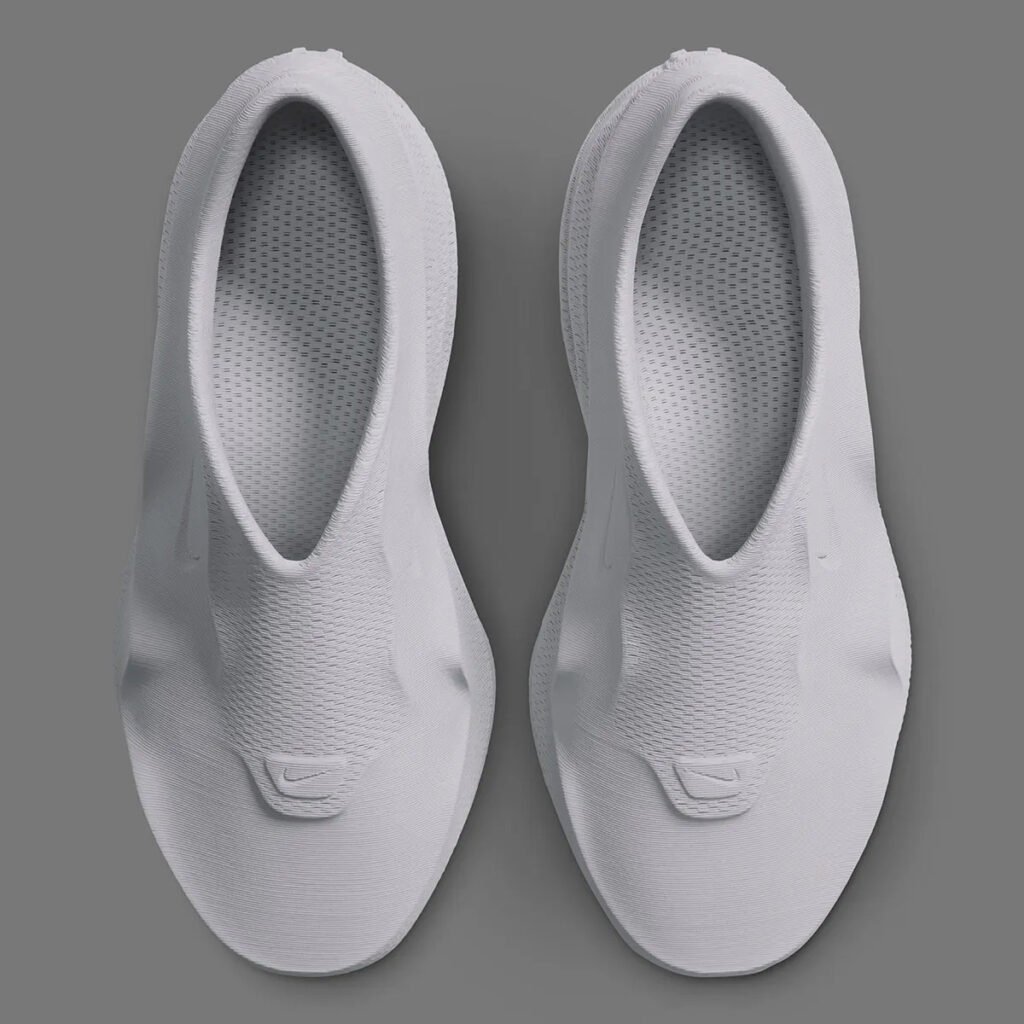
The latest Pure Platinum/Burgundy Crush version, style code JV2916-001, retains the recognizable one-piece form of previous models. Newly surfaced imagery shows the familiar laceless construction, printed textures and visible Air unit rather than a fundamentally different silhouette.
That continuity appears intentional. Nike and Zellerfeld are developing the platform through successive manufacturing revisions rather than replacing it with a completely new sneaker each season.
Air Max 1000.3 Continues an Iterative 3D Printed Platform
The most important context for the Air Max 1000.3 comes from the preceding 1000.2.
Nike said the Air Max 1000.2 introduced changes to the outsole shape and lug design that allowed the shoe to be printed more quickly while retaining the overall feel and construction of the original. Those changes were relatively subtle visually, but they addressed manufacturing as well as the finished product.
That makes the numbering significant.
Instead of treating every manufacturing improvement as a new silhouette, Nike has moved from 1000 to 1000.2 and now 1000.3. A consumer may see a similar-looking shoe while the production geometry underneath it continues to change.
Reports around the new version point to revisions involving the upper and outsole. However, Nike has not yet published the same level of technical detail it provided for the 1000.2.
Claims about improvements in fit, durability or printing speed therefore remain provisional until Nike or Zellerfeld provides confirmation.
The visible design continues to use varying printed textures across the shoe. More open structures sit alongside denser surfaces, allowing ventilation, flexibility and appearance to be influenced through geometry rather than multiple conventional upper materials.
Nike By You Could Add Another Layer to the Air Max 1000.3
Another potentially important development is the expected connection between the Zellerfeld Air Max 1000.3 and Nike By You.
Earlier reporting indicated that the model was being prepared for Nike’s customization platform. More recent coverage continues to identify Nike By You as part of the planned rollout, potentially allowing customers to alter elements such as the main body color and visible Air unit.
That would be particularly relevant for additive manufacturing.
Traditional footwear customization normally works within a predetermined selection of materials, panels and colors. Digitally manufactured footwear creates the potential for more variables to originate within the production file itself.
There is an important limit, however: custom color does not automatically mean custom fit.
Reports have raised the possibility of individualized sizing or fit options, but Nike has not confirmed them. Nike By You already provides extensive color and material customization across conventional Air Max models, so adding a printed shoe would not by itself establish mass-market personalized fit.
The larger milestone would come if Nike eventually connects foot-specific measurements or individualized geometry directly to production. There is currently insufficient public information to say the Air Max 1000.3 does this.
What This Means for 3D Printed Footwear
The larger significance of the Nike Air Max 1000.3 is not that its exterior looks dramatically different. It is that Nike and Zellerfeld continue to revise a commercial printed footwear platform after bringing earlier versions to market.
That distinction matters because additive manufacturing has often entered footwear through prototypes, limited concepts or experimental releases.
The Air Max 1000 program is taking a different path.
Nike has moved through multiple revisions of the same architecture, while its broader work with Zellerfeld has expanded into projects including the Air Max 95000 and Air Works.
That creates a clearer picture of where the technology may be useful.
3D printing allows footwear geometry to be revised digitally. A lug pattern, structural zone or surface texture can potentially be altered without rebuilding the same collection of molds and tooling associated with conventional shoe construction.
The Air Max 1000.2 provided a practical example. Nike specifically linked its outsole revisions with faster production.
The 1000.3 therefore matters less as an isolated sneaker release and more as evidence that continuous iteration is becoming part of Nike’s printed-footwear strategy.
What the Air Max 1000.3 Has Not Solved Yet
The latest update does not mean the major barriers facing Nike 3D printed shoes have disappeared.
Nike has not publicly detailed the production speed of the Air Max 1000.3, the scale at which it will be manufactured or whether its manufacturing cost has materially changed from previous versions.
There is also no confirmed consumer custom-fit system attached to the shoe.
That matters because personalized geometry is often presented as one of additive footwear’s strongest potential advantages. Without a consumer workflow connecting foot measurements directly to production, the Air Max 1000.3 remains primarily a digitally manufactured shoe rather than a fully individualized one.
Availability is another open question.
Several sneaker publications point toward a Fall 2026 release, and some release calendars have listed dates and pricing. Nike, however, has not yet published an official Air Max 1000.3 product or SNKRS release page comparable to the existing 1000.2 listing.
Until that happens, the exact Air Max 1000.3 release date, final retail availability and confirmed customization options should be treated as pending.
What to Watch Next
The most important next development will be Nike’s formal product announcement.
That should clarify what distinguishes the 1000.3 technically from the 1000.2, whether production has become faster or more scalable, and how Nike By You will be incorporated into the release.
Customization deserves particular attention. Color selection would be an incremental extension of an existing Nike retail system. Individualized fit or geometry would represent a much more substantial manufacturing change.
It will also be worth watching how quickly another revision follows.
Nike’s work with Zellerfeld already extends beyond a single experimental model. The Air Max 95000 introduced another printed Air Max architecture, while Air Works is using 3D printing to develop a series of designer-led Air Max silhouettes.
For now, the Air Max 1000.3 is best understood as another controlled iteration of an existing platform rather than a completely new breakthrough.
Its significance will depend on what changed beneath the familiar exterior—and whether those changes make printed footwear easier to manufacture, customize and sell at greater scale.
Mini FAQ
When will the Air Max 1000.3 release?
Nike has not yet confirmed an official Air Max 1000.3 release date. Current reports point toward Fall 2026, but final timing remains pending.
Is the Nike Air Max 1000.3 fully 3D printed?
The shoe continues Nike and Zellerfeld’s printed footwear architecture, combining a 3D printed structure with Nike’s visible Air cushioning system.
Will the Air Max 1000.3 be available through Nike By You?
Reports indicate that Nike By You is expected to form part of the rollout, although Nike has not yet confirmed the final customization options.


