After a long run your legs want two things: cushion and relief. But which is the smarter pick — a traditional foam recovery slide (think Crocs, OOFOS or Hoka recovery models) or the new kid on the block: Fitasy’s fully 3D-printed Stride, built from a phone scan to match your feet? This head-to-head breaks down the real differences — fit, cushioning, washability, price and long-term value — so you can pick the recovery shoe that actually helps you feel better faster.
Quick verdict up front: if you want personalized pressure relief and a travel-friendly, washable shoe, Fitasy Stride is the exciting choice. If you want proven durability, predictable sizing and the lowest risk, traditional foam recovery shoes remain the safe bet. Read on for the details and the right pick for your running profile.
How recovery shoes help after a run
Recovery shoes aren’t about pace or propulsion — they’re about off-loading, circulation and comfort. Key goals:
- Reduce pressure hotspots that form after miles of pounding.
- Offer soft, shock-absorbing support to reduce perceived soreness.
- Allow easy on/off for quick recovery between sessions and for travel.
- Keep feet hygienic and dry after sweaty workouts.
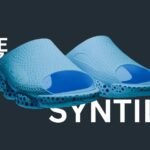
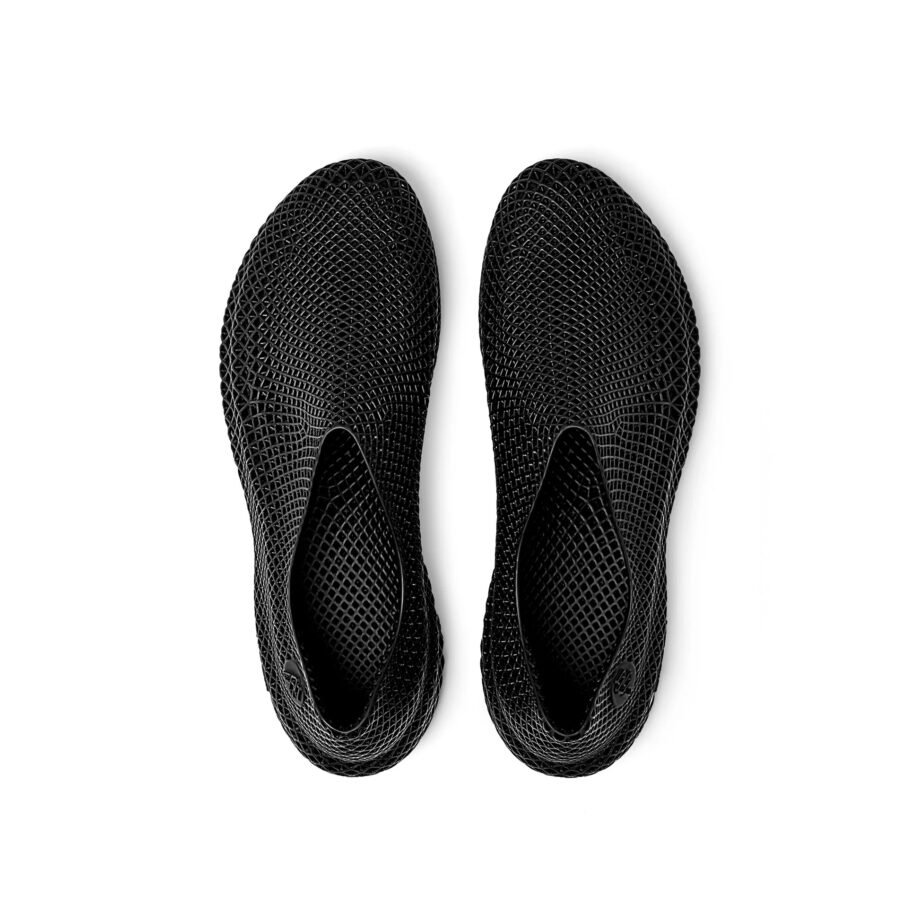
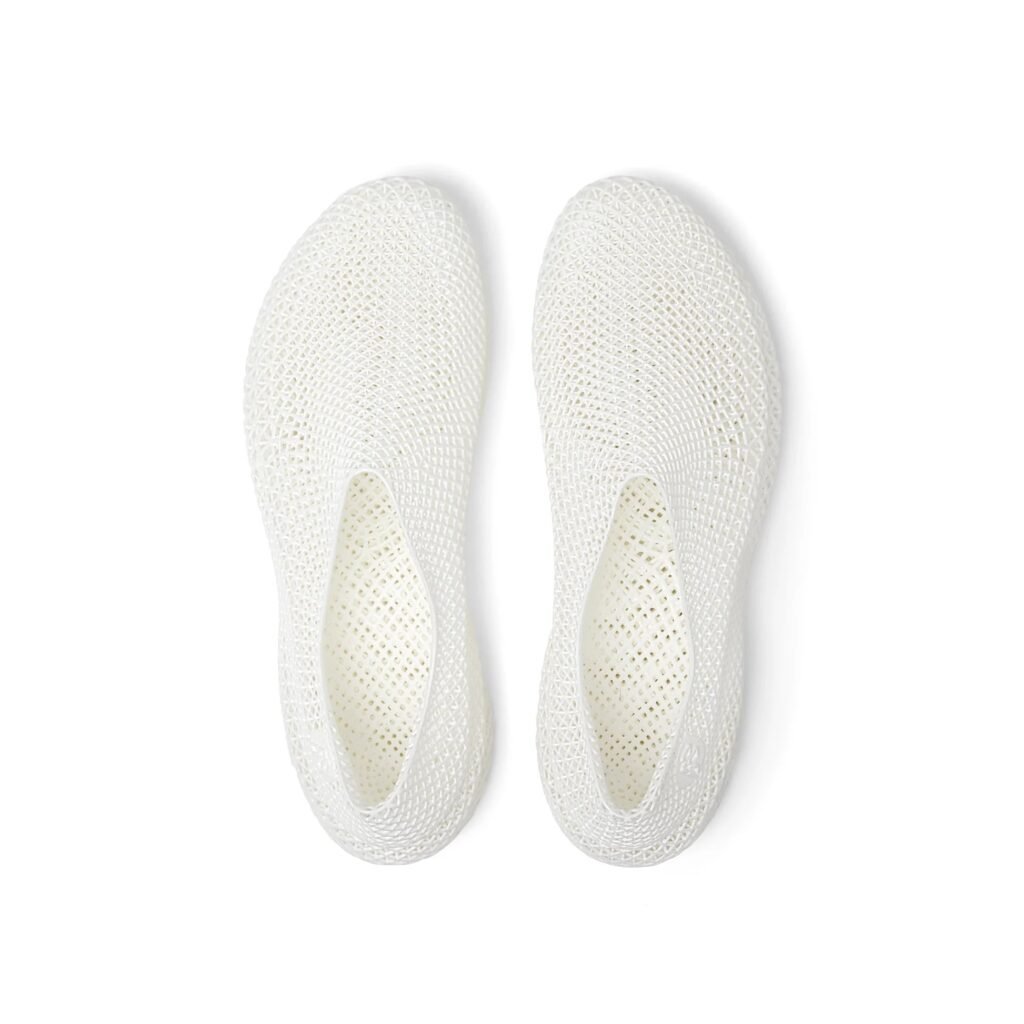
Traditional recovery slides use thick EVA/PU foams or molded resin to create plush, forgiving platforms. Fitasy’s Stride approaches the same goals but with a different toolset: a single-material lattice printed to your foot geometry to redistribute pressure more evenly (Fitasy calls it a “3Dmetric” triple-layer lattice). Early hands-on reports at CES described the Stride as surprisingly cushy and breathable for a printed shoe (see sources below).
Fit & sizing — custom scan vs one-size strategy
Fitasy Stride (custom):
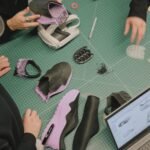
- Uses a phone-based 360° scan (standing + relaxed) to build a 3D model of each foot.
- Spatial AI maps lattice stiffness to pressure zones so the shoe is tailored, not just sized.
- Result: fewer pressure points and a closer “Cinderella” fit for unusual foot shapes.
Traditional recovery shoes:
- Come in standard sizes and sometimes adjustable straps or wider models.
- You can try in store and return easily if they don’t fit.
- Result: predictable sizing and straightforward returns — less risk if you’re between sizes.
Bottom line: if you have high arches, bunions, or asymmetrical feet, the custom mapping Fitasy promises can be transformative. If you prefer immediate, testable comfort and don’t want scan-related uncertainty, stick with a traditional model.
Cushioning & comfort — 3D lattice vs foam feel
Both aim for softness, but the how matters.
Fitasy 3Dmetric lattice
- Triple-layer lattice zones different stiffness across the sole: soft where you need cushion; firmer where you need support.
- Feels “springy” and responsive in early hands-on impressions; the lattice also provides 360° airflow and quick drying (useful for travel or sweaty recovery).
Foam slides (OOFOS, Crocs, Hoka recovery)
- Thick foam compresses under load and slowly returns to shape; the sensation is plush and enveloping.
- Proven performance: many runners swear by foam recovery for next-day comfort and reduced muscle soreness.
Which is better?
- For targeted pressure relief and a personalized fit, the Stride’s lattice may be superior.
- For instant plushness and a long history of effectiveness, traditional foam remains compelling.
- Practical tip: think “springy, breathable custom” (Fitasy) vs “plush, proven, widely available” (foam).
Washability & hygiene — easy win for the Stride
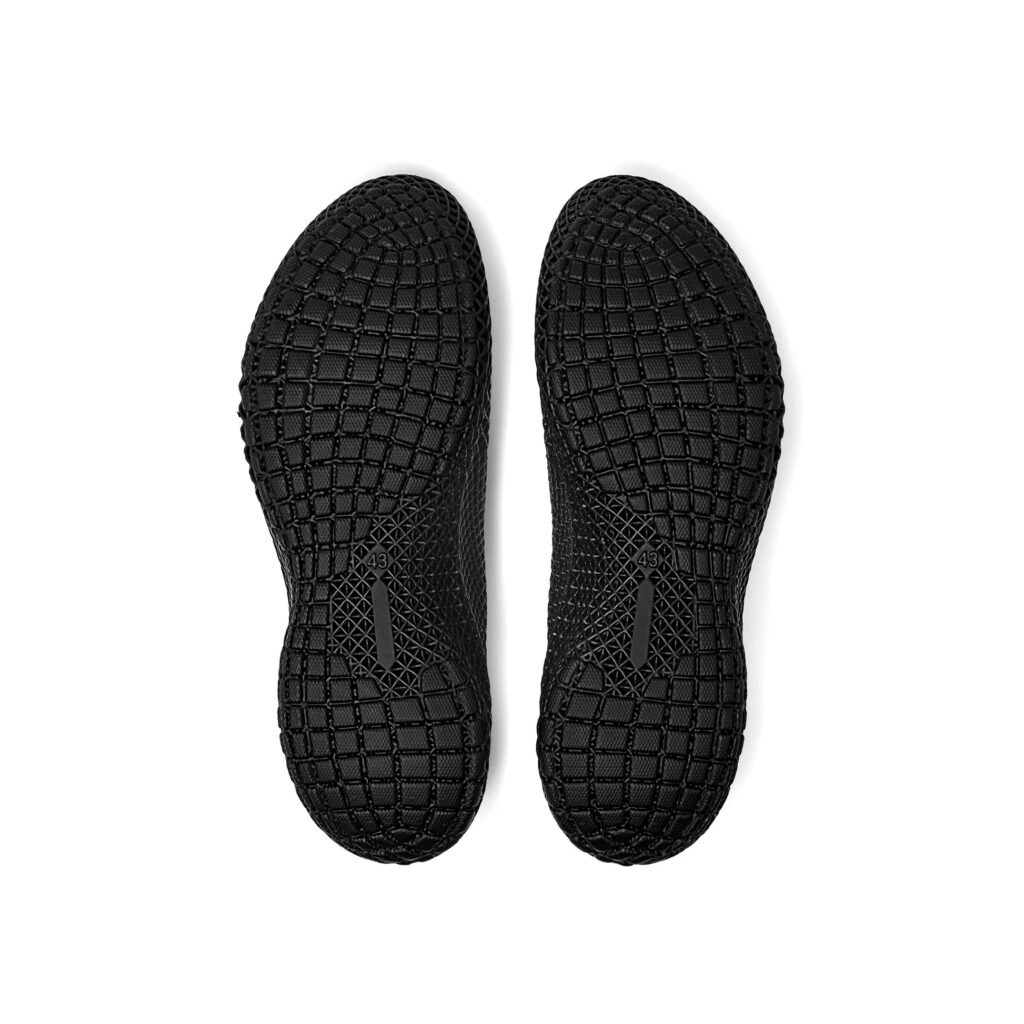
One of Fitasy’s clear advantages is washability. The Stride is a mono-material shoe (printed as a single polyurethane piece) that’s rinseable and quick to dry — ideal for travel, sweaty gym days, and easy maintenance. Traditional recovery shoes vary: Crocs and some foam slides wipe clean well, others can trap odor and moisture over time and sometimes require careful washing.
Care checklist
- Fitasy Stride: rinse, mild soap, air dry out of direct heat. The open lattice speeds drying and reduces fungal risk.
- Foam slides: follow the brand’s cleaning directions (some are machine washable, some are not), dry thoroughly.
If you’re a frequent traveler or hate shoe stink, Fitasy’s printed lattice has a hygiene edge.
Price & availability — what you’ll pay
At launch Fitasy positioned the Stride near mainstream pricing (reported early ranges around $180–$210 depending on custom vs standard options and early offers). Traditional recovery shoes span a wider range: Crocs are typically affordable, OOFOS/Hoka slides sit midrange, and premium recovery slides can reach $100+.
Consider total cost of ownership:
- Custom Fitasy pair: higher upfront but tailored comfort.
- Foam slides: lower upfront, may need replacement if compression and wear occur faster.
Availability also matters: Fitasy began with preorder/waitlist rollout (shipping windows in Spring 2026 at launch reporting), while traditional recovery shoes are widely available today. If you want comfort now, traditional shoes win on immediacy.
Durability & long-term value — unknowns vs knowns
This is the biggest practical tradeoff.
Fitasy Stride:
- Promises recyclable mono-material and reports from demos show good initial resilience.
- Gap: long-term, large-sample wear studies aren’t available yet. Lattice compression, tread abrasion and fatigue over months of daily use remain to be documented.
Traditional foam:
- Known failure modes (foam compression set, loss of cushion) and predictable lifespans based on use.
- Many brands offer warranty or mature return policies.
How to judge value: estimate cost per month = price ÷ expected months of useful life. If Fitasy’s lattice holds up for 12–24 months, the tailored comfort could outperform cheaper foam slides over time. Until robust durability data emerges, traditional models have the advantage of proven, documented lifespans.
Who should buy which shoe?
Use these simple profiles:
- Buy Fitasy Stride if: you travel a lot, have unusual foot geometry, value washability and a personalized fit, and enjoy early tech adoption.
- Buy traditional recovery shoes if: you want immediate availability, predictable sizing, lower upfront cost and proven longevity.
- If you have medical foot issues (plantar fasciitis, orthotic needs): consult a podiatrist. Custom Fitasy pairs may help redistribute pressure but should complement professional advice.
Final recommendation
Both options have merit. Fitasy Stride brings genuine innovation — phone scans, AI-mapped lattices and on-demand recycling-friendly production — and feels promising for recovery and travel. Traditional foam recovery shoes remain the reliable baseline: proven cushioning, easy returns and known durability.
If you’re an early adopter or have problematic fit issues, try Fitasy (or at least join the waitlist) — but if you need no-risk, immediate recovery comfort today, stick with a trusted foam slide and consider testing Fitasy later once long-term reviews are in.
Quick FAQs
Q: Can you use orthotics with Fitasy Stride?
A: Possibly, but the Stride is custom-fitted — adding insoles may change the fit. Check Fitasy’s support and consult a podiatrist for medical inserts.
Q: How long from scan to delivery?
A: Fitasy reported on-demand printing with fabrication taking a few hours; shipping timing depends on preorder queues and region.
Q: Are Fitasy shoes washable?
A: Yes — the printed lattice is rinseable and quick-drying. Follow Fitasy care instructions to retain shape.
Sources & Further reading
- Fitasy — Stride: https://fitasy.com/products/stride-2-3d-printed-sneakers
- GearJunkie — “Custom Recovery Shoes 3D‑Printed for the Perfect Fit” (CES hands‑on, Jan 28, 2026): https://gearjunkie.com/footwear/fitasy-stride-3d-printed-recovery-shoes
- NotebookCheck — “Fitasy unveils Stride custom-fit 3D-printed sneakers” (Dec 10, 2025): https://www.notebookcheck.net/Fitasy-unveils-Stride-custom-fit-3D-printed-sneakers.1182017.0.html
- 3DShoes — “Fitasy Stride Explained: How Custom 3D-Printed Shoes Are Finally Becoming Affordable” (Dec 13, 2025): https://3dshoes.com/3d-innovation/fitasy-stride-custom-3d-printed-shoes/
- Stuff — “These 3D-printed shoes are made for me, but strangers asked to try them on” (Jan 9, 2026): https://www.stuff.tv/features/these-3d-printed-shoes-are-made-for-me-but-strangers-asked-to-try-them-on/
- GadgetGram — Fitasy Stride overview (Jan 2026): https://gadgetgram.com/fitasy-stride-3d-printed-polyurethane-sneakers-w-built-in-360o-airflow/