


Choosing the best 3D printing service isn’t about finding the cheapest option—it’s about avoiding costly mistakes.
If you’ve ever ordered a 3D print online, you’ve likely experienced at least one of these:
- The part arrives late (or worse, weeks late)
- The quality doesn’t match the preview
- The material behaves differently than expected
- The print fails entirely—and you pay again
The reality: not all 3D printing services are built the same.
This isn’t another “Top 10 list.” It’s a decision framework based on real user experiences and engineering workflows—so you can confidently choose the right service for your use case.
By the end of this guide, you’ll know:
- Which platform fits your project
- Where each service excels—and breaks down
- How to avoid the most common (and expensive) mistakes
Why Choosing the Best 3D Printing Service Is More Complex Than It Looks
At first glance, most platforms follow the same flow:
Upload → Configure → Quote → Order
But under the hood, they operate very differently.
What most buyers miss:
- Same material ≠ same result (e.g., PA12 varies by provider and process)
- Price ≠ total cost (reprints, finishing, and shipping add up)
- Not all platforms control production (many route jobs to third-party suppliers)
Common Mistakes to Avoid
- Choosing the cheapest quote without vetting the supplier
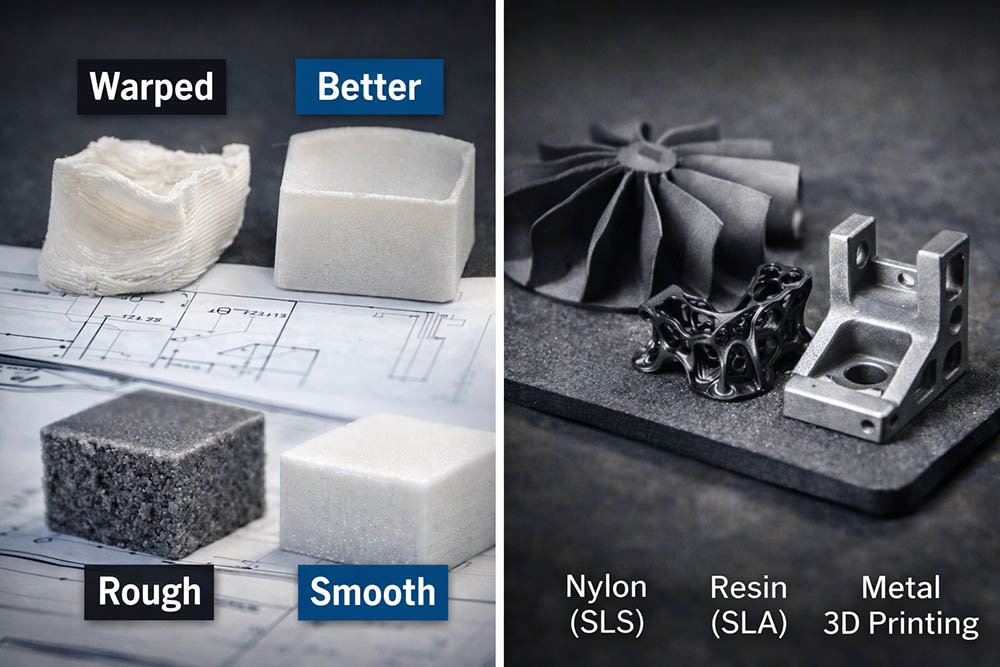
- Assuming all SLS/MJF parts are identical
- Ignoring shipping, duties, and lead-time variability
- Designing at minimum tolerances (higher rejection risk)
- Not understanding the provider’s production model
These mistakes often lead to the wrong conclusion (“the service is bad”) when the real issue is a mismatch between service type and project needs.
The 3 Types of Online 3D Printing Services — And Why It Matters
Understanding the service model is the fastest way to reduce risk.
1) Direct Service Bureaus — Highest Control
Examples: Protolabs, Materialise
What they are: Companies that own and operate their production facilities.
Pros
- Consistent quality
- Controlled processes
- Engineering support
Cons
- Higher cost
- Less pricing flexibility
Best for: Production parts, tight tolerances, mission-critical components
2) Manufacturing Networks — Balanced Approach
Examples: Xometry, [Protolabs Network (Hubs)](https://www.hubs.com/)
What they are: Platforms that route jobs to vetted suppliers.
Pros
- Scalable capacity
- Fast quoting
- Broad materials/processes
Cons
- Variability across suppliers
- Requires clear specifications
Best for: Engineering prototypes, scaling startups
3) Marketplace Aggregators — Price-Driven
Examples: Craftcloud
What they are: Platforms that compare prices across multiple manufacturers.
Pros
- Lowest upfront cost
- Wide selection
Cons
- Inconsistent results
- Vendor-dependent quality
Best for: Budget projects, non-critical parts
Quick Comparison
| Type | Control | Cost | Consistency | Best Use |
|---|---|---|---|---|
| Bureau | High | $$$$ | Very High | Production |
| Network | Medium | $$–$$$ | Variable | Prototypes |
| Marketplace | Low | $ | Inconsistent | Low-risk parts |
Decision Framework: How to Choose the Best 3D Printing Service
Instead of asking “What is the best 3D printing service?”, ask:
👉 “What is the best service for my project?”
Step 1: Define Your Goal
- Functional part vs visual model
- Prototype vs production
Step 2: Choose the Right Process
- SLS / MJF → functional, durable parts
- SLA / Resin → high-detail, cosmetic
- Metal (DMLS/SLM) → industrial applications
Step 3: Evaluate Risk Tolerance
- Can you accept variability, reprints, or delays?
- If not → avoid marketplaces
Step 4: Calculate Total Cost — Not Just the Quote
- Shipping & duties
- Post-processing
- Failure/reprint cost
In many cases, post-processing becomes the largest cost driver, not the print itself.
Step 5: Check Platform Strengths
- Instant quoting vs engineer review
- QC guarantees and inspection options
- Material consistency and documentation
This is where most buyers hesitate. Here’s a practical breakdown:
Xometry vs Sculpteo vs Protolabs — Real-World Comparison
Xometry
Strengths
- Large supplier network
- Wide materials and processes
- Fast, automated quoting
Weakness
- Quality can vary if specs aren’t explicit
Sculpteo
Strengths
- Strong materials ecosystem
- Reliable output for standard configs
- Transparent pricing
Weakness
- Premium pricing in many cases
Protolabs
Strengths
- Industry-leading speed
- Engineering review and DFM feedback
- High consistency
Weakness
- Expensive for simple parts
Side-by-Side
| Feature | Xometry | Sculpteo | Protolabs |
|---|---|---|---|
| Model | Network | Bureau | Bureau + Network |
| Price | $$ | $$$ | $$$$ |
| Quality | Variable | High | Very High |
| Speed | Fast | Medium | Very Fast |
What Engineers Love — And What They Hate
What Users Love
- Fast, instant quoting
- Streamlined ordering
- Access to advanced materials
What Users Hate
- “Hit or miss” quality (especially in networks)
- Late deliveries
- Spec mismatches (dimensions, material substitutions)
Key Insight
- Hobbyists prioritize appearance
- Engineers prioritize function
A part can look rough—but perform perfectly.
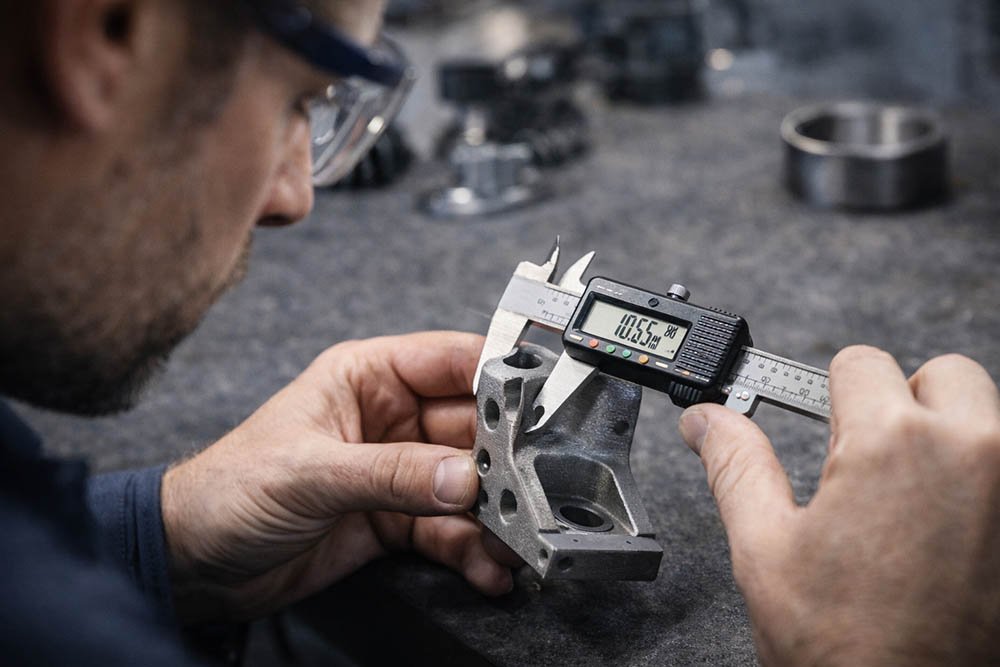
3D Printing Service Costs: What You’re Really Paying For
Most buyers underestimate total cost.
Visible Cost
- Printing price
Real Cost Stack
- Material
- Machine time
- Post-processing (often the largest cost)
- Shipping & logistics
- Failure risk (reprints, delays)
Why “Cheap” Becomes Expensive
- Reprints due to poor quality
- Delays that impact timelines
- Hidden fees (duties, brokerage)
Best 3D Printing Service by Use Case
Beginners
- Craftcloud (price comparison)
- Protolabs Network (guided experience)
Engineers
- Protolabs
- Materialise
Startups
- Xometry
- JLC3DP (cost-efficient iteration)
Production
- Protolabs
- Stratasys Direct Manufacturing
Trends Shaping 3D Printing Services in 2026
1) AI-Powered Quoting
- Automated pricing and manufacturability checks
- Faster—but sometimes less transparent decisions
2) Decentralized Manufacturing
- Distributed production networks (e.g., Xometry)
- Greater capacity with consistency challenges
3) Shift Toward B2B Platforms
- Less focus on hobby prints
- More on production workflows and repeatability
The Core Tradeoff
👉 Automation vs Quality Control
The best platforms clearly define:
- When your job is automated
- When it’s engineer-reviewed
Conclusion: There Is No Single “Best” 3D Printing Service
There is no universal winner.
The best 3D printing service depends on your:
- Project type
- Budget
- Risk tolerance
- Quality requirements
Final Advice
- Use the decision framework above
- Don’t choose based on price alone
- Match the service to your use case
Explore More — Next Steps
If you’re serious about finding the right long-term 3D printing partner, don’t stop here.
At 3D Shoes, we break down:
- Detailed profiles of leading 3D printing services
- Real-world comparisons of materials and processes
- In-depth analysis of emerging technologies in additive manufacturing
👉 Explore more at 3dshoes.com to go deeper, compare platforms, and make smarter decisions before your next order.
Choose a partner—not just a price. In 3D printing, the wrong choice costs both money and time.
- Compare providers in detail (materials, tolerances, lead times)
- Read process guides (e.g., SLS vs SLA)
- Review cost breakdowns before ordering
Choose a partner—not just a price. In 3D printing, the wrong choice costs both money and time.
FAQ
Craftcloud for price comparison, or Protolabs Network for a more guided experience.
China-based platforms like JLC3DP are typically the cheapest, but may require more post-processing.
Xometry offers flexibility and scale; Protolabs offers higher consistency and engineering support.
Costs include materials, machine time, labor, and especially post-processing and logistics.