

Introduction
At 3DShoes.com, we spend a lot of time studying how additive manufacturing is changing the footwear industry. Over the past few years we have covered everything from lattice midsoles and experimental printed sneakers to emerging scan‑to‑print systems.
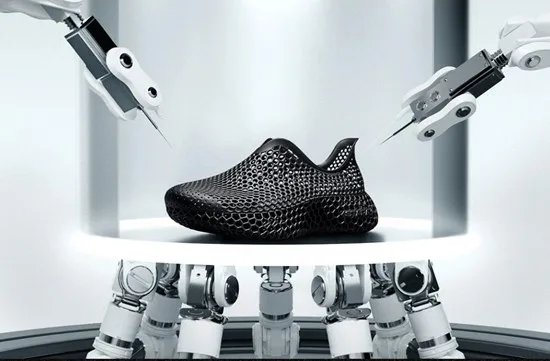
One pattern has become clear: many early projects focused on the spectacle of printing an entire shoe. The technology was impressive, but the results often felt more like demonstrations than real products people would actually wear.
That is why the WAZP METIS concept caught our attention.
Instead of asking “How much of a shoe can we print?” the project asks a more important question: “Where does 3D printing actually solve problems in footwear manufacturing?
This shift may sound subtle, but it represents a major change in how engineers are thinking about 3D printed footwear.
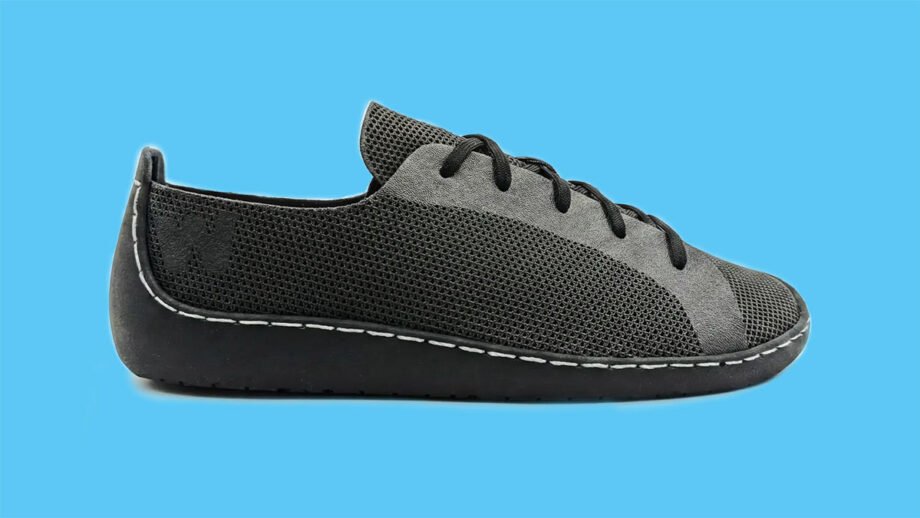
Rather than printing a monolithic sneaker, the METIS system uses modular printed components, stitched assembly, and distributed production to rethink the entire manufacturing workflow.
In this article, we will look closely at what makes the WAZP METIS approach different and why it may represent a more realistic direction for additive manufacturing footwear.
The Early Promise of 3D Printed Footwear
When additive manufacturing first entered the footwear conversation, the vision was bold.
If printers could build complex objects layer by layer, then theoretically they could produce a complete shoe in one build. Many early prototypes followed this idea. Designers experimented with fully printed sneakers, flexible lattice structures, and one‑piece footwear concepts.
At the time, the logic seemed compelling. Traditional shoe manufacturing is incredibly complicated.
A typical running shoe can include:
- textile uppers
- foam midsoles
- rubber outsoles
- reinforcement layers
- adhesives
- stitching
Researchers estimate that a modern athletic shoe can contain around 65 parts and more than 360 manufacturing steps.
From a distance, additive manufacturing looked like the perfect way to simplify that system.
Engineers imagined a future where:
- entire shoes could be printed in one piece
- molds and tooling would disappear
- customization would become easier
- assembly lines could be eliminated
However, as we and others in the industry observed, translating those early experiments into scalable production turned out to be far more difficult than expected.
Why Fully 3D Printed Shoes Struggle in the Real World
The biggest challenge with monolithic printed footwear is production efficiency.
Many experimental designs require extremely long build times. Depending on the printing technology used, producing a single pair of shoes can take 12 to 18 hours.
For prototyping this may be acceptable. For large‑scale manufacturing, it becomes a major obstacle.
Another issue is production risk. When an entire shoe is printed in one build, any failure late in the process means the whole product must be discarded.
Material limitations also play a role. Most additive manufacturing processes rely on a single material during printing. Yet footwear performance normally depends on combining multiple material properties.
For example, shoes typically require:
- soft cushioning
- durable traction surfaces
- flexible upper structures
- structural support elements
Achieving all of those properties with one printable material is difficult.
Design constraints present another challenge. Some printing technologies favor thicker walls or lattice geometries, which can lead to bulky designs that feel unfamiliar to consumers.
And ultimately, consumers do not buy shoes because they are printed. They buy shoes because they are comfortable, durable, and look good.
This is why many engineers are now rethinking how additive manufacturing footwear should be applied.
The Real System Problem in Footwear Manufacturing
To understand why WAZP approached the problem differently, it helps to look at the deeper structure of footwear production.
Modern shoes are assembled through layered construction. Individual components are produced separately and then bonded together.
One of the most common techniques used in the industry is adhesive bonding. Glue attaches midsoles, outsoles, and upper components.
However, adhesives introduce several important problems.
First, they increase manufacturing complexity. Workers must carefully apply bonding agents and control curing conditions.
Second, adhesives make recycling extremely difficult. Once materials are bonded together, separating them later becomes expensive and technically challenging.
Third, adhesives contribute to environmental impact through chemical use and additional manufacturing steps.
These factors help explain why footwear production has a surprisingly large carbon footprint. Studies estimate that a typical running shoe can produce roughly 14 kilograms of CO2 emissions per pair.
Most of those emissions come from material processing and manufacturing operations.
This context helps explain why innovators like WAZP are focusing on system redesign rather than simply printing more components.
Enter WAZP METIS: A Different Way to Think About 3D Printed Footwear
The WAZP METIS concept represents a different philosophy.
Instead of trying to print an entire shoe, METIS focuses on simplifying assembly and reducing manufacturing complexity.
The guiding idea is simple but powerful.
3D printing should solve the hardest constraints in manufacturing rather than becoming the product itself.
To achieve this, METIS divides the shoe into a small number of modular printed components. These parts are then assembled using stitching rather than industrial adhesives.
This approach offers several potential advantages:
- lower production risk
- easier repair and recycling
- simpler assembly processes
- compatibility with local manufacturing
From our perspective at 3DShoes.com, this is one of the most interesting aspects of the project. It treats additive manufacturing as part of a larger production system instead of a standalone novelty.
The Modular Architecture Behind METIS
A typical METIS shoe uses four to six printed components.
Each component serves a structural or functional purpose within the design. For example:
- outsole elements provide traction
- support frames add stability
- upper components guide fit and flexibility
These parts are designed with built‑in stitching guides that allow them to be connected without adhesives.
This assembly method is known as EasyStitch.
The advantages include:
- elimination of chemical bonding
- simplified manufacturing tools
- potential disassembly for repair
- easier recycling at end of life
Early development targets suggest assembly times of roughly 30 minutes per pair, with ambitions to reduce that further as the system evolves.
By combining printed components with stitched construction, the system creates a hybrid manufacturing model that blends digital production with traditional craftsmanship.
Why Modular 3D Printed Shoes Solve Key Manufacturing Problems
The modular strategy behind METIS helps address several persistent issues in additive manufacturing.
First, it reduces production risk. If one printed component fails, only that part must be replaced rather than the entire shoe.
Second, smaller parts usually print faster and can be produced more efficiently within available build volumes.
Third, modular architecture increases design flexibility. Engineers can adjust individual components to fine‑tune cushioning, flexibility, or durability.
For example, lattice structures or surface geometries can be optimized in specific areas of the shoe.
Another advantage is future adaptability. As new materials and printing technologies emerge, individual components can be redesigned without rebuilding the entire system.
This approach reflects a growing trend in additive manufacturing: using printing strategically rather than universally.
Distributed Microfactories and Local Production
Another interesting element of the METIS concept is distributed production.
Traditional footwear supply chains depend on large centralized factories located far from consumer markets.
Products are manufactured months in advance and shipped globally through complex logistics networks.
Additive manufacturing opens the door to a different model.
Because product designs are digital, production can take place closer to customers. The METIS system envisions networks of microfactories operating within roughly 10 to 500 kilometers of demand centers.
This approach could offer several benefits:
- shorter transportation distances
- faster delivery times
- on‑demand manufacturing
- reduced inventory waste
Manufacturing products only after they are ordered may also reduce unsold inventory and landfill waste.
From an industry perspective, distributed manufacturing could significantly change how footwear supply chains operate.
Sustainability Goals of the METIS System
Sustainability is another major motivation behind the METIS concept.
Early estimates suggest a cradle‑to‑gate footprint of about 4.5 kilograms of CO2 per pair.
For comparison, conventional running shoes are estimated to produce around 12 to 14 kilograms of CO2 emissions per pair.
The long‑term goal for METIS is even more ambitious. Developers aim to reduce emissions to below 2 kilograms per pair by 2029.
Several strategies support this objective:
- modular production that reduces waste
- glue‑free construction
- simplified disassembly
- potential closed‑loop recycling
If these targets can be achieved at scale, they could represent a meaningful step toward more sustainable footwear manufacturing.
Remaining Challenges for Modular Additive Manufacturing Footwear
Despite its promising approach, the METIS system still faces several important challenges.
Material durability remains one of the most critical factors. Footwear must survive repeated flexing, abrasion, moisture exposure, and temperature changes.
Ensuring that printed materials maintain performance over long periods will be essential.
Another challenge involves maintaining consistent quality across distributed microfactories. Production processes must be carefully standardized.
Consumer adoption is equally important. Even the most advanced manufacturing system must produce shoes that meet expectations for comfort, aesthetics, and price.
Finally, large‑scale recycling programs require effective reverse logistics. Collecting used products and processing materials is a complex task.
Addressing these challenges will determine whether modular additive footwear systems can succeed commercially.
When 3D Printing Becomes Infrastructure
One of the biggest lessons from the METIS project is that additive manufacturing works best when it becomes infrastructure rather than spectacle.
Instead of printing entire products, companies are increasingly applying 3D printing where it provides clear advantages.
These advantages include:
- eliminating molds and tooling
- enabling complex geometries
- supporting customization
- enabling digital inventory
Across the footwear industry we are already seeing this shift through lattice midsoles, scan‑to‑print systems, and modular production strategies.
The common theme is thoughtful integration rather than total replacement of traditional processes.
Final Thoughts
From our perspective at 3DShoes.com, the story of WAZP METIS highlights an important turning point for 3D printed footwear.
The future of additive manufacturing in footwear may not depend on printing entire shoes. Instead, it may depend on how intelligently the technology is integrated into manufacturing systems.
By combining modular printed components, stitched assembly, and distributed microfactories, the METIS concept attempts to address the real challenges of footwear production.
Whether the system ultimately scales remains to be seen. However, the underlying philosophy reflects a broader shift happening across additive manufacturing.
3D printing is no longer just the headline.
Increasingly, it is becoming the infrastructure that quietly enables better, smarter products.
And that shift may be exactly what the footwear industry needs.