Introduction
If you’ve been following the rise of 3D-printed shoes, one name keeps coming up: Zellerfeld.
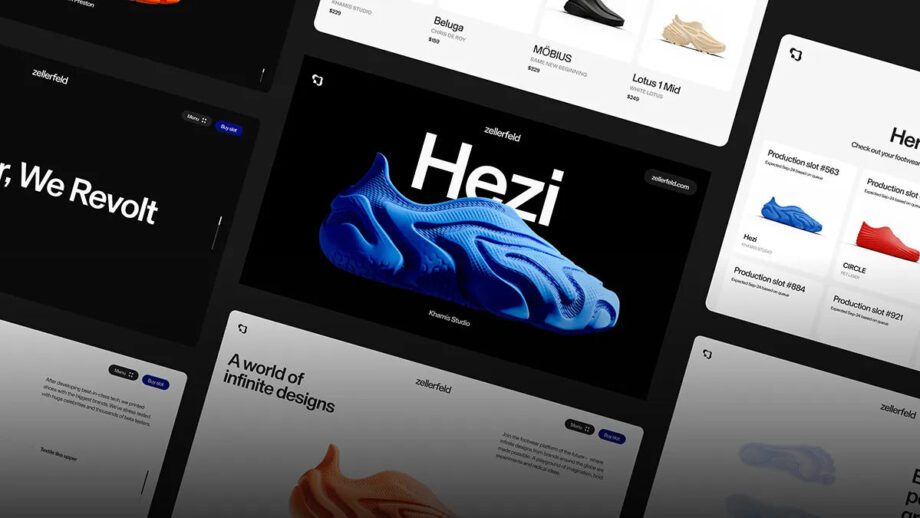
Positioned as one of the most forward-thinking companies in footwear, Zellerfeld is not just producing shoes—it’s rethinking how they are designed, manufactured, and sold. Instead of traditional factories, supply chains, and seasonal drops, Zellerfeld is building what it calls the “YouTube of shoes”—an open platform where anyone can design, publish, and sell fully 3D-printed footwear.
For readers of 3DShoes.com, this isn’t just another brand—it’s a glimpse into the future of footwear.
What Is Zellerfeld?
Zellerfeld is a Hamburg-based footwear technology company specializing in fully 3D-printed shoes.
Unlike traditional footwear brands, Zellerfeld operates on a radically different model:
- Shoes are 3D printed on demand
- No mass inventory or overproduction
- Designs are uploaded digitally and produced as needed
- The entire shoe is printed as a single structure
This approach eliminates many of the limitations of conventional footwear manufacturing, including long production cycles, minimum order quantities, and complex global supply chains.
From Beta to Full Platform Launch
After more than a year in beta, Zellerfeld has officially launched its platform to the public, marking a major milestone for the company.
During its beta phase, the company produced over 10,000 pairs of 3D-printed shoes, collaborating with notable names such as:
- Moncler
- KidSuper
- Heron Preston
- Chris Brown
This phase allowed Zellerfeld to refine its operations, including:
- Production workflows
- Shipping logistics
- Customer experience
- Fit accuracy
Now, the platform is moving into full-scale deployment.
The “YouTube of Shoes” Concept
At the core of Zellerfeld’s vision is a platform that democratizes footwear design.
How it works:
- Designers upload their 3D shoe models
- Zellerfeld verifies and prepares them for production
- Designs are published on the platform
- Consumers can browse and purchase directly
This creates a system where:
- Designers can launch products without factories or capital
- Consumers get access to unique, experimental footwear
- Products evolve faster than traditional release cycles
As CEO Cornelius Schmitt describes it, the goal is to remove barriers and allow creativity to thrive.
How Zellerfeld Produces Shoes
Zellerfeld’s biggest innovation lies in its production process.
Traditional footwear:
- 12–18 months development cycle
- Multiple materials and assembly steps
- Global supply chains
Zellerfeld:
- Fully 3D printed
- Single-material construction
- Production in days, not months
This allows:
- Faster iteration
- On-demand production
- Reduced waste
Zellerfeld Studio: Tools for Creators
To support its platform, Zellerfeld introduced Zellerfeld Studio, a system designed for designers.
Key features:
- Upload and validate designs
- Order samples quickly
- Launch products with minimal friction
Submission process:
- Designers submit files via Discord
- Automated systems verify the design
- Approved creators gain access to Studio
- Designs are published on the marketplace
This lowers the barrier for entry significantly compared to traditional footwear production.
Business Model: How Zellerfeld Makes Money
Zellerfeld uses a hybrid model that combines production access and revenue sharing.
1. Production slots
- Customers reserve slots for around $10
- Lock in position in the production queue
- Final cost is billed before production begins
2. Revenue split
- Designers receive 40% of the sale
- After production, shipping, and operational costs
This model aligns incentives:
- Designers earn directly from their creations
- Zellerfeld scales production demand
Why Zellerfeld Matters
Zellerfeld is not just another footwear brand—it represents a shift in the industry.
Key implications:
🔹 1. Decentralized design
Anyone can create and sell footwear
🔹 2. On-demand manufacturing
No overproduction or unsold inventory
🔹 3. Faster innovation
New designs can launch in days instead of months
🔹 4. New creator economy
Footwear becomes a digital-first product category
For 3DShoes.com, this is exactly the type of innovation that signals where the industry is heading.
Challenges and Limitations
Despite its potential, Zellerfeld still faces challenges:
- Scaling production capacity
- Maintaining consistent quality
- Consumer adoption of new materials
- Pricing vs traditional footwear
These factors will determine how quickly the model can grow.
The Future of 3D-Printed Shoes
Zellerfeld is positioning itself at the center of a major shift:
👉 From mass production → to digital manufacturing
👉 From seasonal drops → to continuous innovation
As more brands experiment with 3D printing—including adidas and Nike—Zellerfeld’s platform could become a blueprint for the industry.
Final Thoughts
Zellerfeld is building something much bigger than a footwear brand.
It’s creating an ecosystem where:
- Designers can publish freely
- Consumers can access unique products
- Manufacturing becomes digital
For anyone following the evolution of 3D-printed footwear, this is a company worth watching closely.
🔗 Sources & Further Reading
- https://footwearnews.com/business/business-news/zellerfeld-launches-3d-printed-footwear-platform-1203657585/
- https://zellerfeld.com
- https://3dshoes.com
FAQ: Zellerfeld & 3D-Printed Shoes
Zellerfeld is a footwear company that produces fully 3D-printed shoes using on-demand manufacturing.
Yes, through their platform, where users can browse and order designs created by independent designers.
They are produced using advanced 3D printing technology, creating a single-piece shoe structure.
Yes, designers can submit their work through the platform and sell approved designs.
They have strong potential due to customization, speed, and reduced waste, but adoption is still growing.