3D Shoes 3D Shoes
  • News
  • Innovation
  • Design
  • Companies
  • Shoes
Reading: Engineers Design Mind-Blowing 3D-Printed Device That Pulls Water From Thin Air: A Practical Solution
Follow 3DShoes on LinkedIn
Font ResizerAa
3DShoes3DShoes
  • Home
  • About
  • Directory
  • Shoes
  • Innovation
  • Design
  • News
  • Shoes

HP Quietly Discontinued the Fitstation Insole Platform

R_Shoes R_Shoes June 26, 2024
5.9kLike
4kFollow
3.7kPin
3.7kFollow
  • 3D Printed Shoes
  • 3D Companies
  • About
  • STL Files
  • Contact
© 2026 3DShoes.com. All Rights Reserved.
News

Engineers Design Mind-Blowing 3D-Printed Device That Pulls Water From Thin Air: A Practical Solution

R_Shoes
Last updated: August 25, 2025 1:38 am
By R_Shoes 8 Min Read
Share
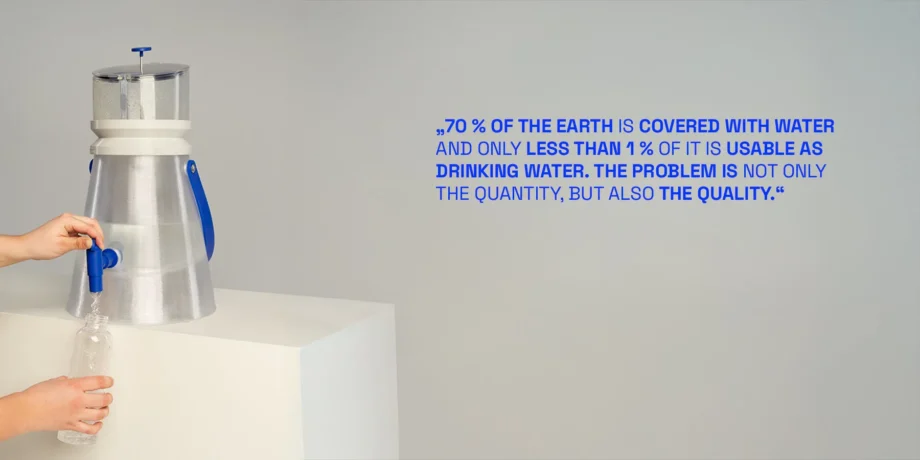
Person filling a bottle from the 3D-printed ‘Water from Air’ device; transparent reservoir with yellow band and blue spigot visible.
‘Water from Air’ prototype in use—solar-heated, 3D-printed unit that condenses potable water from ambient air. Credit: Louisa Graupe & Julika Schwarz via designboom.
SHARE

Access to clean drinking water is one of the most pressing global challenges of the 21st century. While billions live in water-scarce regions, a team of engineers has unveiled a 3D-printed device that can literally pull water from thin air—a breakthrough that could change the way communities, homes, and even disaster zones access safe water. Unlike futuristic concepts that remain in labs, this technology is not only affordable but also reproducible, opening the door for DIY enthusiasts, schools, and innovators to build their own versions.
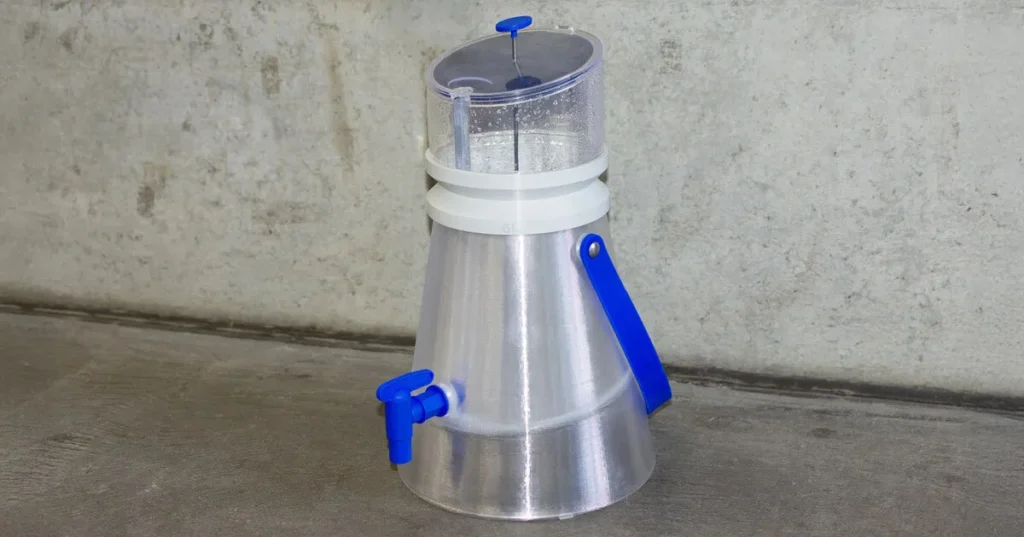
Table of Contents
How Does It Work?The 3D-Printing ProcessCan You Build One Yourself?Comparison With Other Water-Harvesting TechnologiesEnvironmental and Societal ImpactThe Road AheadFAQFinal ThoughtsSources & Further Reading

Full view of the 3D-printed ‘Water from Air’ device with transparent base, colored lid, and spigot tap.
Full prototype view of the 3D-printed “Water from Air” device showing its modular design and spigot — Photo credit: Louisa Graupe & Julika Schwarz / 3Dnatives.

How Does It Work?

The device leverages hygroscopic materials—substances that naturally absorb moisture from the air. Think of how a packet of silica gel in a shoebox collects humidity, but on a far more advanced scale. Engineers 3D-printed a lattice structure coated with special salts and polymers that pull in water vapor, even from relatively dry environments. Once collected, a solar-powered heating system warms the material, releasing the trapped water vapor, which then condenses into drinkable liquid.
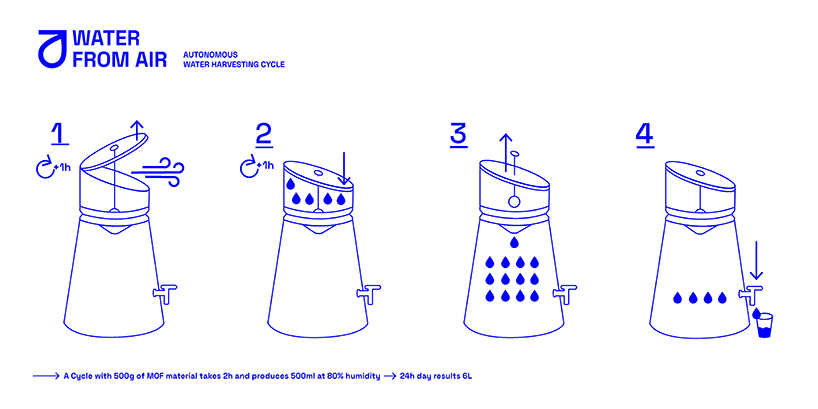
Diagram showing the absorption of moisture by the lid, solar heating, and condensation into the tank.
Schematic illustrating the two-stage cycle—absorption by the lid and solar-powered condensation into the transparent tank — Photo credit: Louisa Graupe & Julika Schwarz / 3Dnatives.

This cycle of absorption and release requires no external electricity grid, making it viable in off-grid or disaster-stricken areas.


The 3D-Printing Process

The team used additive manufacturing (3D printing) to prototype the structure, which is key to the device’s performance. Instead of a flat surface, the design uses a porous, sponge-like geometry that maximizes surface area for capturing vapor. According to the engineers:

  • Material: Polymers infused with calcium chloride or other hygroscopic salts.
  • Design: Lightweight lattice with repeating geometrical patterns for strength and efficiency.
  • Size: Scalable; lab versions are small, but the design can be scaled up for households or villages.

The benefit of 3D printing is that anyone with a desktop printer and access to the right materials can potentially replicate the design. While commercial versions are being refined, DIY builders could adapt the concept with off-the-shelf parts.


Can You Build One Yourself?

Yes—at least in a simplified form. Based on publicly available details:

  1. Frame: 3D-print a porous structure using standard PLA or PETG filament. While not as effective as advanced polymers, these are accessible.
  2. Coating: Apply a hygroscopic salt coating, such as calcium chloride mixed with a polymer binder to help it stick.
  3. Condensation Chamber: Build a simple enclosure with transparent plastic or glass to trap solar heat.
  4. Collection Tray: Use food-safe plastic or stainless steel to gather condensed water.

This DIY model will not yield as much water as the engineered prototype, but it demonstrates the science and could inspire community-driven innovations.


Comparison With Other Water-Harvesting Technologies

This 3D-printed device stands out among existing water-harvesting approaches:

  • Fog Nets: Already used in parts of Chile and Morocco, fog nets collect droplets from mist but require specific climates.
  • Atmospheric Water Generators (AWGs): These work like dehumidifiers, cooling air to condense water, but they consume significant electricity.
  • Solar Stills: Use evaporation and condensation to purify water, but are limited in scale and speed.

In contrast, the 3D-printed hygroscopic device is low-cost, solar-powered, and portable, bridging gaps where traditional technologies fall short.


Environmental and Societal Impact

The potential of this innovation is enormous:

  • Disaster Relief: Imagine emergency kits containing portable water harvesters for survivors of earthquakes or floods.
  • Rural Communities: Villages with no reliable infrastructure could harvest water daily without relying on expensive pipelines.
  • Climate Resilience: As droughts intensify, localized water harvesting could reduce dependence on shrinking rivers and overdrawn aquifers.
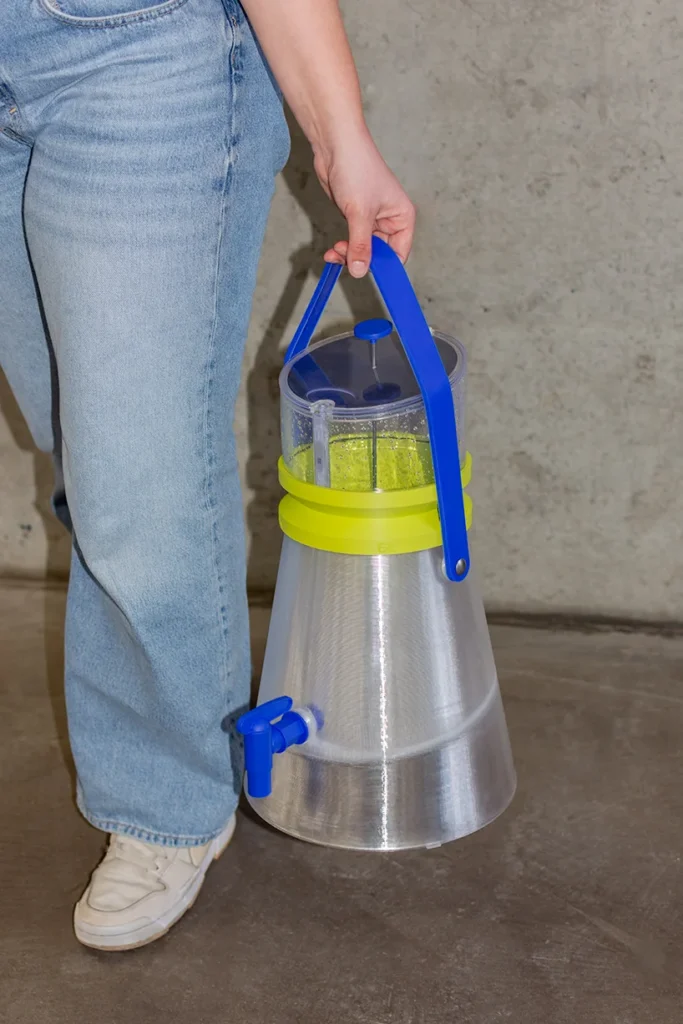
Person carrying the compact ‘Water from Air’ device by its handle.
Design emphasizes portability with a handle for easy transport—highlighting practical, everyday use — Photo credit: Louisa Graupe & Julika Schwarz / 3Dnatives.

Critically, the fact that the device can be fabricated via 3D printing means that it is not locked behind industrial supply chains. Communities can locally print parts, reducing costs and encouraging self-reliance.


The Road Ahead

While the current prototypes are promising, engineers are working on:

  • Improving the efficiency of water capture in very arid conditions.
  • Testing durability over months or years of use.
  • Scaling the technology for community-level water supply.

If successful, this 3D-printed device could democratize access to clean water in ways never before possible.


FAQ

Q: How does the 3D-printed water harvester work?
It uses special moisture-absorbing materials combined with a 3D-printed structure that captures humidity and releases clean water when heated by sunlight.

Q: Can people build this device at home?
The concept is simple, but the exact materials (like advanced hydrogels and MOFs) are still under research. DIY versions may work in principle, but efficiency will be much lower.

Q: How is this different from dehumidifiers or fog nets?
Unlike traditional machines, it doesn’t need electricity and can function in dry climates. Compared to fog nets, it works even without visible mist.

Q: How much water can it produce?
Current prototypes can yield several liters of water per day depending on humidity and sunlight. Scaling up is a key focus for engineers.

Q: What is the potential impact of this technology?
It could provide clean water to communities without reliable access, especially in arid regions, disaster zones, or off-grid areas.


Final Thoughts

Water-from-air devices have long captured the imagination of scientists, but 3D printing has made it possible to build them cheaply, quickly, and at scale. For students, hobbyists, and communities alike, this is more than just an engineering marvel—it’s a practical solution that could redefine water security worldwide.


Sources & Further Reading

  • mobile 3D printed device extracts drinking water directly from air — designboom, July 2025. Louisa Graupe & Julika Schwarz’s design details, materials, fabrication, and operation. Designboom
  • A New 3D Printed Device is Capable of Transforming Air into Drinking Water — 3Dnatives, July 16 2025. Technical breakdown, MOF functionality, scalability, and design philosophy. 3Dnatives
  • Engineers design mind-blowing 3D-printed device that can pull water from thin air: ‘A practical solution’ — The Cool Down, August 19 2025. Context on global water scarcity; device yield, accessibility, and intent. The Cool Down
  • Atmospheric water generator — Wikipedia, August 2025. Tech context, comparative energy requirements, and global potential. Wikipedia

💡 Takeaway: The technology is real, reproducible, and scalable. With further refinement, it could be as common as solar panels—quietly pulling life-giving water out of the very air around us.

TAGGED:3D printing3D-printed devicesatmospheric water harvestingclean water technologyFeaturedfuture of clean watermoisture capture technologyresin-based water harvestersustainable water solutionswater from airwater scarcity innovation
Share This Article
Facebook Twitter Pinterest Whatsapp Whatsapp LinkedIn Reddit Telegram Email Copy Link Print

Launching something like this?

If you're working on a product, platform, or business, I design fast, SEO-structured WordPress websites built for real results..

Start Your Project
100+ websites built • 15+ years experience

Stay Up To Date!

Sign up for 3DShoes.com's mailing list where you will stay up-to-date with latest trends, drops, and more.

loader

Website Help

Need a website for your project?

I build clean, fast, SEO-structured WordPress websites for real business results.

Start Your Project
100+ websites built • 15+ years experience

Trending

Top 10 best 3D-printed shoes of 2025 featuring futuristic lattice-sole sneakers for performance and lifestyle wear
Top 10 Best 3D-Printed Shoes of 2025 — Performance, Fashion & Value
December 27, 2025
Syntilay Pulse Podz
PulsePodz Review — Is Syntilay’s 3D-Printed Recovery Slide Worth $149?
January 19, 2026
A close-up of a modern 3D printer creating a small figurine, representing digital manufacturing and copyright issues.
3D Printing and Copyright: When Does Making a Replica Become a Crime?
November 9, 2025
Skylrk Earth Bender shoe. Courtesy
Justin Bieber x Zellerfeld Reveal the Earth Bender — A 3D-Printed, Soccer-Inspired Shoe for SKYLRK
December 6, 2025

3D Printed Shoes →

3D Printing Companies →

Topics

  • Innovation
  • Design
  • News
  • Guides
  • Products
Follow 3DShoes on LinkedIn

Affiliate links on 3DShoes may earn us a commission. Learn more.

News

How Formism and Bambu Lab Are Rewriting Footwear: Inside the Persona 3D-Printable Shoe Launch

FORMISM by SCRY

Introduction — downloadable shoes, at last A small but significant shift in how we obtain footwear has moved from concept to market. FORMISM — a digital production studio created by…

January 21, 2026 News

Your may also like!

Innovation & Trends

Best 3D Printing Service in 2026

R_Shoes April 10, 2026
Nike Air Works
News

Inside Nike Air Works: The 3D-Printed Air Max Program Explained

R_Shoes April 10, 2026
adidas Project R.A.P 3D-printed performance footwear concept
News

What Is adidas Project R.A.P? The Future of 3D-Printed Performance Footwear Explained

R_Shoes March 25, 2026
Image to 3D print workflow using Meshy and MakerWorld showing image conversion to 3D model and final printed object
News

Image to 3D Print Workflow Explained: What Meshy + MakerWorld Makes Possible

R_Shoes March 21, 2026

NEWSLETTER

Stay Updated on 3D Footwear Innovation

Get the latest insights, breakthroughs, and industry updates delivered to your inbox.

loader

No spam. Just relevant industry updates.

3D Shoes

3DShoes tracks the evolution of 3D-printed footwear—covering design, technology, and manufacturing to help make sense of where the industry is heading.

Quick Links

  • 3D Printed Shoes
  • 3D Companies
  • About
  • STL Files
  • Contact

Legal

  • Privacy Policy
  • Cookie Policy (EU)
  • Disclaimer
  • Terms & Conditions

Socials

Our website stores cookies on your computer. They allow us to remember you and help personalize your experience with our site. Read our privacy policy for more information.

© 2026 3DShoes – All Rights Reserved. Hosted & Developed by PixelCrafted.Dev.

Manage Consent
To provide the best experiences, we use technologies like cookies to store and/or access device information. Consenting to these technologies will allow us to process data such as browsing behavior or unique IDs on this site. Not consenting or withdrawing consent, may adversely affect certain features and functions.
Functional Always active
The technical storage or access is strictly necessary for the legitimate purpose of enabling the use of a specific service explicitly requested by the subscriber or user, or for the sole purpose of carrying out the transmission of a communication over an electronic communications network.
Preferences
The technical storage or access is necessary for the legitimate purpose of storing preferences that are not requested by the subscriber or user.
Statistics
The technical storage or access that is used exclusively for statistical purposes. The technical storage or access that is used exclusively for anonymous statistical purposes. Without a subpoena, voluntary compliance on the part of your Internet Service Provider, or additional records from a third party, information stored or retrieved for this purpose alone cannot usually be used to identify you.
Marketing
The technical storage or access is required to create user profiles to send advertising, or to track the user on a website or across several websites for similar marketing purposes.
  • Manage options
  • Manage services
  • Manage {vendor_count} vendors
  • Read more about these purposes
View preferences
  • {title}
  • {title}
  • {title}
Stay Up To Date!

Sign up for 3DShoes.com's mailing list where you will stay up-to-date with latest trends, drops, and more.

loader

Zero spam, Unsubscribe at any time.
adbanner
AdBlock Detected
Our site is an advertising supported site. Please whitelist to support our site.
Okay, I'll Whitelist
Welcome Back!

Sign in to your account

Lost your password?