Imagine lacing into a pair of running shoes that feel like they give you an extra calf muscle with every step. That’s the idea behind Nike Project Amplify — a prototype “powered footwear” system that adds a motorized boost to walking and running so everyday athletes can go farther and feel fresher. This explainer covers what Amplify is, how the hardware and software work, who it’s for, what testing shows so far, how it stacks up against passive carbon-plate racers, and the practical questions (battery life, weight, legality) you’ll want answered.
TL;DR — the quick facts
- What it is: A motorized footwear system that pairs a carbon-plated running shoe with a calf-worn motor/battery and a drive belt to add active lift to each stride.
- How it helps: The system times a brief powered pull on the heel at push-off, lowering calf/Achilles load and cutting perceived effort.
- Testing so far: Nike reports extensive trials with hundreds of testers across millions of steps.
- Who it’s for: Targeted at everyday runners and walkers (roughly a 10–12 min/mile pace), not elite record-chasing racers.
- Release window: Still in development; public pilots and broader launches are expected to follow further testing.
What exactly is Project Amplify?
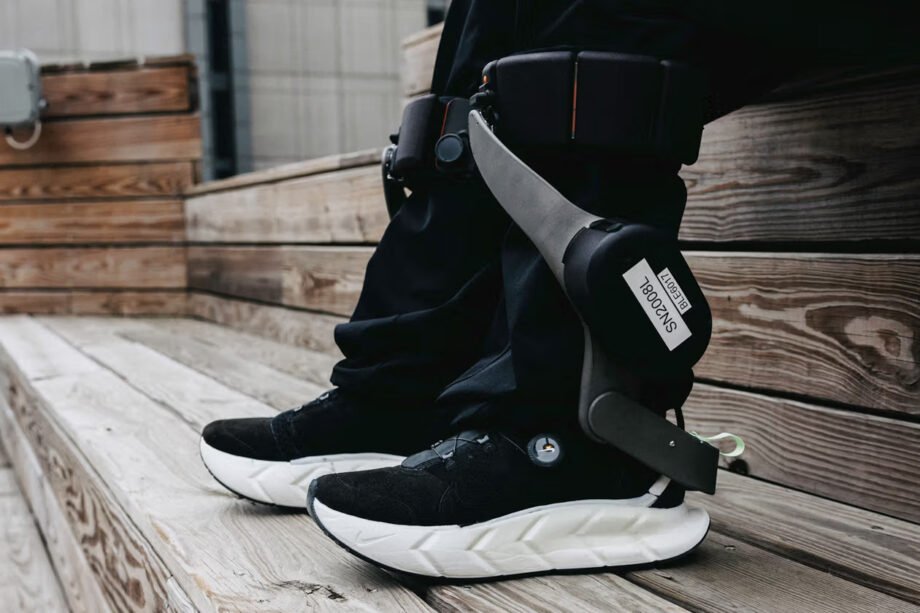
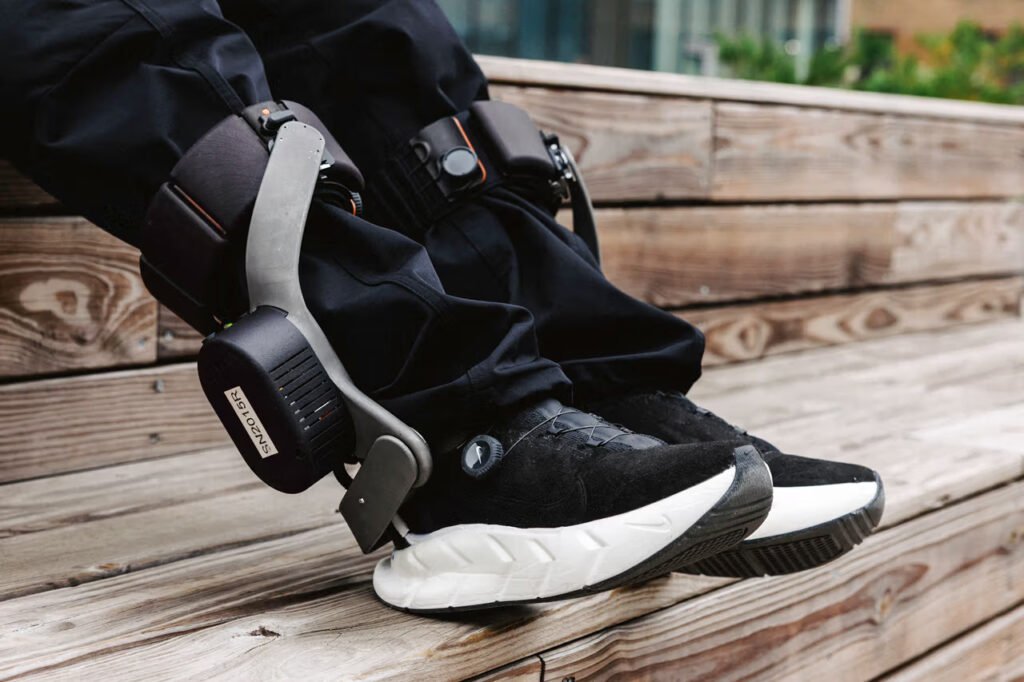
Project Amplify is Nike’s first public demonstration of powered footwear for civilian runners and walkers. Rather than relying solely on passive materials (foam, carbon plates) to store and return energy, Amplify adds active mechanical assistance via a compact motor and belt that pull on the shoe’s heel at precisely the right moment in the gait cycle. The motor and controller live in a cuff around the calf (with a rechargeable battery), and the running shoe contains a carbon-fiber plate that transfers the assist to the foot. The goal is to augment natural lower-leg movement — in effect, giving a short, timed boost that makes hills feel flatter and moderate paces easier.
The hardware: motor, belt, cuff, and carbon plate
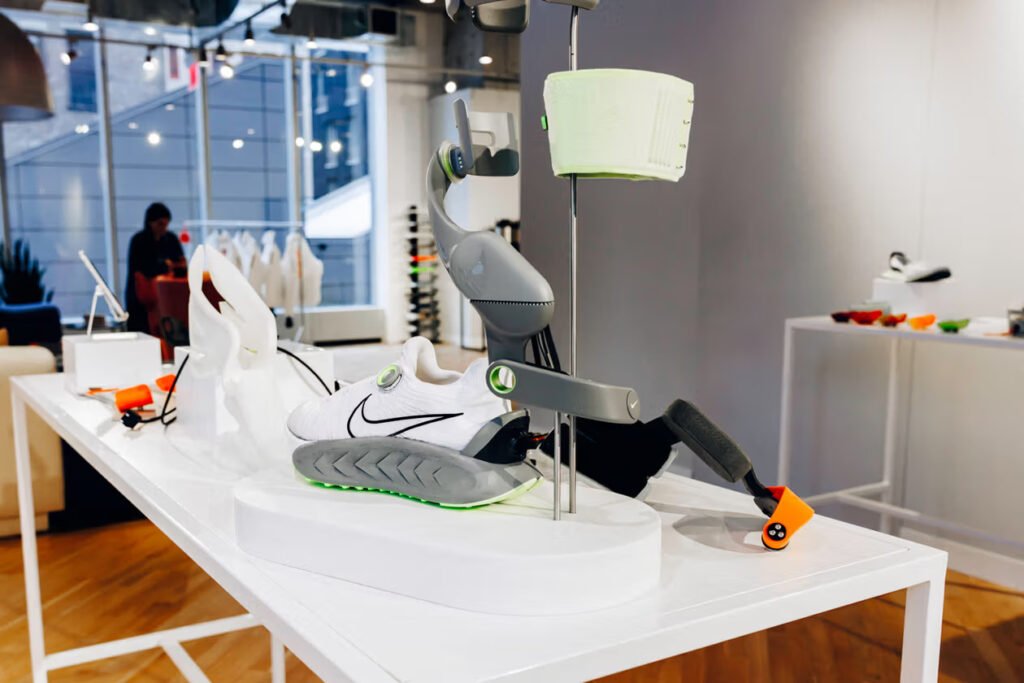
At a component level, Amplify pairs wearable robotics with what looks like a purpose-built running shoe:
- Calf cuff + battery: a soft cuff houses the battery and controller, worn low on the calf. The pack is designed to be light and unobtrusive while delivering power to the motor.
- Miniature motor & drive belt: a compact motor mounted near the ankle pulls a belt that connects to the shoe’s heel plate, adding upward/forward force during push-off.
- Carbon-fiber plated shoe: the shoe includes a rigid plate and an interface point so the motor’s force transfers smoothly to the foot; the shoe can also be used as a regular sneaker without the robotics attached.
- Sensors & adaptive control: embedded sensors (ankle angle, force) feed algorithms so the assist is timed and tuned to the wearer’s gait rather than applying a one-size-fits-all shove.
Nike has refined multiple hardware iterations during testing, improving placement, weight, and calibration to make the assist feel seamless and intuitive.
How the bionic shoe changes your stride
The assist in Project Amplify is brief and targeted: as the runner reaches push-off, the motor pulls on the heel plate so some of the work normally supplied by the calf and Achilles is done mechanically. The physiological effects reported so far include reduced perceived exertion and lower muscular demand in the calves, which translates to feeling fresher for the same pace or maintaining a faster pace for the same effort.
Academic research into ankle exoskeletons supports the idea that powered assistance can lower metabolic cost during walking and loaded gait; Nike’s Sport Research Lab measured similar trends while optimizing Amplify’s algorithms. That said, Amplify is tuned for everyday endurance and comfort — not sprint mechanics or elite record attempts — and Nike emphasizes augmentation, not takeover, of natural movement.
Who benefits most from Project Amplify?
Nike frames Amplify for the broad “everyday athlete”: recreational runners who run around a 10–12 minute mile, walkers who want longer commutes without extra fatigue, and hikers tackling sustained uphill sections. The assist is designed to extend usable range and improve enjoyment for people who stop moving because it feels hard — the same population that helped drive the e-bike revolution. Elite, competitive runners chasing seconds off race times are not the primary target for this first generation.
What testing tells us so far
Nike’s testing program combined lab protocols and outdoor field trials with hundreds of athletes across multiple prototype versions. Testers repeatedly reported that the hardware “felt like part of their body,” reduced effort on climbs, and allowed some runners to hold faster paces with less perceived strain. Independent hands-on writeups from journalists who tried early demos described a noticeable boost that didn’t feel jarring — more like a gentle assist — when tuned correctly.
Objective lab numbers from peer-reviewed exoskeleton research show powered ankle assistance can yield measurable metabolic benefits, which aligns with Nike’s goals for Amplify. Precise VO₂ or percentage-based energy savings from Nike’s tests have not been widely published, but the qualitative trends are consistent with the exoskeleton literature.
How Amplify compares to carbon-plate/“supershoe” technology
Modern performance shoes improve running economy through passive materials: reactive foams and rigid plates that return stored elastic energy. Amplify adds active mechanical work on top of that: it supplies power instead of just returning it.
That means Amplify can reduce muscular load and perceived exertion in ways passive shoes cannot — but at the cost of added complexity (motors, batteries), shifted weight distribution, and likely a higher price. Passive carbon-plate shoes helped push marathon times lower; Amplify aims to make everyday movement easier rather than directly targeting record-breaking performance.
Practical considerations: battery, weight, durability, and rules
A few pragmatic notes to keep in mind:
- Battery & range: the system is rechargeable and designed for short to moderate runs; autonomy and power management are still being refined.
- Weight & packing: the system shifts some mass to the calf cuff. Iterative design focuses on minimizing perceived weight and keeping the assist natural.
- Maintenance & repairs: moving parts mean new maintenance categories (belts, motors, batteries) versus traditional trainers — expect different warranties and service needs when the product ships.
- Race legality: sanctioned races are likely to restrict motorized assistance. Governing bodies regulate footwear and typically bar devices that provide external power. Check race rules before attempting official competition with any powered system.
Pros, cons, and a short verdict
Pros
- Lowers calf and Achilles effort, especially on hills.
- Extends walking and running range for casual athletes.
Cons
- Added system complexity (battery, motor, belt) and likely higher price than typical running shoes.
- Durability, repair logistics, and rule-book questions remain unresolved.
Verdict: Project Amplify is a bold, plausible next step in footwear — not a polished consumer product yet, but an exciting demonstration that active assist can be made wearable and intuitive. For everyday runners and walkers curious about a different kind of performance boost, Amplify is an innovation to watch; for elite racers or minimal-gear purists, the first releases may feel like a niche experiment.
Want to stay updated?
Project Amplify is still in testing and Nike plans more public trials and iterative releases before a broad consumer launch. Bookmark Nike’s official communications and major tech/fitness outlets for hands-on reviews and release announcements.