


3D Shoes 3D Shoes
  • News
    NewsShow More
    Nike Project Amplify
    What Is Nike Project Amplify? — A Complete Explainer of Nike’s Bionic Shoe
    February 11, 2026
    FORMISM by SCRY
    How Formism and Bambu Lab Are Rewriting Footwear: Inside the Persona 3D-Printable Shoe Launch
    January 21, 2026
    Close-up of STARAY’s NEOHEX lattice sole technology from the CES 2026 showcase
    STARAY CES 2026 Reception — What Attendees Said, On-Site Sales & Award Wins
    January 14, 2026
    CES 2026
    CES 2026 3D Printing Roundup — AtomForm, Creality, Gauss MT90 & More
    January 9, 2026
    Skylrk Earth Bender shoe. Courtesy
    Justin Bieber x Zellerfeld Reveal the Earth Bender — A 3D-Printed, Soccer-Inspired Shoe for SKYLRK
    December 6, 2025
  • Design
    DesignShow More
    PollyFab Review
    The Ultimate Guide to PollyFab 3D-Printed Shoes (Aero & Flux) — Tech, Fit, and Real Reviews
    November 17, 2025
    A close-up of a modern 3D printer creating a small figurine, representing digital manufacturing and copyright issues.
    3D Printing and Copyright: When Does Making a Replica Become a Crime?
    November 9, 2025
    Nike A.I.R dragon-scale 3D-printed sprint spike prototype
    AI 3D Printing: How Smart Machines Are Reinventing Footwear—from Design to Delivery
    July 16, 2025
    adidas Is Dropping A Laced Version Of The Climacool
    Adidas Climacool Laced 2025 Release: What You Need to Know Before Buying
    June 20, 2025
    Side profile of the red 3-D-printed Nike Air Max 1000 prototype
    Nike Air Max 1000 vs Adidas 4DFWD 3: Can Either 3‑D‑Printed Sneaker Survive 500+ Miles?
    June 16, 2025
  • Trends
    TrendsShow More
    3D-printed concept shoe with rice husk composite midsole demonstrating bio-based insulation principles applied to sustainable footwear.
    From Rice Husks to Soles: What Itaca’s Bio-Infill Teaches Sustainable Footwear Design
    February 9, 2026
    Stride - 3D Printed Sneaker
    Fitasy Stride vs Recovery Shoes — Which Is Better for Post-Run Recovery?
    January 31, 2026
    Syntilay Pulse Podz
    PulsePodz Review — Is Syntilay’s 3D-Printed Recovery Slide Worth $149?
    January 19, 2026
    Top 10 best 3D-printed shoes of 2025 featuring futuristic lattice-sole sneakers for performance and lifestyle wear
    Top 10 Best 3D-Printed Shoes of 2025 — Performance, Fashion & Value
    December 27, 2025
    EDDY by HEK LAB
    EDDY 3D printed shoe — Full breakdown of Hek Lab’s everyday 3D-printed sneaker
    December 17, 2025
  • Picks
    PicksShow More
    High-resolution collage featuring five popular running shoes — Nike Invincible 4, HOKA Bondi 9, ASICS GEL-Nimbus 27, New Balance FuelCell SC Elite v4, and Adidas 4DFWD — recommended for an EPU 45 midsole upgrade.
    5 Running Shoes That Need Carbon’s EPU 45 Foam (But Probably Won’t Get It Yet)
    June 10, 2025
    Anycubic Wash & Cure 3
    Budget vs. Premium: Which Wash & Cure Station Is Right for You in 2025?
    June 5, 2025
    CAD for kids course review covers a 16-week program taking learners from CAD sketch to 3D-printed model, summarizing projects, skills and required tools.
    CAD for Kids – Build, Create & Learn — Our Full Project-Based Review
    May 8, 2025
    Best Subscription Boxes for Moms This Mother’s Day (2025 Gift Guide)
    🎀 Best Subscription Boxes for Moms This Mother’s Day (2025 Gift Guide)
    April 29, 2025
    3D Printing from Zero to Hero in Blender – FDM & MSLA - Course Review
    3D Printing from Zero to Hero in Blender – FDM & MSLA: Build, Create & Learn — Our Full Project-Based Review
    April 12, 2025
  • Shoes
Reading: What Is Nike Project Amplify? — A Complete Explainer of Nike’s Bionic Shoe
Fuel Our Steps
Font ResizerAa
3DSHOES.COM3DSHOES.COM
  • News
  • Design
  • Recommended Picks
  • STL Files
Search
  • Home
  • News
  • Design
  • Recommended Picks

Betee: Sneakers For Every Occasion

R_Shoes R_Shoes June 26, 2024
5.9kLike
4kFollow
3.7kPin
3.7kFollow
  • Home
  • About
  • STL Files
  • Contact
  • Shoes
© 2024 3DSHOES.com. All Rights Reserved.
News

What Is Nike Project Amplify? — A Complete Explainer of Nike’s Bionic Shoe

R_Shoes
Last updated: February 11, 2026 3:21 am
By R_Shoes 9 Min Read
Share
Nike Project Amplify
Brian Nguyen/Hypebeast
SHARE

Imagine lacing into a pair of running shoes that feel like they give you an extra calf muscle with every step. That’s the idea behind Nike Project Amplify — a prototype “powered footwear” system that adds a motorized boost to walking and running so everyday athletes can go farther and feel fresher. This explainer covers what Amplify is, how the hardware and software work, who it’s for, what testing shows so far, how it stacks up against passive carbon-plate racers, and the practical questions (battery life, weight, legality) you’ll want answered.

Table of Contents
TL;DR — the quick factsWhat exactly is Project Amplify?The hardware: motor, belt, cuff, and carbon plateHow the bionic shoe changes your strideWho benefits most from Project Amplify?What testing tells us so farHow Amplify compares to carbon-plate/“supershoe” technologyPractical considerations: battery, weight, durability, and rulesPros, cons, and a short verdictWant to stay updated?Sources & further reading

TL;DR — the quick facts

  • What it is: A motorized footwear system that pairs a carbon-plated running shoe with a calf-worn motor/battery and a drive belt to add active lift to each stride.
  • How it helps: The system times a brief powered pull on the heel at push-off, lowering calf/Achilles load and cutting perceived effort.
  • Testing so far: Nike reports extensive trials with hundreds of testers across millions of steps.
  • Who it’s for: Targeted at everyday runners and walkers (roughly a 10–12 min/mile pace), not elite record-chasing racers.
  • Release window: Still in development; public pilots and broader launches are expected to follow further testing.

What exactly is Project Amplify?

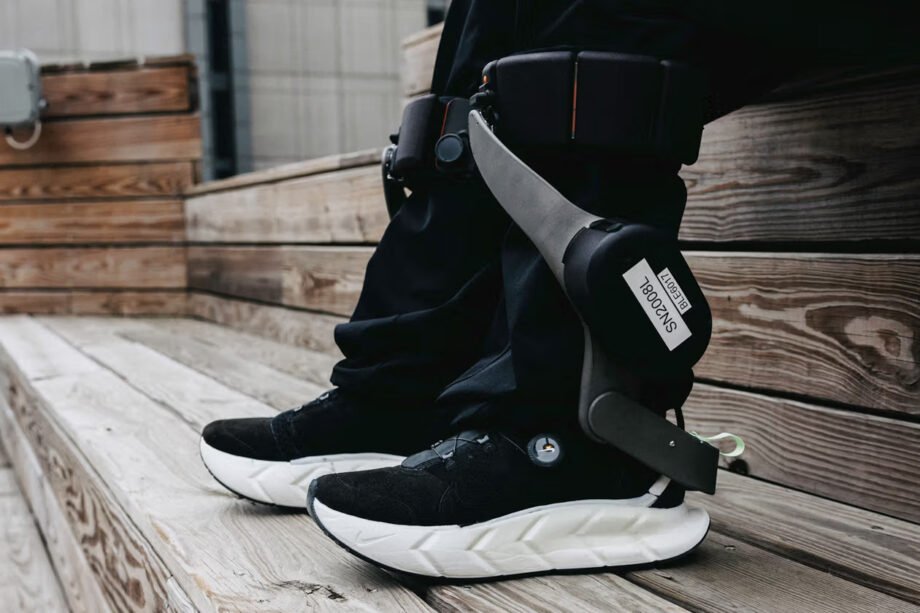
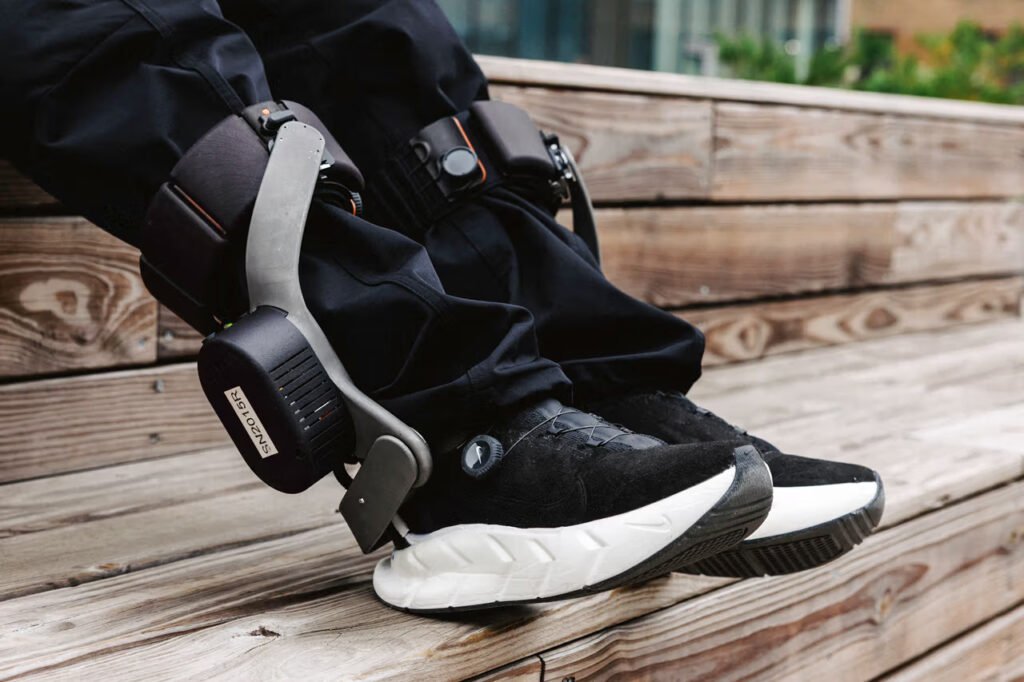
Project Amplify is Nike’s first public demonstration of powered footwear for civilian runners and walkers. Rather than relying solely on passive materials (foam, carbon plates) to store and return energy, Amplify adds active mechanical assistance via a compact motor and belt that pull on the shoe’s heel at precisely the right moment in the gait cycle. The motor and controller live in a cuff around the calf (with a rechargeable battery), and the running shoe contains a carbon-fiber plate that transfers the assist to the foot. The goal is to augment natural lower-leg movement — in effect, giving a short, timed boost that makes hills feel flatter and moderate paces easier.
Nike Project Amplify
Brian Nguyen/Hypebeast

The hardware: motor, belt, cuff, and carbon plate

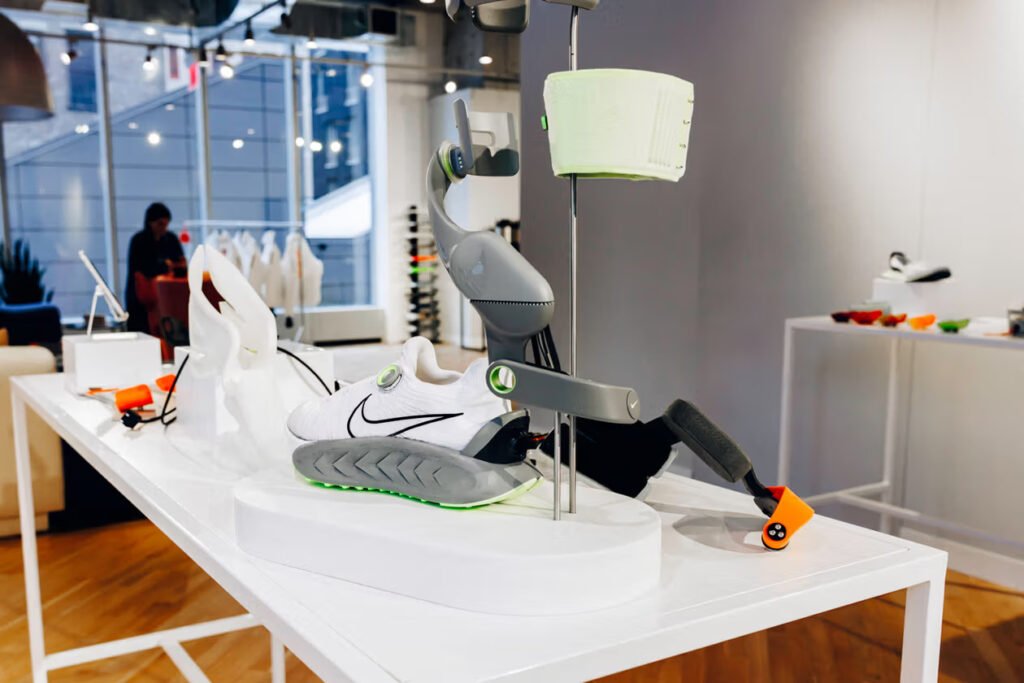
At a component level, Amplify pairs wearable robotics with what looks like a purpose-built running shoe:

  • Calf cuff + battery: a soft cuff houses the battery and controller, worn low on the calf. The pack is designed to be light and unobtrusive while delivering power to the motor.
  • Miniature motor & drive belt: a compact motor mounted near the ankle pulls a belt that connects to the shoe’s heel plate, adding upward/forward force during push-off.
  • Carbon-fiber plated shoe: the shoe includes a rigid plate and an interface point so the motor’s force transfers smoothly to the foot; the shoe can also be used as a regular sneaker without the robotics attached.
  • Sensors & adaptive control: embedded sensors (ankle angle, force) feed algorithms so the assist is timed and tuned to the wearer’s gait rather than applying a one-size-fits-all shove.

Nike has refined multiple hardware iterations during testing, improving placement, weight, and calibration to make the assist feel seamless and intuitive.


How the bionic shoe changes your stride

The assist in Project Amplify is brief and targeted: as the runner reaches push-off, the motor pulls on the heel plate so some of the work normally supplied by the calf and Achilles is done mechanically. The physiological effects reported so far include reduced perceived exertion and lower muscular demand in the calves, which translates to feeling fresher for the same pace or maintaining a faster pace for the same effort.

Academic research into ankle exoskeletons supports the idea that powered assistance can lower metabolic cost during walking and loaded gait; Nike’s Sport Research Lab measured similar trends while optimizing Amplify’s algorithms. That said, Amplify is tuned for everyday endurance and comfort — not sprint mechanics or elite record attempts — and Nike emphasizes augmentation, not takeover, of natural movement.


Who benefits most from Project Amplify?

Nike frames Amplify for the broad “everyday athlete”: recreational runners who run around a 10–12 minute mile, walkers who want longer commutes without extra fatigue, and hikers tackling sustained uphill sections. The assist is designed to extend usable range and improve enjoyment for people who stop moving because it feels hard — the same population that helped drive the e-bike revolution. Elite, competitive runners chasing seconds off race times are not the primary target for this first generation.


What testing tells us so far

Nike’s testing program combined lab protocols and outdoor field trials with hundreds of athletes across multiple prototype versions. Testers repeatedly reported that the hardware “felt like part of their body,” reduced effort on climbs, and allowed some runners to hold faster paces with less perceived strain. Independent hands-on writeups from journalists who tried early demos described a noticeable boost that didn’t feel jarring — more like a gentle assist — when tuned correctly.

Objective lab numbers from peer-reviewed exoskeleton research show powered ankle assistance can yield measurable metabolic benefits, which aligns with Nike’s goals for Amplify. Precise VO₂ or percentage-based energy savings from Nike’s tests have not been widely published, but the qualitative trends are consistent with the exoskeleton literature.
Nike Project Amplify
Brian Nguyen/Hypebeast

How Amplify compares to carbon-plate/“supershoe” technology

Modern performance shoes improve running economy through passive materials: reactive foams and rigid plates that return stored elastic energy. Amplify adds active mechanical work on top of that: it supplies power instead of just returning it.

That means Amplify can reduce muscular load and perceived exertion in ways passive shoes cannot — but at the cost of added complexity (motors, batteries), shifted weight distribution, and likely a higher price. Passive carbon-plate shoes helped push marathon times lower; Amplify aims to make everyday movement easier rather than directly targeting record-breaking performance.


Practical considerations: battery, weight, durability, and rules

A few pragmatic notes to keep in mind:

  • Battery & range: the system is rechargeable and designed for short to moderate runs; autonomy and power management are still being refined.
  • Weight & packing: the system shifts some mass to the calf cuff. Iterative design focuses on minimizing perceived weight and keeping the assist natural.
  • Maintenance & repairs: moving parts mean new maintenance categories (belts, motors, batteries) versus traditional trainers — expect different warranties and service needs when the product ships.
  • Race legality: sanctioned races are likely to restrict motorized assistance. Governing bodies regulate footwear and typically bar devices that provide external power. Check race rules before attempting official competition with any powered system.

Pros, cons, and a short verdict

Pros

  • Lowers calf and Achilles effort, especially on hills.
  • Extends walking and running range for casual athletes.

Cons

  • Added system complexity (battery, motor, belt) and likely higher price than typical running shoes.
  • Durability, repair logistics, and rule-book questions remain unresolved.

Verdict: Project Amplify is a bold, plausible next step in footwear — not a polished consumer product yet, but an exciting demonstration that active assist can be made wearable and intuitive. For everyday runners and walkers curious about a different kind of performance boost, Amplify is an innovation to watch; for elite racers or minimal-gear purists, the first releases may feel like a niche experiment.


Want to stay updated?

Project Amplify is still in testing and Nike plans more public trials and iterative releases before a broad consumer launch. Bookmark Nike’s official communications and major tech/fitness outlets for hands-on reviews and release announcements.


Sources & further reading

  • Nike press release (Project Amplify newsroom).
  • Wired feature on Project Amplify.
  • The Verge coverage and analysis.
  • Hands-on reports (GQ, Marathons.com) and design writeups.
TAGGED:carbon plate running shoesfuture of sneakersNike bionic shoeNike Project Amplifypowered running shoesrunning technologysmart footwearsports innovationwearable robotics footwear
Share This Article
Facebook Twitter Copy Link
Leave a comment

Leave a Reply Cancel reply

You must be logged in to post a comment.

Stay Up To Date!

Sign up for 3DShoes.com's mailing list where you will stay up-to-date with latest trends, drops, and more.

loader

Trending

EDDY 3D printed shoe — Full breakdown of Hek Lab’s everyday 3D-printed sneaker

Introduction — Why EDDY matters Hek Lab’s EDDY arrives at an important moment for additive-manufactured…

December 16, 2025

The Engineer Behind the Breakthrough: How David Deisenroth’s Laser Reflections Could Change Metal 3D Printing (and Footwear)

If “light caustics” sound like physics trivia, David Deisenroth is the mechanical engineer turning them…

September 11, 2025

Fitasy Stride vs Recovery Shoes — Which Is Better for Post-Run Recovery?

After a long run your legs want two things: cushion and relief. But which is…

January 31, 2026
PixelCrafted banner ad bold headline ‘Websites That Sell’, tagline ‘Custom WordPress builds that convert’, button ‘Get a Free Mockup’.
5.9kLike
4kFollow
3.7kPin
3.7kFollow
Innovation & Trends

From Rice Husks to Soles: What Itaca’s Bio-Infill Teaches Sustainable Footwear Design

3D-printed concept shoe with rice husk composite midsole demonstrating bio-based insulation principles applied to sustainable footwear.

I. When Buildings and Shoes Share the Same Problem A house wall and a shoe sole are rarely mentioned in the same sentence—yet they solve remarkably similar material problems. Both…

R_Shoes February 9, 2026

Your may also like!

Nike Project Amplify
News

What Is Nike Project Amplify? — A Complete Explainer of Nike’s Bionic Shoe

R_Shoes February 11, 2026
3D-printed concept shoe with rice husk composite midsole demonstrating bio-based insulation principles applied to sustainable footwear.
Innovation & Trends

From Rice Husks to Soles: What Itaca’s Bio-Infill Teaches Sustainable Footwear Design

R_Shoes February 9, 2026
Stride - 3D Printed Sneaker
Innovation & Trends

Fitasy Stride vs Recovery Shoes — Which Is Better for Post-Run Recovery?

R_Shoes January 31, 2026
FORMISM by SCRY
News

How Formism and Bambu Lab Are Rewriting Footwear: Inside the Persona 3D-Printable Shoe Launch

R_Shoes January 21, 2026
Our website stores cookies on your computer. They allow us to remember you and help personalize your experience with our site.

Read our privacy policy for more information.

Quick Links

  • Home
  • About
  • STL Files
  • Contact
  • Shoes

Legal

  • Privacy Policy
  • Cookie Policy (EU)
  • Disclaimer
  • Terms & Conditions

Socials

Follow US
Crafted with love by PixelCrafted.Dev ❤
Manage Consent
To provide the best experiences, we use technologies like cookies to store and/or access device information. Consenting to these technologies will allow us to process data such as browsing behavior or unique IDs on this site. Not consenting or withdrawing consent, may adversely affect certain features and functions.
Functional Always active
The technical storage or access is strictly necessary for the legitimate purpose of enabling the use of a specific service explicitly requested by the subscriber or user, or for the sole purpose of carrying out the transmission of a communication over an electronic communications network.
Preferences
The technical storage or access is necessary for the legitimate purpose of storing preferences that are not requested by the subscriber or user.
Statistics
The technical storage or access that is used exclusively for statistical purposes. The technical storage or access that is used exclusively for anonymous statistical purposes. Without a subpoena, voluntary compliance on the part of your Internet Service Provider, or additional records from a third party, information stored or retrieved for this purpose alone cannot usually be used to identify you.
Marketing
The technical storage or access is required to create user profiles to send advertising, or to track the user on a website or across several websites for similar marketing purposes.
  • Manage options
  • Manage services
  • Manage {vendor_count} vendors
  • Read more about these purposes
View preferences
  • {title}
  • {title}
  • {title}
Stay Up To Date!

Sign up for 3DShoes.com's mailing list where you will stay up-to-date with latest trends, drops, and more.

loader

Zero spam, Unsubscribe at any time.
adbanner
AdBlock Detected
Our site is an advertising supported site. Please whitelist to support our site.
Okay, I'll Whitelist
Welcome Back!

Sign in to your account

Lost your password?