

3D printed shoes look open and lightweight—but that doesn’t automatically mean your feet stay cool.
What matters is how that structure performs once it’s under load, in motion, and exposed to body heat over time.
Breathability in 3D printed footwear depends on three factors working together: structure, material, and fit. If one of these is off, airflow drops and heat builds up quickly.
Quick Answer — Are 3D Printed Shoes Breathable?
Yes, 3D printed shoes can be breathable—but only when the design supports it.
Lattice airflow shoes allow air to pass through open structures, but performance varies widely:
- Open designs with large gaps → better airflow
- Dense designs → reduced ventilation
- Fully printed shoes → more heat retention
- Hybrid designs (mesh + printed) → better cooling
Key takeaway: Some breathable TPU shoes feel cooler than traditional sneakers, but others can trap heat depending on structure, material, and fit.
What Makes 3D Printed Shoes Breathable (or Not)?
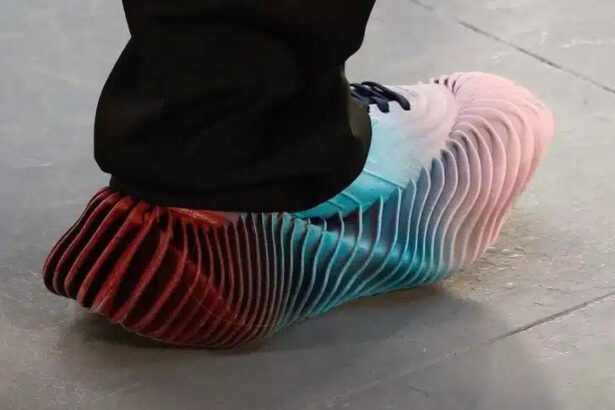
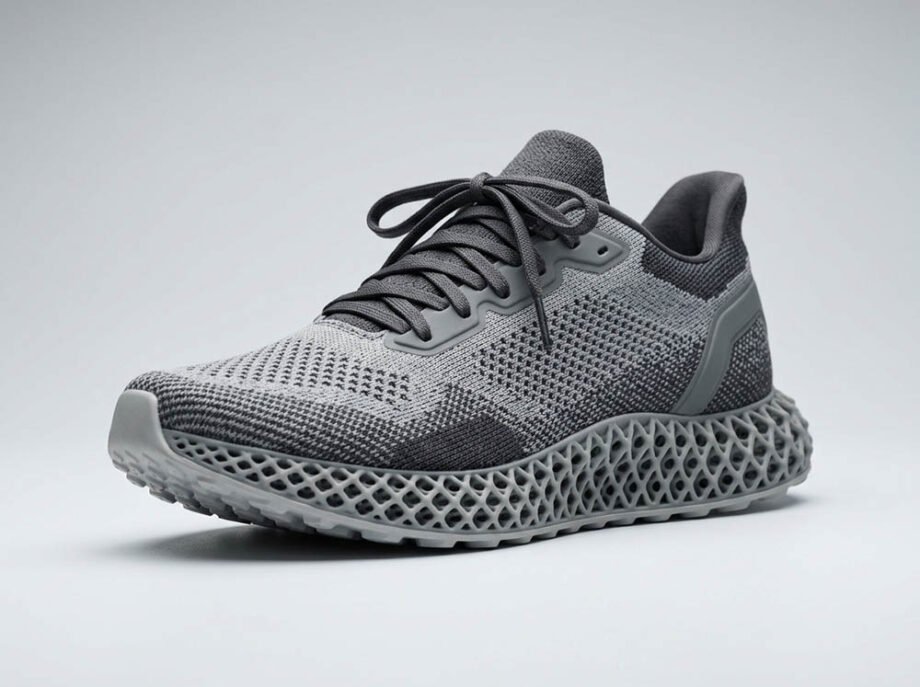
Open Lattice Structures and Airflow
Lattice structures create built-in air channels across the midsole or upper. This is where most airflow comes from.
However, airflow is highly dependent on geometry:
- Large, open cells: Allow consistent air movement
- Small, tight cells: Restrict airflow and behave more like foam
There’s also a compression factor. When you step down:
- Lattice gaps compress
- Air channels partially close
- Ventilation becomes inconsistent
So even open designs lose airflow under pressure.
Material Behavior — TPU and Heat Retention
Most 3D printed shoes use TPU, which is flexible and durable—but not breathable.
TPU behaves differently from fabric:
- It does not absorb sweat
- It does not allow vapor to pass through
- It retains heat from foot contact
This means all ventilation depends on physical openings—not the material itself.
In warm conditions, TPU can feel warmer than expected because it holds heat longer than mesh or knit materials.
Shoe Construction — One-Piece vs Multi-Material
Construction has a direct impact on breathability.
- Fully printed shoes (one-piece TPU):
Limited airflow unless the upper is extremely open - Hybrid designs (mesh + printed midsole):
Better ventilation due to breathable fabric uppers
In practical use, the upper controls most of the cooling. A well-ventilated midsole cannot compensate for a closed upper.
Do Lattice Shoes Actually Keep Your Feet Cool?
Air Circulation vs Direct Ventilation
Airflow does not always equal cooling.
Lattice airflow shoes circulate air internally, but cooling requires heat to escape. This becomes difficult when:
- Your foot blocks airflow paths
- Pressure flattens the structure
- Air becomes trapped in contact zones
As a result, some areas (heel, forefoot) can feel noticeably warmer than others.
Socks also play a major role:
- Thin socks → allow airflow to pass through
- Thick socks → block ventilation and trap heat
Moisture and Sweat Management
Moisture behaves differently inside breathable TPU shoes.
Since TPU doesn’t absorb sweat:
- Moisture stays on the skin or surface
- Evaporation depends entirely on airflow
- Drying can feel slower compared to mesh shoes
In humid conditions, this becomes more noticeable. Sweat doesn’t escape easily unless the design is highly open.
Real-World Use — How Breathable Are They Day to Day?
Casual Wear (Walking, Errands)
For short, low-intensity use, breathability is generally acceptable.
- Airflow is noticeable in open designs
- Heat buildup is minimal over short periods
- Comfort remains stable in moderate weather
For everyday errands, most designs perform well enough.
Hot Weather Performance
In hot conditions, differences become more obvious.
- Open lattice + breathable upper → manageable cooling
- Dense lattice + solid upper → heat buildup
3D printed shoes in hot weather can feel warmer than expected, especially when there is continuous contact between foot and material.
Direct sun exposure also increases TPU heat retention, making the shoe feel warmer over time.
Long Wear (All-Day Use)
Over extended periods, breathability becomes less effective.
- Heat accumulates in pressure zones
- Sweat builds up without absorption
- Airflow becomes less noticeable
Even well-designed shoes can feel warm after several hours, especially without breaks.
Athletic or Active Use
During movement, airflow increases slightly—but so does heat production.
- Walking → moderate airflow improvement
- Running or training → rapid heat and sweat buildup
This is where limitations show clearly. Fully printed shoes are less effective for sustained activity, especially in warm environments.
Common Problems and Limitations
Heat Trapping in Dense Designs
Tight lattice patterns reduce airflow and trap heat, especially under pressure.
Lack of Fabric Ventilation
Without mesh uppers, there is no direct path for heat and moisture to escape.
Sweat Accumulation and Odor
Since TPU doesn’t absorb moisture:
- Sweat remains inside the shoe
- Odor can develop faster
- Regular cleaning becomes important
Fit and Contact Issues
Fit directly affects breathability.
- Tight fit → more contact → less airflow
- Relaxed fit → more space → better ventilation
Shoes that hug the foot too closely tend to feel warmer.
3D Printed Shoes vs Regular Shoes — Which Is More Breathable?
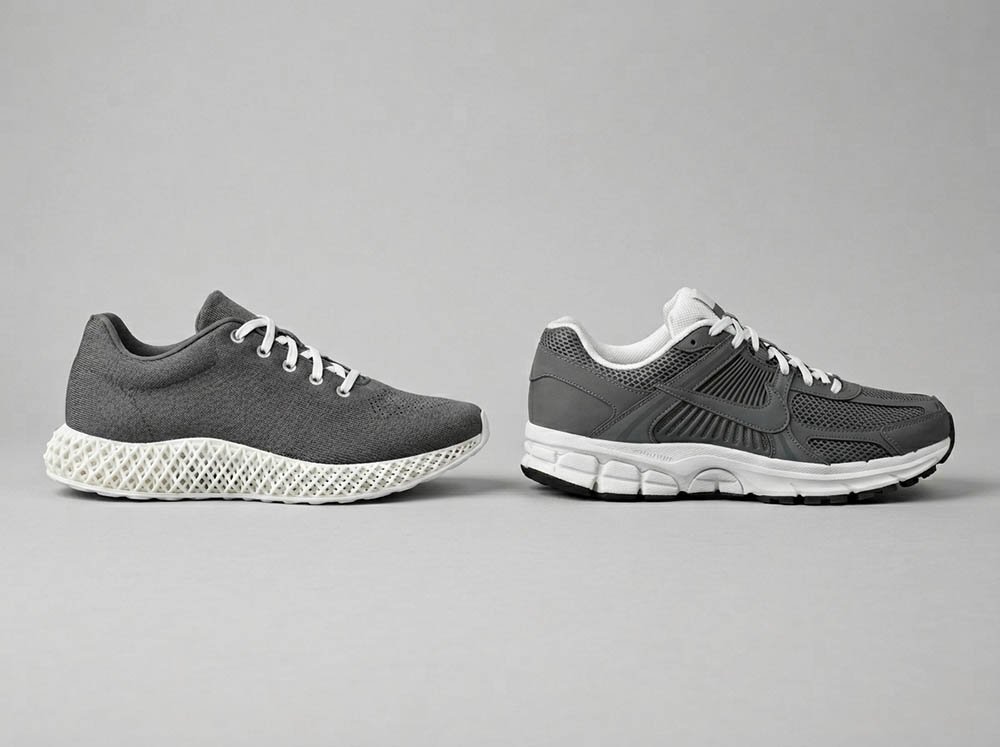
Mesh Sneakers vs Lattice Shoes
Mesh sneakers provide direct airflow through fabric, making them more effective at cooling.
Lattice airflow shoes rely on indirect airflow, which is less consistent when compressed.
Foam Midsoles vs Printed Midsoles
The midsole has minimal impact on breathability.
The upper determines airflow:
- Open, breathable upper → cooler feel
- Closed upper → heat retention
When 3D Printed Shoes Win (and When They Don’t)
They perform well when:
- The design is open and flexible
- Air can move freely through the upper
- Use is short-term or casual
They struggle when:
- The structure is dense
- The upper is closed
- Use involves long hours or high heat
Practical Advice — How to Choose a More Breathable 3D Printed Shoe
Look for Open Lattice Designs
Choose designs with visible spacing and larger air channels. Avoid compact patterns.
Choose Hybrid Uppers When Possible
Mesh uppers significantly improve ventilation compared to fully printed designs.
Consider Fit and Sizing Carefully
A slightly relaxed fit improves airflow and reduces heat buildup.
Use the Right Socks (or None)
- Thin socks → better airflow
- Thick socks → reduced ventilation
- Sockless → maximum airflow, but may affect comfort
Match the Shoe to Your Use Case
- Casual use → most designs are sufficient
- Hot weather → prioritize ventilation
- Long wear → choose the most open design available
Who Should (and Shouldn’t) Choose 3D Printed Shoes for Breathability
Good Fit For
- Casual wear in moderate climates
- Short-duration daily use
- Users who prefer lightweight, structured footwear
Not Ideal For
- Very hot environments
- Long, continuous wear
- Users prone to heavy sweating
Final Verdict — Are 3D Printed Shoes Breathable Enough?
3D printed shoes can be breathable, but only when design, material, and fit are aligned.
Airflow comes from structure—not from TPU itself. In well-designed models, ventilation can be noticeable and comfortable. In dense or fully enclosed designs, heat buildup becomes the limiting factor.
They work best when used for casual wear in moderate conditions, with open structures and proper fit.
FAQ
They can, especially if the lattice is dense or the upper lacks ventilation.
No. Mesh allows direct airflow, while lattice structures rely on indirect air movement.
Yes, but only if the design is open and well-ventilated. Closed designs may feel warm.
They don’t necessarily increase sweat, but they can trap it due to non-absorbing materials.
They can be, but heat buildup over time may reduce comfort.
Yes. Thinner socks improve airflow, while thicker socks reduce ventilation.
In most cases, yes. Hybrid designs with mesh uppers allow better airflow.