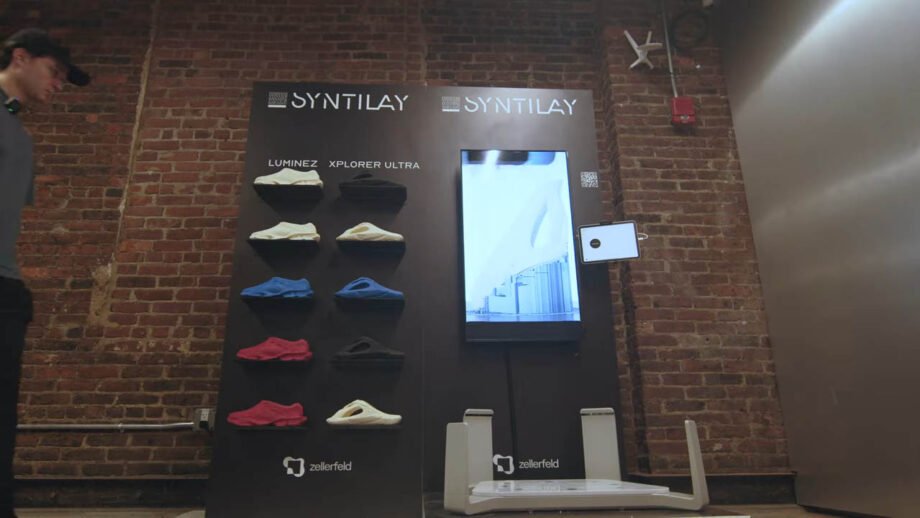
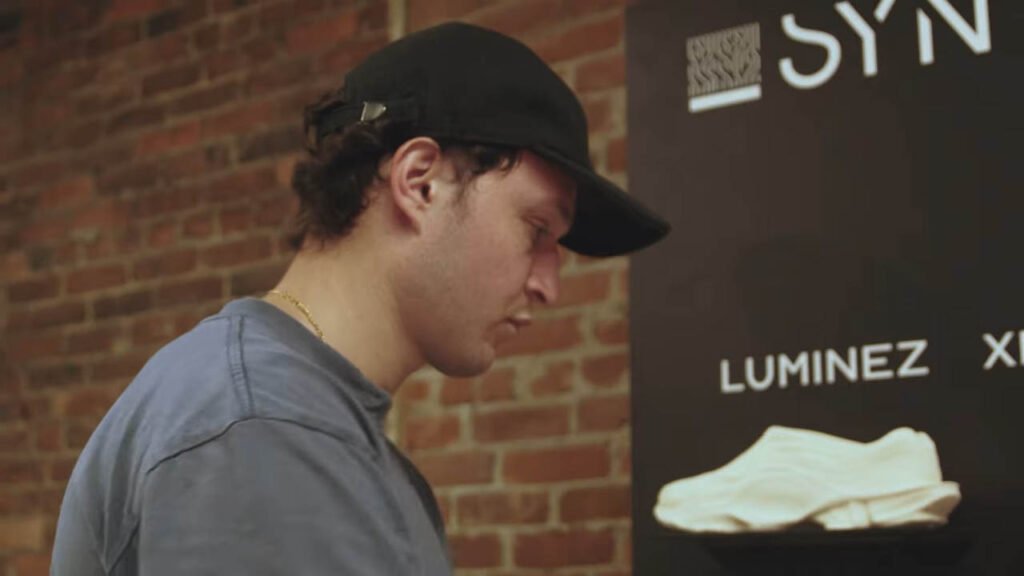
Custom fit 3D printed shoes are moving into physical retail—but can in-store scanning translate into a scalable buying process? Syntilay is testing that question directly through a Times Square activation where live foot scanning becomes part of the purchase journey.
Syntilay Tests Physical Retail for Scan-to-Shoe Footwear
Syntilay’s Times Square store marks a shift from digital-first distribution to in-person engagement. Instead of relying on online customization tools, the brand is placing its process in a high-traffic retail environment.
This activation functions as a controlled test focused on:
- Customer response to live foot scanning
- Understanding of personalized fit value
- Friction introduced during the buying process
The Times Square location prioritizes visibility. It is designed to observe behavior rather than maximize immediate conversions.
How Custom Fit 3D Printed Shoes Work in Store
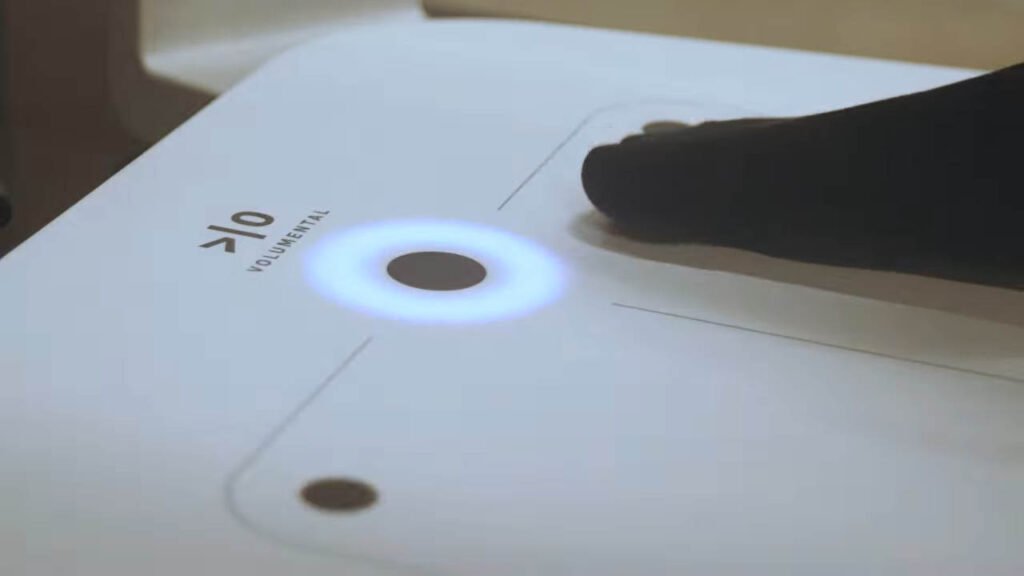
At the center of the activation is live foot scanning, replacing standard sizing with individualized data capture.
The process follows a structured sequence:
- Customer initiates scanning
- Foot geometry is captured in real time
- Data generates a personalized shoe model
- Production occurs off-site, followed by delivery
This differs from traditional retail, where purchase and fulfillment happen instantly.
While the system is straightforward, the in-store version introduces visible friction—time, explanation, and trust—that online models partially conceal.
Live Foot Scanning Shoes Change the Buying Process
Introducing scanning into retail changes how customers engage with footwear.
Instead of selecting pre-made sizes, the process becomes:
- Educational: customers must understand the value of scanning
- Sequential: scan first, receive later
- Less tactile: limited immediate product testing
This creates a hybrid retail model combining physical interaction with delayed fulfillment.
Precision improves. Convenience decreases.
In practice, this means conversion depends heavily on how clearly the value is communicated.
Why 3D Printed Shoes in Store Matter for Adoption
Bringing 3D printed shoes into a physical environment addresses a key limitation: abstraction.
Online, customization can feel theoretical. In-store, it becomes visible and tangible.
This shift supports:
- Trust building: Customers see the process directly
- Expectation clarity: Timelines and outcomes are easier to understand
However, retail also exposes weaknesses. If the process feels slow or unclear, customer drop-off happens immediately.
Retail does not just validate the model—it actively stress-tests it.
What This Means for 3D Printed Footwear
This activation signals a shift from product innovation to system validation.
If effective, it suggests:
- Scan-to-shoe workflows can operate in real-world retail
- Customers may accept delayed delivery for better fit
- Physical stores can act as onboarding points for complex products
However, the system remains incomplete.
Key constraints include:
- Throughput limits: Each scan requires time and attention
- Operational cost: Equipment and staffing increase overhead
- Customer tolerance: Many still expect immediate ownership
In practical terms, scaling depends on reducing friction without compromising accuracy.
Limitations and What Still Isn’t Solved
Despite its visibility, the model still faces structural challenges:
- Speed vs. accuracy: Faster scans may reduce precision
- Retail efficiency: Traditional stores depend on fast turnover
- Expectation gap: Immediate purchase remains the standard
For example, while scanning improves fit, it introduces a delay that conventional retail avoids. That tradeoff must be clearly justified at the point of purchase.
At this stage, the system works as a demonstration—but not yet as a frictionless retail standard.
What to Watch Next
The next phase will determine whether this model expands or remains experimental.
Key developments to monitor:
- Expansion beyond flagship locations
- Faster, more intuitive scanning systems
- Reduced production and delivery timelines
- Integration with mobile or at-home scanning
If these improve, scan-to-shoe retail could become repeatable. If not, it may remain a niche experience rather than a scalable system.
Mini FAQ
Customers scan their feet in-store, and the data is used to produce personalized shoes that are delivered later.
It is a process that captures foot geometry in real time to create custom-fit shoes instead of using standard sizes.
No. Most models use delayed fulfillment, with shoes produced after the scan and delivered later.