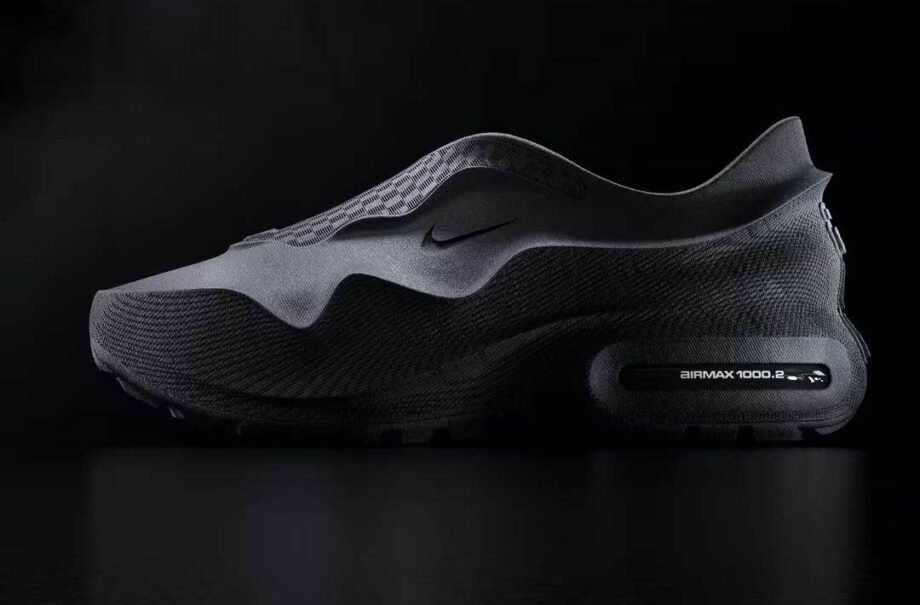
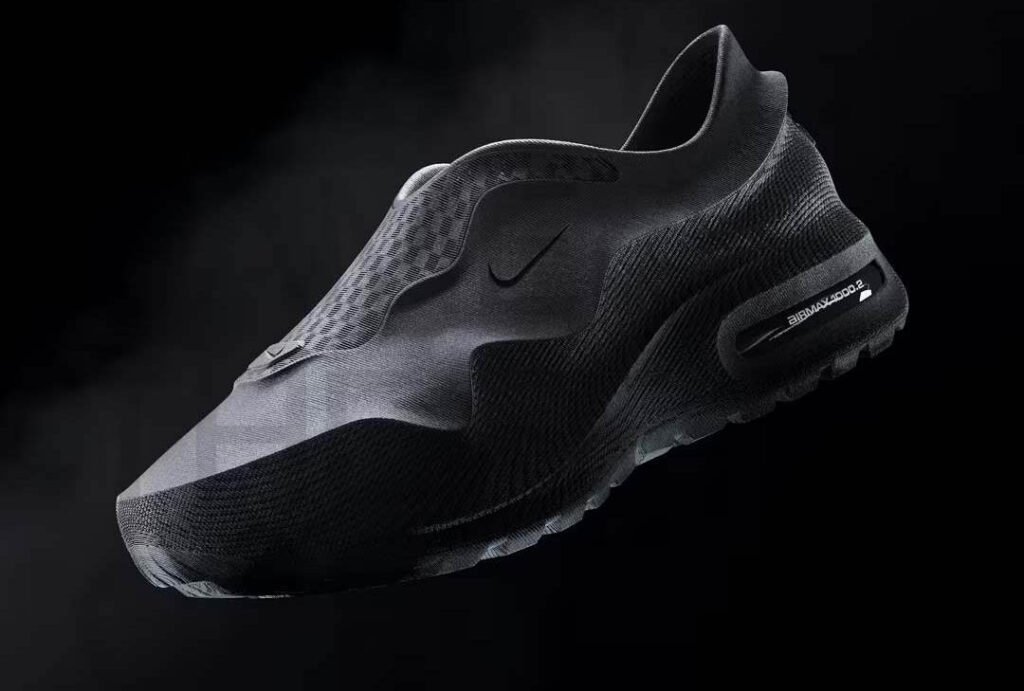
Nike has released a new 3D printed Air Max with Zellerfeld, raising a practical question for the footwear industry: can 3D printed sneakers move from experimental drops into repeatable product updates? The Nike Air Max 1000.2 is an updated version of the earlier Air Max 1000, with changes focused on production speed, outsole geometry, and wearability.
Nike Updates the Air Max 1000 With a New 3D Printed Release
The Nike Air Max 1000.2 continues Nike’s collaboration with Zellerfeld, the 3D printed footwear company known for producing fully printed, made-to-order shoes. The release builds on the original Air Max 1000, which introduced a mostly 3D printed interpretation of Nike’s Air Max platform.
The new model launched through early raffle access on Zellerfeld beginning May 4, with a Nike SNKRS release scheduled for May 7. Pricing has been reported between $179 and $200, depending on the listing source.
Nike and Zellerfeld are positioning the shoe as a refinement, not a complete redesign. That distinction matters.
This is not only a limited sneaker release with unusual manufacturing. It is an example of Nike and Zellerfeld using 3D printing to revise a footwear product between versions.
The Air Max 1000.2 keeps the same broad design direction as the earlier model while focusing on production and performance details that are harder to see at first glance.
What Changed in the 3D Printed Air Max
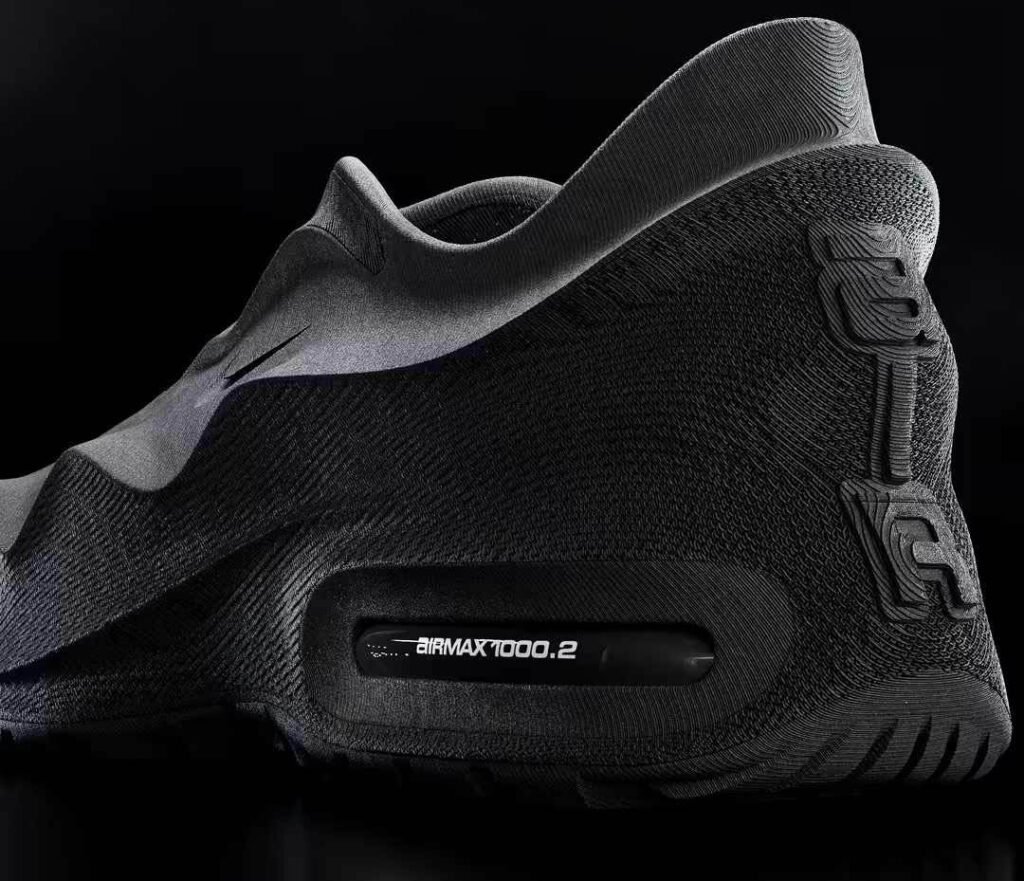
The most important update is not the colorway. Nike says the Air Max 1000.2 includes outsole shape updates and a refined lug design, creating a print that is faster to produce while remaining wearable.
Zellerfeld’s product page also describes the model as an evolution of the 3D printed Nike Air Max 1000, with refinements to geometry, performance, and print efficiency.
In practical terms, the changes appear focused on three areas:
- Outsole geometry: The lower structure has been adjusted to make the printed form more efficient.
- Lug design: The traction pattern has been refined, likely reducing unnecessary print complexity.
- Production speed: The revised shape is intended to make the shoe quicker to manufacture.
This is where the release becomes more interesting than a standard sneaker drop. Traditional footwear updates often depend on molds, tooling, supply chains, and factory-level changes.
In a 3D printed sneaker, the product can be revised through digital geometry and print parameters.
That does not make the process simple. But it changes where iteration happens.
Instead of treating every new version as a fully separate manufacturing project, the Air Max 1000.2 suggests a product model where structure, density, surface texture, and print efficiency can be tuned more directly.
Nike Air Max 1000.2 Shows a More Iterative Product Model
The phrase “updated like software” appears in Zellerfeld’s product language for the Air Max 1000.2. That wording can sound abstract, but the practical meaning is straightforward: the product file can evolve from one release to the next.
For 3D printed footwear, this is one of the clearest advantages over conventional sneaker production.
A brand can theoretically adjust:
- wall thickness
- lattice density
- outsole geometry
- texture placement
- flexibility zones
- print time
- material usage
- fit and feel across future versions
The Air Max 1000.2 does not prove that all of those changes are happening at scale yet. It does show Nike and Zellerfeld using a major sneaker platform to test a more iterative product cycle.
That is the stronger industry signal.
The original Air Max 1000 showed that Nike could translate an iconic sneaker language into a mostly 3D printed form. The Nike Air Max 1000.2 shows that the concept can be revised, reissued, and improved.
This matters because the long-term value of 3D printed Nike shoes may not come from novelty alone. It may come from how quickly a product can be updated after real-world feedback, production testing, and material learning.
Why the Zellerfeld Nike Shoes Matter Beyond the Drop
Zellerfeld has been positioning itself around on-demand, fully printed footwear. Its system is built around shoes produced without traditional stitched uppers, glued assemblies, or conventional inventory models.
The Nike partnership gives that system a more visible mainstream test case.
The Air Max 1000.2 connects several industry themes at once:
- major-brand experimentation
- digital product iteration
- lower tooling dependency
- direct-to-consumer release mechanics
- 3D printed sneaker production at limited commercial scale
For Nike, the project keeps the Air Max line connected to visible innovation without abandoning one of its most recognizable design families.
For Zellerfeld, the collaboration provides validation that its printed footwear platform can support a globally recognized brand.
Still, the most important point is practical. A faster print is not just a technical improvement. It affects whether a 3D printed shoe can become commercially realistic beyond limited drops.
If production time stays too slow, every release remains constrained by capacity. If geometry improvements reduce print time while maintaining wearability, the economics become more interesting.
That does not mean mass adoption is imminent. It means one of the main bottlenecks is being addressed directly.
What This Means for 3D Printed Footwear
The Air Max 1000.2 points to a more mature phase for 3D printed footwear. The category is moving beyond the question of whether a shoe can be printed and toward the harder question of whether printed shoes can be improved, reproduced, and sold with enough consistency to matter.
That is the real shift.
Early 3D printed footwear stories often centered on visual novelty: unusual silhouettes, futuristic surfaces, or the fact that the product was printed at all.
The Air Max 1000.2 is more grounded because its key update is operational. Nike and Zellerfeld are talking about geometry, lug design, production speed, and wearability.
Those details are not flashy, but they are more important for the category’s future.
A better-looking 3D printed sneaker can attract attention. A faster-to-produce 3D printed sneaker can change the business case.
The practical implication is that future 3D printed shoes may be judged less by whether they look experimental and more by whether the manufacturing system behind them can keep improving.
That includes fit, durability, comfort, turnaround time, cost, and availability.
The Air Max 1000.2 does not solve all of those questions. It simply makes the improvement cycle more visible.
What Is Still Not Solved
The Air Max 1000.2 is a meaningful release, but it does not mean 3D printed sneakers have reached mainstream scale.
Several limitations remain.
First, availability is still controlled. The product is tied to raffle access and platform-specific drops, not broad retail distribution. That limits how much real-world consumer feedback can be gathered compared with a general release.
Second, price remains a factor. A shoe in the $179–$200 range is not unusual for premium sneakers, but 3D printed footwear still has to prove that its value is based on more than novelty.
Third, long-term durability remains a practical question for consumers. A printed structure can be engineered for flexibility and support, but buyers will still judge it by everyday wear, traction, comfort, cleaning, and how the material ages over time.
Fourth, fit remains a broader category issue. Zellerfeld’s platform is associated with digital production and printed footwear, but the Air Max 1000.2 should not be confused with a fully custom medical or scan-to-print fit product unless the release specifically offers that level of individual customization.
That distinction matters. A 3D printed shoe is not automatically a custom-fit shoe.
Finally, sustainability claims need careful handling. 3D printing can reduce some forms of waste by changing how shoes are produced, but the total environmental impact depends on material, energy use, production location, shipping, lifespan, and end-of-life handling.
The practical clarification is simple: 3D printing may reduce certain manufacturing inefficiencies, but it is not automatically sustainable by default.


What to Watch Next
The next question is whether Nike continues to treat 3D printed Air Max releases as occasional experiments or as a developing product track.
Several signals are worth watching:
- whether more Air Max 1000.2 colorways follow
- whether Nike expands 3D printed models beyond Air Max
- whether production times continue to improve
- whether Zellerfeld gains more major-brand partnerships
- whether future releases include broader sizing, fit options, or scan-based customization
- whether printed footwear moves from raffle access into more predictable retail availability
The Air Max 1000.2 is not the final answer for 3D printed sneakers. It is a useful checkpoint.
Nike and Zellerfeld are showing that 3D printed footwear can be revised like a product platform, not just launched as a one-time concept.
The next stage will depend on whether those revisions lead to better availability, stronger wearability, and a clearer reason for consumers to choose printed sneakers over conventional ones.
Mini FAQ
The Nike Air Max 1000.2 is an updated 3D printed sneaker made with Zellerfeld. It builds on the earlier Air Max 1000 with changes to outsole geometry, lug design, and print efficiency.
The shoe is described as a 3D printed Air Max release made through Zellerfeld’s printed footwear platform. It continues the fully printed design direction associated with the original Air Max 1000.
The release matters because it shows Nike and Zellerfeld treating 3D printed sneakers as products that can be revised between versions. The focus is not only appearance, but production speed, structure, and wearability.