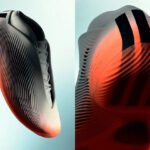
What do 3D printed shoes look like when a global footwear brand moves beyond experimental components and builds the shoe as a single structure? adidas is putting that question into commercial territory with Futurecool, a new silhouette announced August 27 with a limited release and a wider retail launch scheduled for April 2027.
adidas Moves Futurecool From 3D Printing Experiment to Product
adidas has introduced Futurecool as the latest development in its 3D-printed footwear program, building on the company’s Climacool platform.
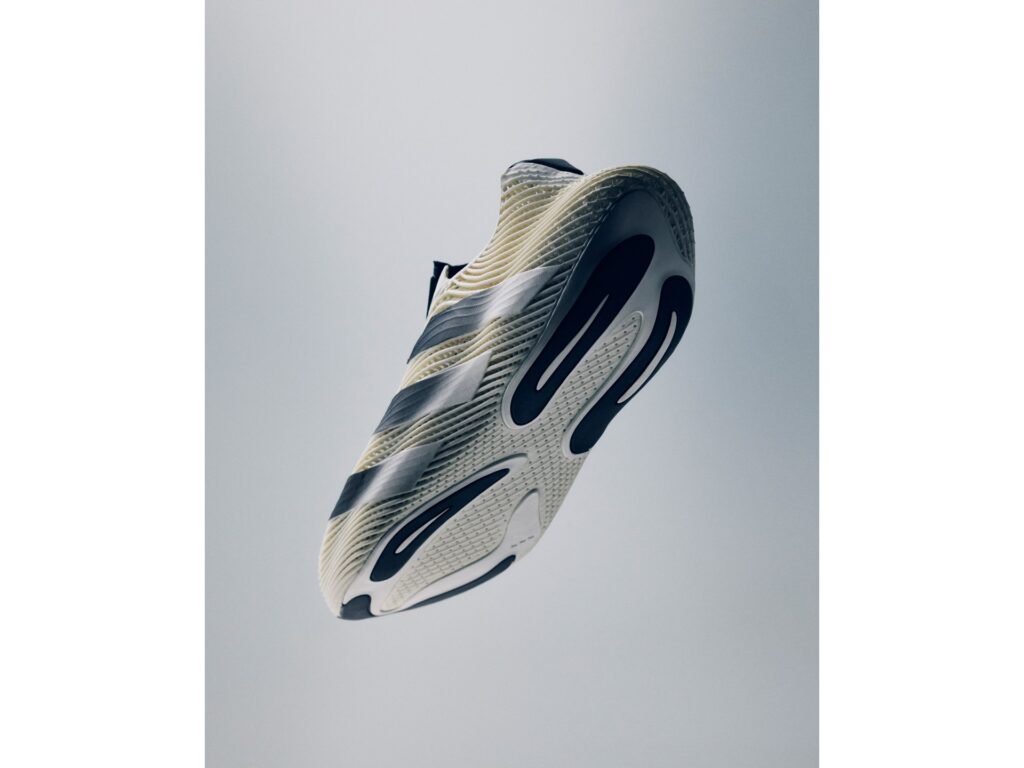
The shoe uses a seamless, single-structure construction rather than a conventional sneaker assembled from multiple major components. adidas says the manufacturing process combines resin with specialised materials through its latest additive manufacturing approach.
The commercial rollout is also clearly defined:
- 400 individually numbered pairs are being offered in the initial release.
- The first pairs are available through a CONFIRMED app raffle beginning August 28.
- The worldwide retail launch is scheduled for April 1, 2027.
- adidas lists the retail price at €180.
- The shoe will be available in unisex UK sizes 4–14.
That combination of a limited technology-focused release and a scheduled global launch makes Futurecool more significant than a concept or design study.
adidas is not presenting 3D printing simply as a demonstration of manufacturing capability. It is attaching the technology to a product with a defined price, size range and retail timetable.
What Changed in adidas 3D Printing With Futurecool?
Futurecool extends the direction adidas established with its 3D-printed Climacool footwear, but the construction takes the concept in a new direction.
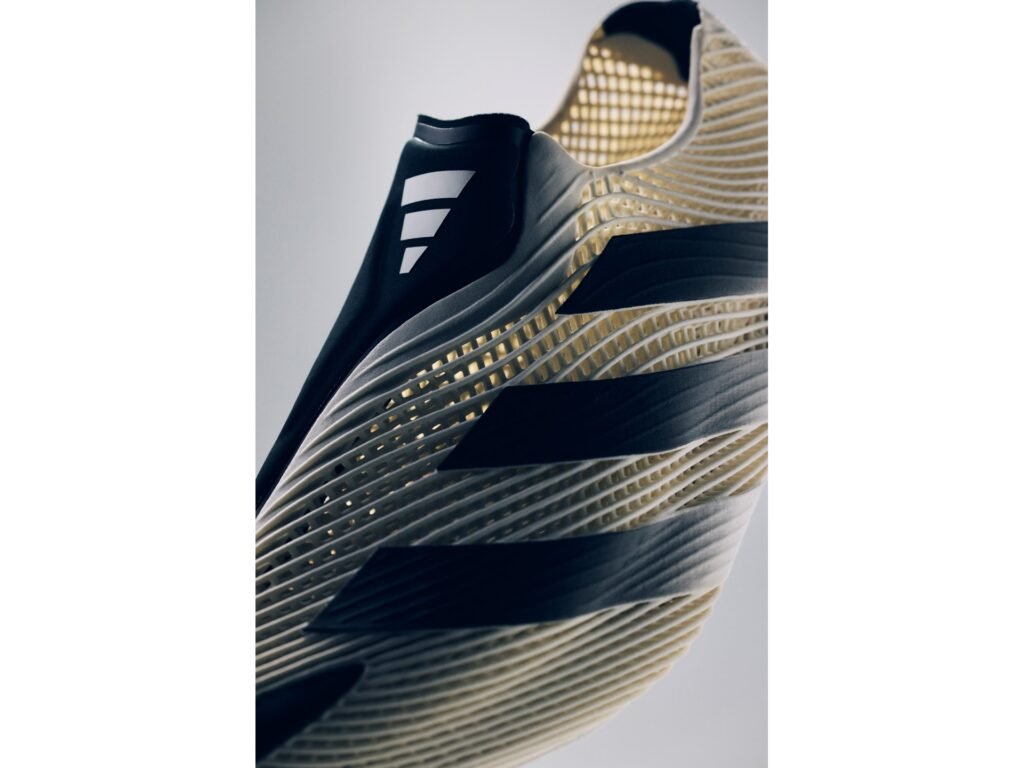
Rather than using additive manufacturing only for an individual sole or midsole component, Futurecool is 3D-printed as a single, seamless structure. adidas says the construction is designed to provide 360-degree breathability, adaptive comfort and a second-skin feel.
The open structure is central to the design. Its geometry creates space around the foot while allowing adidas to shape the shoe directly through its digital manufacturing process.
That is one of the practical advantages of additive manufacturing. Designers can produce complex three-dimensional structures directly from digital models rather than relying entirely on conventional cutting, molding and assembly processes.
Futurecool therefore changes what the manufacturing process can control.
The important question is no longer only whether a company can 3D-print a footwear component. It is whether the technology can reliably produce a complete consumer product at a commercially viable scale.
3D Printed Shoes Enter a More Defined Retail Model
The commercial structure surrounding Futurecool is as important as the shoe itself.
The initial 400-pair release gives adidas a controlled introduction before the April 2027 global launch. It places a limited number of individually numbered products into consumers’ hands while leaving several months before the wider retail rollout.
For 3D printed shoes, this creates an important distinction between a technology demonstration and a commercial product.
A demonstration can prove that a particular geometry or material can be printed. A retail product has to satisfy additional requirements:
- repeatable production
- consistent dimensions
- acceptable durability
- predictable fit
- manufacturing throughput
- quality control
- retail pricing
- consumer demand
adidas has not disclosed production volumes or manufacturing throughput for the planned global launch. That makes it too early to conclude that Futurecool has solved the economics of large-scale 3D-printed footwear production.
The April launch is therefore an important milestone to watch rather than proof that additive manufacturing has already reached the efficiency of conventional footwear production.
What This Means for 3D Printed Footwear
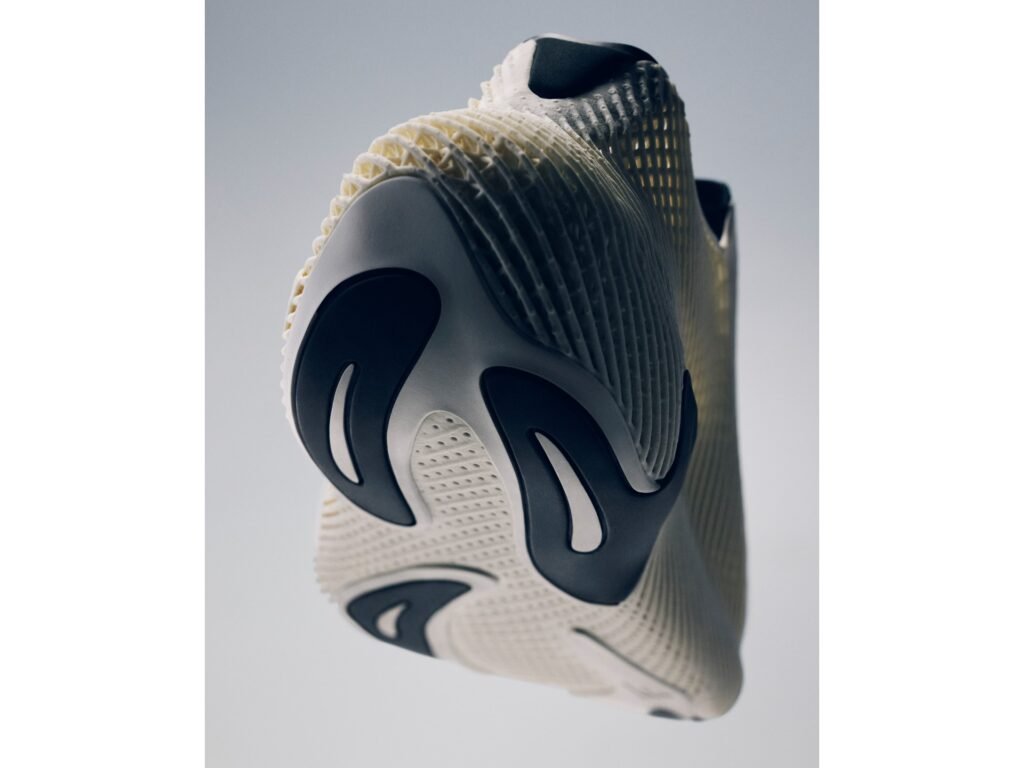
Futurecool suggests that adidas is treating 3D printing as a product architecture, not simply as another manufacturing technique.
That distinction matters because the geometry of a printed structure can influence several characteristics at the same time. Ventilation, flexibility, support and appearance can be incorporated into the structure itself.
In conventional footwear, these characteristics are often distributed across different materials and components. A designer may use a separate upper, midsole, outsole, overlays and structural elements, each produced through different processes.
A digitally manufactured structure approaches the problem differently.
The practical implication is that footwear designers have more freedom to connect geometry with product performance. That does not automatically make a 3D-printed shoe better; it changes the design and manufacturing options available to the brand.
Futurecool also gives adidas another commercial silhouette within its growing 3D-printed footwear strategy. The brand has continued developing the Climacool platform, including additional 3D-printed footwear releases in 2026.
The broader industry signal is not that conventional sneakers are about to disappear.
It is that major footwear brands are increasingly testing whether additive manufacturing can support recognizable, commercially priced products rather than remaining limited to prototypes and technical demonstrations.
The Limits of Futurecool Are Still Important
There are still several unanswered questions.
adidas has described Futurecool’s breathability, comfort and durability characteristics, but the launch announcement does not provide independent long-term wear data or detailed comparative testing against conventionally manufactured footwear.
That matters because a complex printed structure can demonstrate what additive manufacturing makes possible without proving how the product performs after months of everyday use.
The detailed manufacturing process and material formulation have also not been fully disclosed. Without those details, it is difficult to assess production speed, material efficiency or the precise economics of scaling the technology.
The €180 retail price also does not establish whether 3D printing reduces manufacturing costs.
The technology may initially be justified by design freedom, product differentiation and new construction possibilities rather than lower production costs.
There are practical questions around repair, cleaning and end-of-life processing as well.
A seamless printed structure can reduce the number of assembled components, but that does not automatically make a shoe easier to repair or recycle. Those issues become more important if adidas moves from hundreds of pairs to substantially larger production volumes.
Futurecool therefore demonstrates a commercially serious direction, but it does not show that every operational challenge surrounding 3D-printed footwear has been solved.
What to Watch Next
The next major milestone is the transition from the 400-pair limited release to the planned April 2027 global launch. That period should provide a clearer indication of whether Futurecool remains a technology-focused limited product or becomes part of a repeatable commercial footwear platform.
Several developments will be particularly important:
- Production scale: How many pairs adidas can manufacture for the global launch.
- Manufacturing consistency: Whether the single-structure process maintains reliable quality at larger volumes.
- Consumer response: Whether buyers value the construction beyond its distinctive appearance.
- Wear performance: How the printed structure performs over extended use.
- Product expansion: Whether adidas applies the manufacturing approach to additional footwear categories.
The most important development may ultimately be what comes after Futurecool.
If adidas applies similar additive manufacturing systems across multiple silhouettes, the significance will move from one new sneaker to a broader change in how footwear is designed and produced.
For now, Futurecool is a clearly defined commercial test: a 3D-printed shoe with 400 individually numbered pairs, a €180 price point and a scheduled worldwide launch on April 1, 2027. That makes it one of the clearest current indicators that 3D printed shoes are moving further into mainstream product development.
Mini FAQ
What is the adidas Futurecool?
The adidas Futurecool is a new 3D-printed shoe built as a single, seamless structure using additive manufacturing and specialised materials.
When does the adidas Futurecool release?
A limited run of 400 individually numbered pairs began through the CONFIRMED app on August 28, 2026. The worldwide retail launch is scheduled for April 1, 2027.
How much will the adidas Futurecool cost?
The worldwide retail price is €180, with the shoe offered in unisex UK sizes 4–14.