What does a classic basketball sneaker look like when it is rebuilt as a digital product? Reebok 3D printed shoes enter a new commercial phase with the Question 96/26, a Zellerfeld-produced reinterpretation of Allen Iverson’s first signature model released for the Question’s 30th anniversary.
Reebok Brings the Question Into 3D Printed Footwear
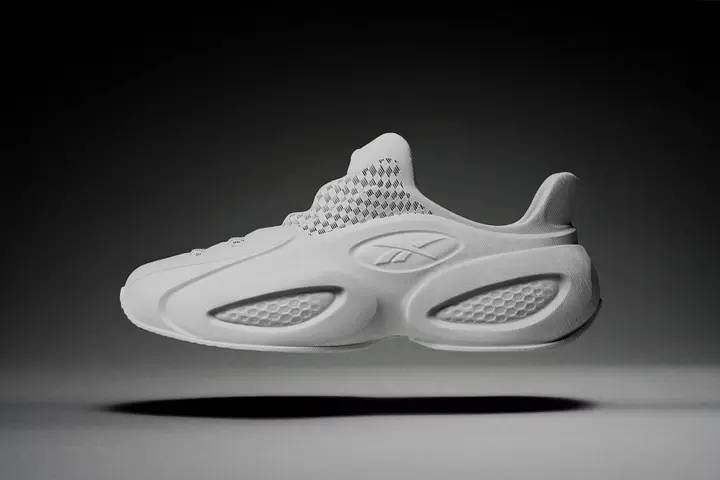
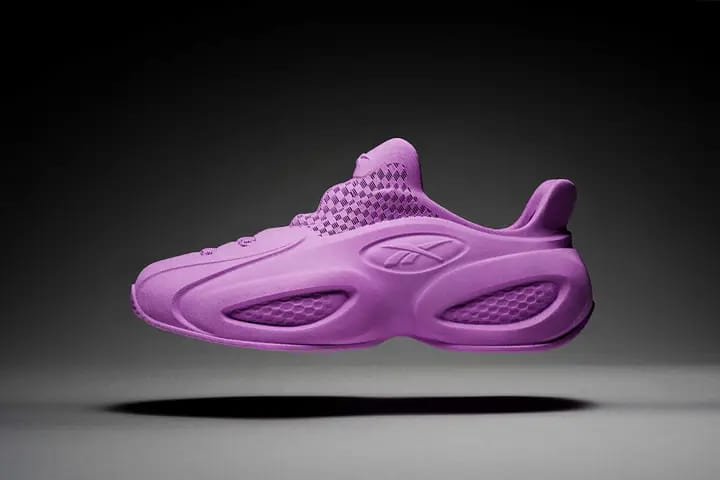
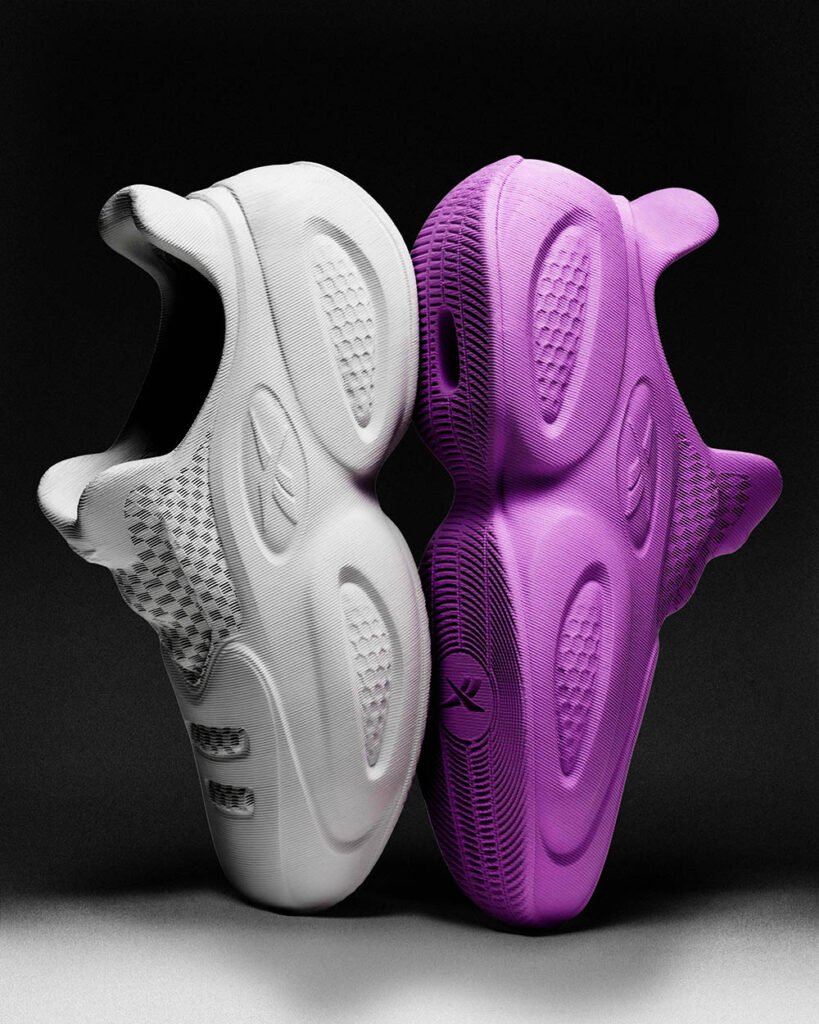
Reebok and Zellerfeld are marking 30 years of the original Question with a fundamentally different approach to footwear construction. The Question 96/26 retains recognizable elements from Iverson’s 1996 signature shoe, including its sweeping lines, oval midsole windows and honeycomb-inspired structure, but it is not a one-to-one retro recreation.
Instead, Zellerfeld turns the Question into a digitally manufactured product. The Question 96/26 is scheduled to launch in Stone and Lilac on August 25, exclusively through Zellerfeld, with the current product listing showing a $169 price.
That distinction matters. Reebok is not simply reproducing an existing basketball shoe with a 3D printer. The Question 96/26 changes the construction, silhouette and manufacturing process at the same time.
How the Reebok Question 96/26 Uses 3D Printing
The most significant change is the construction itself.
Zellerfeld produces the shoe through additive manufacturing instead of assembling a conventional upper, midsole and outsole through traditional footwear processes. Industry reporting describes a single-piece construction using Zellerfeld’s proprietary TPU-based zellerFOAM, with different material densities used across the shoe.
Zellerfeld says the Question 96/26 is made with Zellerfoam, which it describes as breathable and reusable. The company also says the shoe is reengineered around the customer’s own sizing requirements.
The manufacturing model also differs from conventional footwear production. Zellerfeld says the Question 96/26 is printed in Austin and Hamburg, placing production within its own distributed manufacturing network.
Several details distinguish the new model from the 1996 Question:
- It uses a digitally manufactured, 3D-printed construction.
- The silhouette is lower and more slip-on oriented than the original Question Mid.
- The original Question’s visual language returns through the oval midsole windows and honeycomb-inspired geometry.
- Zellerfeld says the shoe is reengineered to fit individual sizing requirements.
- Production takes place through Zellerfeld’s Austin and Hamburg facilities.
The result is closer to a digital reinterpretation of the Question than a conventional anniversary retro.
Reebok 3D Printed Shoes Move Into Commercial Release
The commercial context makes the Question 96/26 particularly significant.
3D-printed footwear has appeared in major-brand prototypes and experimental programs before. The Question 96/26 takes a different step by placing additive manufacturing inside a recognizable sportswear franchise with a defined retail price and consumer release.
The shoe is priced at $169 on Zellerfeld’s current listing and is scheduled for a limited release on August 25. Zellerfeld lists the product as shipping from its Austin and Hamburg facilities.
That does not prove that 3D printing is ready to replace conventional basketball-shoe manufacturing. It does establish something more practical: Reebok is using additive manufacturing to reinterpret an established footwear property and sell the resulting product directly through Zellerfeld.
That distinction matters because footwear manufacturing is not only a design problem. It also involves production volume, consistency, material performance, logistics, sizing and cost.
The Question 96/26 gives the industry a real commercial product against which some of those questions can be tested.
What This Means for 3D Printed Footwear
The Question 96/26 points toward a shift from 3D printing as a manufacturing technique to 3D footwear as a digital product system.
In conventional footwear, a brand develops a physical product, produces inventory in advance and distributes it through a retail network. A digitally manufactured shoe can potentially work differently: the design exists digitally, customer sizing can be incorporated into production, and manufacturing can take place closer to demand.
Zellerfeld explicitly promotes the Question 96/26 as reengineered to fit individual sizing requirements.
The practical implication is straightforward: the digital file becomes part of the product.
That creates possibilities for future revisions, individualized geometry and production across different locations without requiring the same physical tooling associated with conventional footwear. Those possibilities are not proven mass-market benefits yet, but they represent a meaningful change in product development.
The Reebok collaboration also demonstrates another important point. 3D printing does not require designers to abandon recognizable footwear identities.
The Question 96/26 retains enough of Iverson’s original design language to remain recognizable while changing the underlying construction. That creates a middle ground between heritage footwear and digitally native design.
What the Question 96/26 Has Not Solved
The launch should not be treated as evidence that 3D printed basketball shoes are ready to replace conventional performance footwear.
The available product information does not establish that the Question 96/26 is intended to serve as a professional on-court basketball shoe. Its lower-cut, slip-on-oriented design and digitally manufactured construction make it materially different from the original Question basketball model.
There are also unanswered questions around long-term durability, high-impact performance, traction and broader consumer adoption.
Those questions require sustained real-world use rather than simply demonstrating that the manufacturing technology works.
The personalized-fit proposition also needs practical validation.
Zellerfeld says the shoe is reengineered to fit individual sizing requirements, but a customizable digital shoe still has to deliver consistent comfort and fit across different feet.
Finally, the limited release does not demonstrate mass-market production economics.
A $169 retail price is notable, but one limited product cannot establish that additive manufacturing is already competitive with the enormous production volumes and mature supply chains of conventional footwear.
The significance of the Question 96/26 is therefore not that it solves these problems. It is that Reebok and Zellerfeld are putting a commercial product into the market where those questions can begin to be tested.
What to Watch Next
The immediate test is the August 25 launch.
The first issue to watch is whether the Question 96/26 generates enough demand to justify further production and whether Zellerfeld can maintain its stated delivery window as orders increase. The current product listing gives an estimated delivery time of three to four weeks.
The second is consumer response to the digitally manufactured construction and personalized sizing. Positive feedback on fit and comfort would provide stronger evidence for individualized 3D footwear beyond the novelty of the technology.
The third is whether Reebok extends the approach beyond this anniversary model.
A single collaboration can remain an experiment. A sequence of commercially released 3D-printed Reebok products would indicate something more substantial: that additive manufacturing is becoming part of the brand’s product-development strategy.
For Zellerfeld, the bigger question is whether the Question 96/26 becomes another isolated collaboration or demonstrates a scalable model for licensed, personalized footwear.
The answer will depend less on the novelty of seeing Allen Iverson’s Question recreated in 3D and more on what happens after customers actually receive the shoes.
Mini FAQ
Is the Reebok Question 96/26 3D printed?
Yes. Zellerfeld produces the Question 96/26 through its additive-manufacturing process as a digitally manufactured footwear product.
Who makes the 3D printed Reebok Question 96/26?
Reebok developed the collaboration with Zellerfeld, which handles the 3D printing and production of the shoe. Zellerfeld says the model is printed in Austin and Hamburg.
When does the Reebok Question 96/26 release?
The Question 96/26 is scheduled to release August 25, 2026, exclusively through Zellerfeld. The current Zellerfeld listing gives a $169 price.