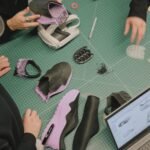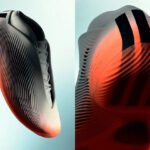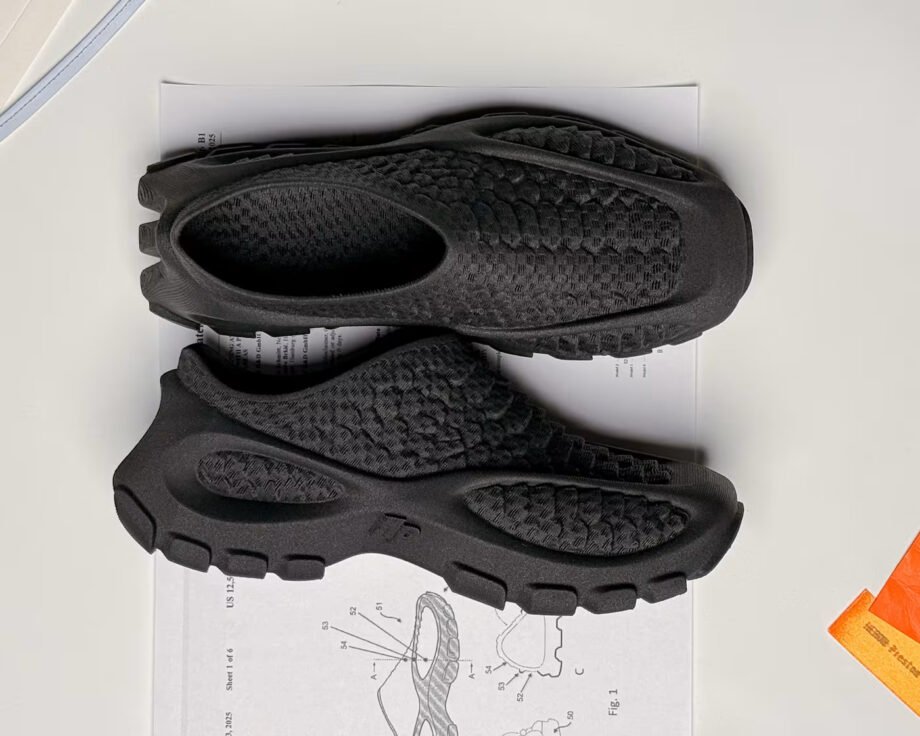
Heron Preston and Zellerfeld are bringing back the HERON01, a 3D printed sneaker that helped define one of the earliest fashion-led experiments in fully printed footwear. Can the return of a 2021 silhouette show how far 3D printed shoes have moved from prototype culture toward limited commercial releases?
The latest release positions the HERON01 sneaker less as a futuristic concept and more as a product from a platform that has continued refining its materials, fit systems, and digital production process.
Heron Preston and Zellerfeld Bring HERON01 Back to Market
The HERON01 has returned in an all-black version, bringing renewed attention to one of Zellerfeld’s earliest and most recognizable footwear collaborations.
The shoe originally appeared in 2021, when fully printed footwear was still a narrow experimental category. At the time, the project stood out because it was not only a printed midsole or component. It was presented as a fully 3D printed shoe, including the upper and sole structure.
That distinction still matters. Many footwear brands use additive manufacturing for midsoles, plates, or tooling. The HERON01 sits in a smaller category of shoes built around a printed one-piece construction approach.
The latest Zellerfeld HERON01 release also arrives in a different market than the original. Since 2021, 3D printed footwear has gained more visibility through collaborations, platform launches, and limited releases from both independent creators and larger footwear brands.
For Heron Preston, the return gives the design a second commercial moment. For Zellerfeld, it reinforces the company’s role as a production platform for designers who want to bring printed footwear to market without conventional shoe tooling.
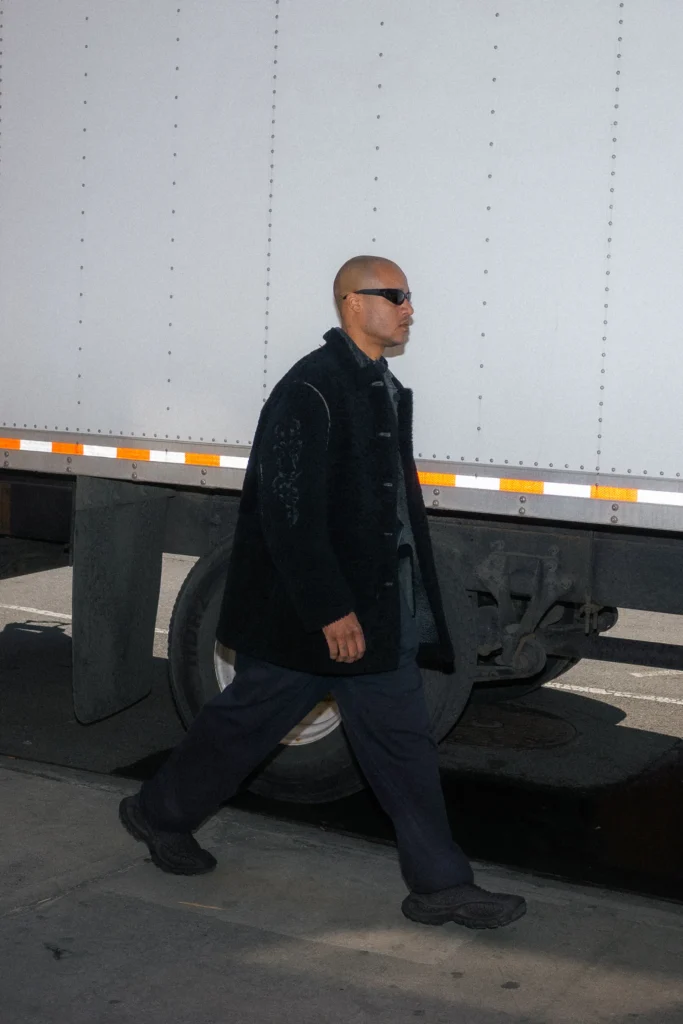
A 3D Printed Sneaker Built Around One-Piece Construction
The HERON01 sneaker is designed as a slip-on silhouette with a sculptural, all-black form. Its main technical point is the fully printed construction, rather than a traditional assembly of stitched, glued, and layered materials.
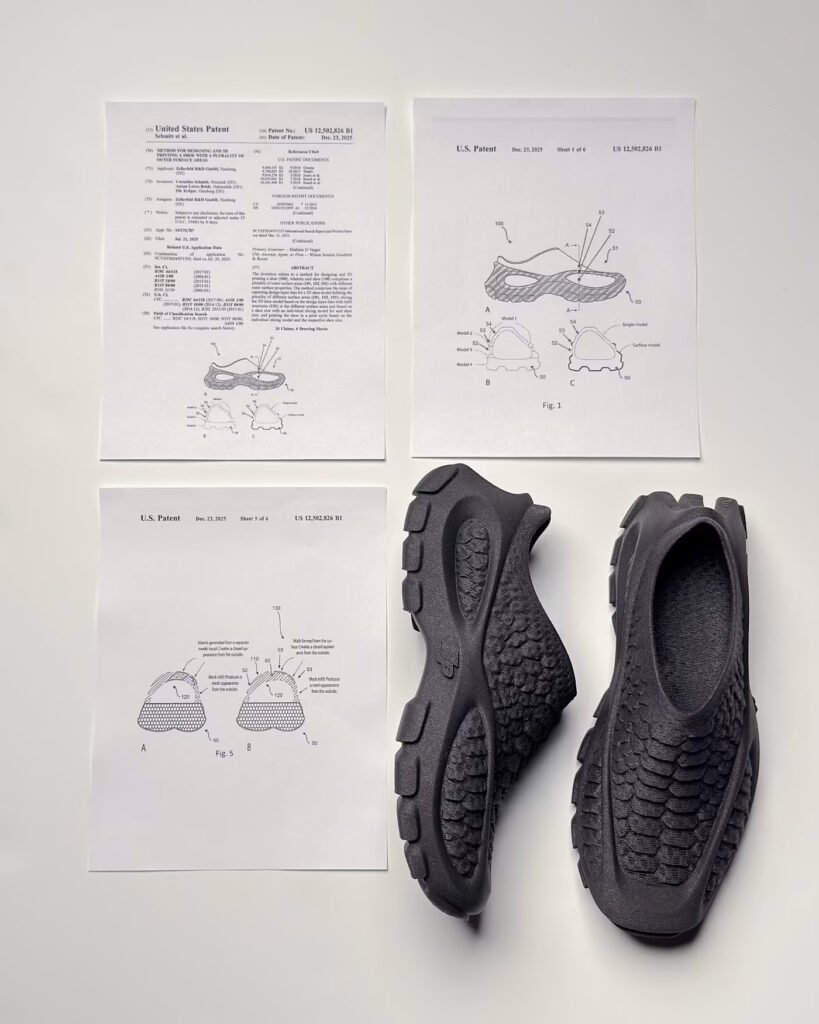
Zellerfeld describes the latest version as printed with ZellerFOAM, a TPU-based material designed for flexibility, cushioning, and everyday wear. The shoe also uses ZellerMESH for breathable structure and TextureMap for programmed surface detail across the silhouette.
In practical terms, the HERON01 is not trying to imitate a standard leather or mesh sneaker. It uses the visual language of 3D printing as part of the design.
The product structure points to several key differences from conventional sneakers:
- fewer separate material layers
- no traditional stitched upper construction
- a printed upper and sole system
- digital surface texture built into the design
- production that depends more on software, material control, and print process than standard cut-and-sew tooling
That does not automatically make it better than traditional footwear. It does make the shoe a useful case study for how printed sneakers can create shapes and structures that would be difficult to manufacture through standard production.
What Changed Since the Original HERON01 Release
The return of the HERON01 is not only about bringing back an early collaboration. The larger context is that Zellerfeld’s platform has matured since the shoe first appeared.
In 2021, the HERON01 was largely read as a proof of concept. It showed that a designer could use 3D printing to create a wearable shoe with an unconventional structure and a direct-to-consumer release model.
In 2026, the same silhouette enters a market where printed footwear is more familiar, even if still niche. Zellerfeld has worked with more designers and brands, while consumer awareness of 3D printed sneakers has expanded through higher-profile releases and custom-fit footwear discussions.
The updated product language reflects that shift. Instead of focusing only on the novelty of a printed shoe, the current release emphasizes material systems, breathability, surface programming, comfort, and everyday use.
That is an important change. For 3D printed footwear to move forward, the conversation has to shift from “this was printed” to “this works as footwear.”
The HERON01 still carries the visual identity of an experimental shoe. But its commercial framing is now more product-focused, with pricing, delivery timing, and direct online availability making it easier to evaluate as a real release rather than only a design statement.
Why the HERON01 Release Matters for Zellerfeld
For Zellerfeld, the HERON01 functions as both a product and a reference point.
It reminds buyers and industry observers that Zellerfeld’s model is not limited to one brand, one silhouette, or one performance category. The company’s platform is built around enabling different creators to release printed footwear through a digital manufacturing workflow.
That is the more important business signal. Zellerfeld is not only selling shoes. It is building a system where designers can develop, refine, and produce footwear without relying on traditional manufacturing infrastructure.
The HERON01 helps communicate that model because it has history. It was one of the early public examples of what a designer-led, fully printed sneaker could look like. Bringing it back now lets Zellerfeld show continuity between its early experiments and its current commercial platform.
It also gives Heron Preston’s design a different role. Instead of being treated only as an early experiment, the shoe now sits closer to an archive release within the emerging history of 3D printed sneakers.
That is useful for the category. Footwear markets often mature when products begin developing memory, not just novelty. A returning silhouette suggests that printed footwear can build its own references, reissues, and collector interest.
What This Means for 3D Printed Footwear
The HERON01 release shows that 3D printed footwear is developing in two directions at once.
One direction is technical: better materials, more controlled fit systems, improved digital production, and more practical wearability. The other direction is cultural: recognizable silhouettes, designer archives, limited drops, and collaborations that give the category a stronger identity.
That combination matters because footwear is not adopted on technology alone. A shoe still has to look desirable, feel wearable, fit the buyer, and arrive through a purchase experience that makes sense.
The HERON01 does not solve every challenge facing 3D printed sneakers. What it does show is that the category is beginning to build continuity. Early projects are returning, platforms are improving, and buyers are seeing more printed shoes presented as actual products rather than isolated experiments.
The practical clarification is simple: a returning HERON01 does not mean fully printed sneakers are mainstream. It means the niche is becoming more structured, with clearer product cycles and stronger brand storytelling.
For 3D printed footwear, that may be just as important as the printing process itself.
Reality Check: What Is Not Solved Yet
The HERON01 is still a limited and specialized product. Its return does not remove the main barriers that continue to shape the 3D printed sneaker market.
The biggest unresolved questions are still practical:
- long-term durability compared with conventional sneakers
- comfort across different foot shapes
- return and exchange friction for printed or made-to-order footwear
- production speed at larger scale
- consumer trust beyond early adopters
- price sensitivity outside niche fashion and sneaker audiences
A fully 3D printed shoe can reduce some traditional manufacturing complexity. It also creates new expectations around fit, material performance, and delivery reliability.
The delivery window matters as well. Buyers used to standard sneaker retail may see multi-week delivery as a tradeoff, especially when comparing the HERON01 with conventional footwear available immediately.
There is also a distinction between design credibility and mass-market readiness. Heron Preston gives the release cultural relevance, while Zellerfeld provides the technology platform. Broader adoption will depend on whether printed sneakers can consistently match buyer expectations after repeated wear.
That is the realistic position: the HERON01 is meaningful, but it is not proof that the category has already crossed into mainstream footwear.
What to Watch Next
The next question is whether Zellerfeld can keep turning designer-led releases into repeatable commercial products.
Three developments are worth watching.
First, the company’s ability to reduce delivery times will matter. Faster production would make printed shoes feel closer to standard retail, especially for buyers who are not already committed to the technology.
Second, fit and comfort feedback will become increasingly important. If buyers treat the HERON01 as more than a collectible design object, real-world wear impressions will shape how the release is judged.
Third, more archive-style returns could signal a new phase for 3D printed sneakers. If early printed silhouettes begin coming back in updated versions, the category could start building its own release history rather than relying only on novelty.
The HERON01 release does not need to be framed as a breakthrough. Its importance is quieter but still meaningful: an early fully printed sneaker has returned at a time when the infrastructure around 3D printed footwear is more developed than it was five years ago.
Mini FAQ
What is the HERON01 sneaker?
The HERON01 is a fully 3D printed shoe created through a collaboration between Heron Preston and Zellerfeld. It uses a printed upper and sole structure rather than a conventional stitched sneaker build.
Is the Zellerfeld HERON01 a fully 3D printed shoe?
Yes. The HERON01 is positioned as a fully 3D printed shoe, with the main structure produced through Zellerfeld’s printed footwear platform.
Why is the Heron Preston Zellerfeld release important?
The release matters because it brings back an early designer-led 3D printed sneaker at a time when printed footwear is becoming more commercially structured and better understood by buyers.