

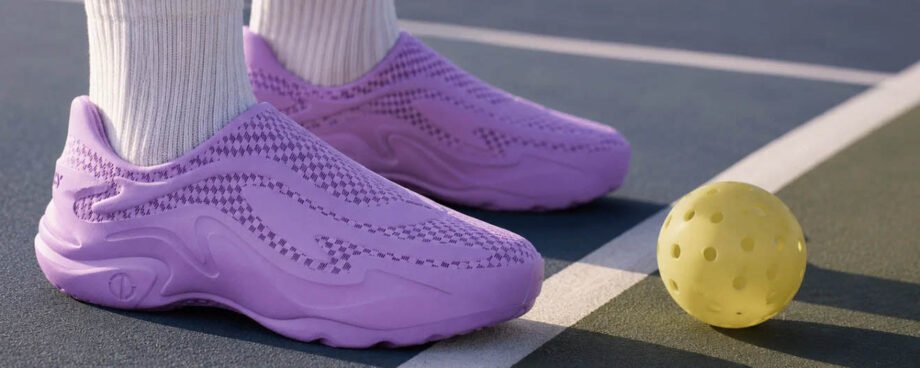
Syntilay has launched a custom 3D printed recovery shoe with Terrell Owens, bringing scan-based footwear personalization into pickleball recovery. Can a recovery shoe built around a player’s foot scan offer a more practical use case for 3D printed footwear than another concept sneaker?
The release positions the Syntilay TO Reset as both a sport-specific recovery product and a test of how individualized footwear can move closer to commercial use.
Syntilay Moves Into Pickleball Recovery With TO Reset
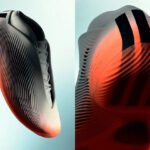
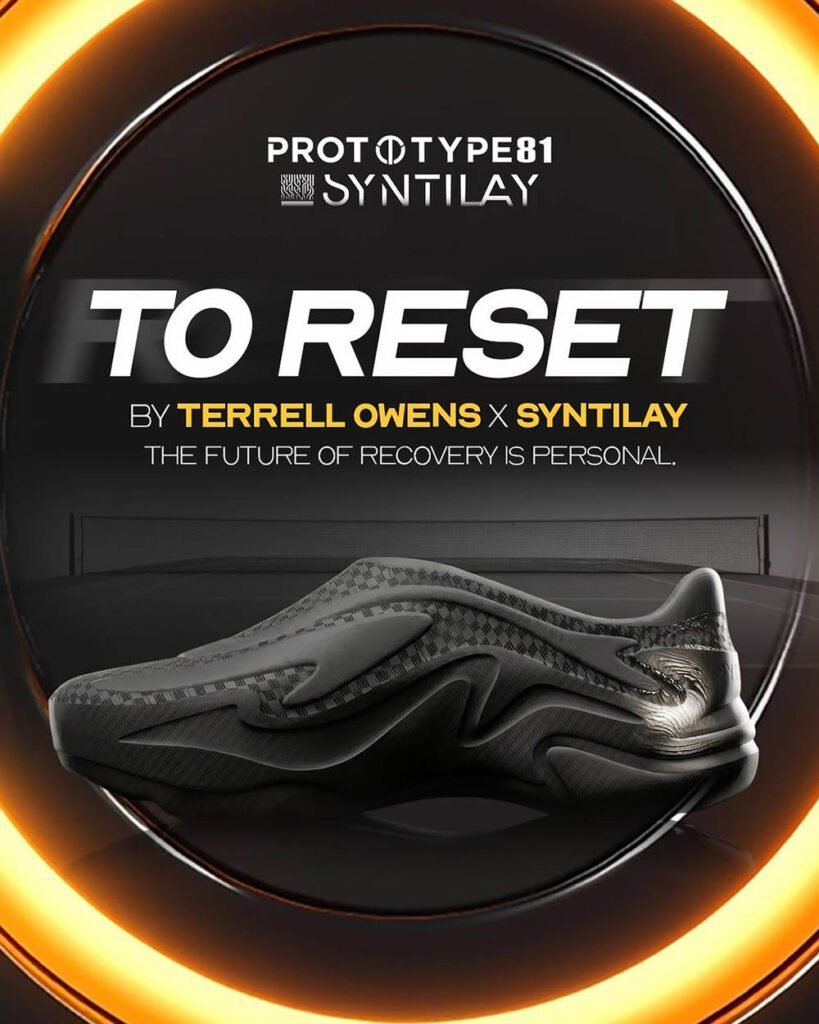
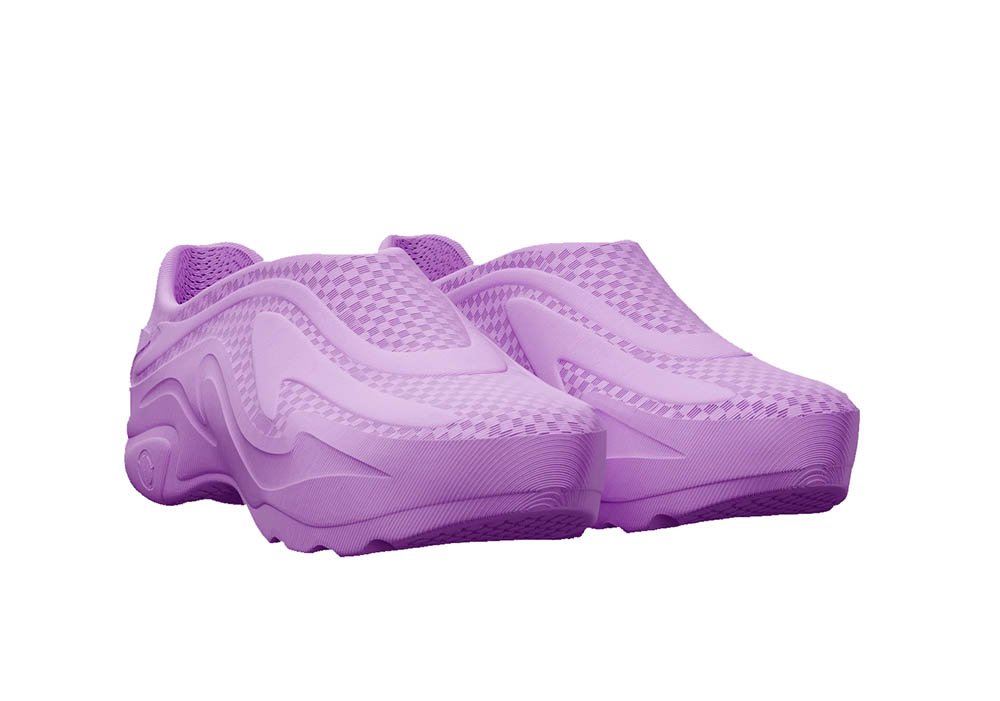
Syntilay has introduced the TO Reset, a 3D printed recovery shoe developed with NFL Hall of Famer Terrell Owens. The shoe is aimed at pickleball players, a consumer group with a clear set of post-play recovery needs.
Unlike a conventional recovery slide or sandal, the TO Reset is not presented only as a standard-size product. It is generated from a scan of the customer’s feet, with the design adjusted around individual foot shape, width, instep, and asymmetry.
That is the main news angle. Syntilay is not only attaching a celebrity name to a footwear release. It is using Owens’ connection to pickleball to frame custom 3D printed footwear around a specific sport and recovery use case.
The shoe is listed in multiple colorways and positioned as a premium recovery product rather than a mass-market basic. That pricing and positioning matter because this is still early-stage consumer footwear, not a broad replacement for traditional recovery shoes.
How the Custom 3D Printed Recovery Shoe Works
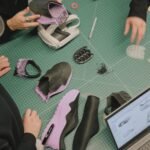
The custom 3D printed recovery shoe starts with a digital foot scan. Instead of selecting only from standard sizes, each customer’s foot data is used to generate a personalized shoe structure.
The scan-based workflow matters because recovery footwear depends heavily on how pressure is distributed under the foot. A generic fit may work for many buyers, but it does not account for differences between the left and right foot, arch profile, heel contact, or forefoot shape.
In practical terms, the Syntilay TO Reset brings together several elements:
- Foot scanning for personalized fit data
- AI-assisted digital design
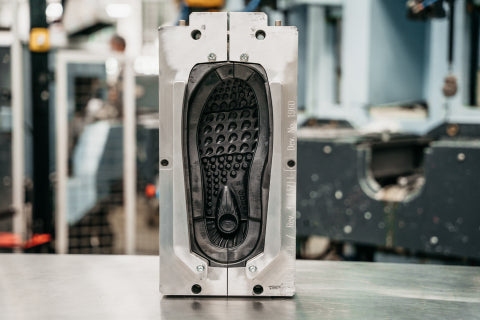
- 3D printed production
- A recovery-focused structure for post-play use
- Pickleball-specific positioning around lateral movement and court fatigue
This does not mean the shoe can automatically solve every recovery problem. It means Syntilay is using digital manufacturing to create a more individualized product than standard molded footwear typically allows.
That distinction is important. The value of 3D printed recovery shoes is not only visual novelty. The stronger argument is whether the technology can produce measurable comfort, better pressure distribution, and repeatable fit quality at consumer scale.
Why Pickleball Recovery Shoes Are a Strategic Category
The focus on pickleball gives the product a more specific reason to exist. Pickleball involves lateral movement, quick stops, pivots, and time on hard court surfaces. Those demands can create foot fatigue in ways that differ from walking, running, or gym training.
For Syntilay, pickleball recovery shoes help narrow the product message. A general recovery slide competes in a crowded market. A sport-specific recovery shoe can speak to a clearer user problem: what players wear after matches, tournaments, or extended court sessions.
Terrell Owens adds visibility to that positioning. His role gives the product a sports-performance narrative, but the more important commercial question is whether pickleball players see recovery footwear as a category worth paying for.
That is where the TO Reset becomes more interesting than a typical athlete-branded shoe. It is not being positioned as a performance court shoe. It is positioned as a recovery product generated around the wearer’s feet.
This gives Syntilay a narrower but potentially more defensible market. Instead of trying to convince all consumers to adopt 3D printed footwear, the brand is targeting a group that already understands movement, soreness, and post-play comfort.
What This Means for 3D Printed Footwear
The TO Reset shows how 3D printed footwear is moving from broad futuristic claims toward narrower commercial use cases. The product is not trying to prove that every shoe should be printed. It is testing whether personalization, recovery, and sport-specific design can make printed footwear easier for buyers to understand.
That matters because the category has often been held back by vague promises. “Custom fit” sounds strong, but consumers need to know what changes in real life. In this case, the practical clarification is simple: the shoe is designed around foot shape and recovery use after pickleball, not just around a new manufacturing method.
The launch also reflects a broader shift in footwear production. Digital scanning, AI-assisted design, and on-demand 3D printing can reduce dependence on traditional size runs, molds, and inventory-heavy releases.
For small brands, athlete-led products, and niche sports, that model may be more realistic than trying to compete directly with global sneaker supply chains.
Still, the biggest implication is not that 3D printed shoes are suddenly mainstream. The stronger takeaway is that brands are learning to attach the technology to specific customer problems.
A custom product needs a practical reason to be custom. Recovery footwear may be one of the clearer places to test that idea because comfort, pressure, and fit are directly tied to the user experience.
What the TO Reset Does Not Solve Yet
The TO Reset is a meaningful release, but it does not remove the major questions around 3D printed footwear.
The first question is durability. A recovery shoe may face less stress than a running shoe or court shoe, but buyers will still expect the material to hold up through regular use, washing, travel, and outdoor wear.
The second question is comfort consistency. A custom scan can improve fit potential, but the final product still depends on scan accuracy, design translation, material behavior, and manufacturing quality. A personalized shoe still has to feel good after repeated wear.
The third question is delivery and accessibility. Custom 3D printed shoes can require more production time than traditional stocked footwear. That may be acceptable for early adopters, but it can limit impulse purchases and mainstream adoption.
The fourth question is price. At a premium price point, the shoe must justify itself through comfort, personalization, design, or sport-specific value. The product cannot rely only on the novelty of being 3D printed.
There is also a category education challenge. Many consumers understand recovery slides, but fewer understand scan-to-fit 3D printed recovery footwear. Syntilay will need to make the buying process feel simple, not technical.
What to Watch Next
The next test for the Syntilay TO Reset will be user feedback from actual pickleball players. Comfort claims, recovery positioning, and personalized fit will matter more once buyers begin comparing the shoe against conventional recovery slides and sport sandals.
It will also be worth watching whether Syntilay expands the same model into other sports. If pickleball recovery shoes prove commercially useful, similar scan-based recovery products could be developed for tennis, running, golf, basketball, or training.
The other major signal will be repeatability. One successful athlete-led release can generate attention, but the longer-term question is whether Syntilay can build a product system around creators, athletes, scanning, and 3D printed manufacturing.
For now, the TO Reset is best understood as a focused commercial experiment. It combines a recognizable athlete, a sport-specific recovery angle, and a personalized production model in a category where fit and comfort are central to the product promise.
That makes it a useful development for 3D printed footwear, not because it solves the entire market, but because it gives the technology a clearer real-world role.
Mini FAQ
What is the Syntilay TO Reset?
The Syntilay TO Reset is a 3D printed recovery shoe developed with Terrell Owens. It uses foot scan data to create a more personalized recovery footwear product.
Is the Syntilay TO Reset a pickleball shoe?
The TO Reset is positioned as a recovery shoe for pickleball players, not as an on-court performance shoe. It is designed for post-play comfort rather than match use.
Why does foot scanning matter for 3D printed recovery shoes?
Foot scanning helps capture individual foot shape, width, and asymmetry. That data can support a more personalized fit than standard size-based recovery footwear.