

Picture this: a kitchen counter with a buzzing drone on one side and a humming 3D printer on the other — one airborne, one earthbound, both quietly rewriting what consumers can do at home. This used to be the stuff of sci‑fi. But today, it’s corporate strategy.
In late 2025, a subtle yet seismic move rippled through the consumer tech world: DJI — the undisputed king of civilian drones — took a stake in ELEGOO, one of the fastest‑rising names in consumer 3D printing. It wasn’t a chest‑thumping acquisition, nor a splashy shareholder announcement. It was quiet, almost coy — the kind of move a giant makes when it knows exactly what it’s doing.
And suddenly, an entire industry perked up.
Why would a drone titan want to wade into resin vats and filament spools? What does Elegoo gain from DJI’s deep pockets and even deeper manufacturing know‑how? And why is investor “hot money” treating consumer 3D printers as if they’re literal money‑printing machines?
The short answer: because for the first time in years, a hardware category feels like it’s on the brink of becoming the next big thing.
Drones, Dragons, and Diversification
DJI has spent the past decade defining — and dominating — the global consumer drone market. They made flying cameras mainstream. They shaped entire creator industries. They became synonymous with “drone” the way GoPro became shorthand for “action cam.”
But success came with scrutiny.
In the U.S. and several other markets, DJI drones have faced heightened political, military, and regulatory pressure. That history makes diversification not just smart — but perhaps necessary. Investing in 3D printing offers the company a hardware‑based growth path that avoids many of the “dual‑use” flags hovering over drones.
Enter: 3D printing — a hardware sector DJI understands at an instinctual, mechanical level, but without the geopolitical baggage.
Elegoo, the company DJI quietly bought into, is a perfect mirror match. It’s a brand beloved by hobbyists, educators, and small businesses. Its printers are affordable, reliable, and increasingly powerful.
In other words: DJI didn’t just buy into 3D printing. They bought into the future of at‑home manufacturing.
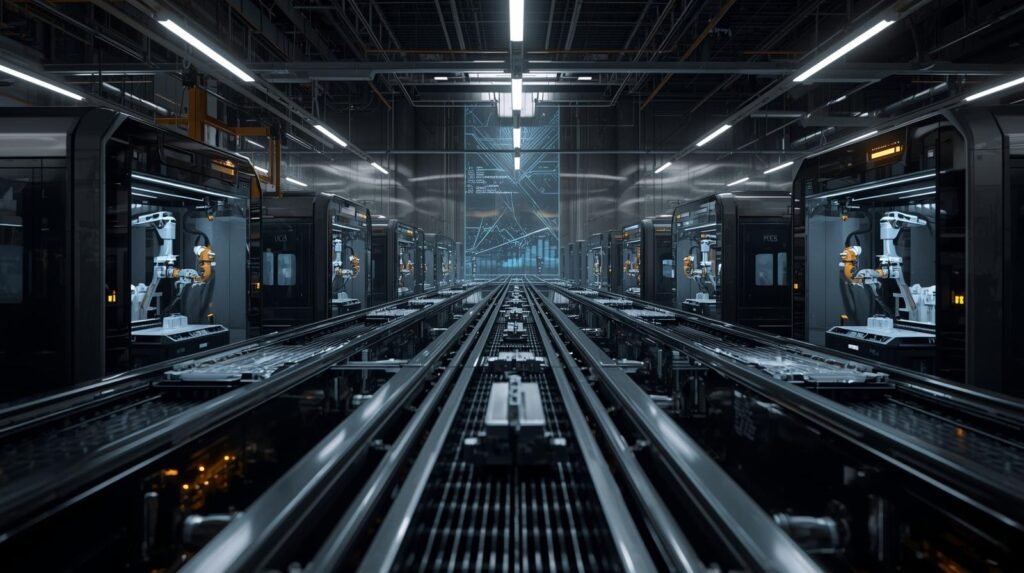
Why 3D Printing Is Back — And Bigger Than Ever
Consumer 3D printing has been “the next big thing” at least four times in the past 15 years. The hype cycled: from hobbyists… to Kickstarter darlings… to makerspace mania… to pandemic mini‑booms. But something is different now.
1. The technology finally caught up with the promise.
Affordable resin and FDM printers from brands like Elegoo can now deliver resolution, reliability, and ease‑of‑use that were unthinkable a few years ago.
2. AI‑powered modeling lowered the barrier to design.
No CAD degree required. Advances in generative AI and design software are making 3D modeling accessible to non‑technical users — drastically reducing one of the key historical barriers.
3. Social media supercharged the culture.
Consumer‑grade 3D printing has started trending heavily on social platforms. Searches are in the billions, and short‑form video plays in the tens of billions — a clear sign of mainstream curiosity.
4. Investors have smelled recurring‑revenue blood in the water.
Printers are the entry point. The real money is filament, resin, spare parts, accessories, and digital model marketplaces. Financing rounds have surged, signaling a wave of “hot money” chasing potential returns.
That’s why capital is pumping in. That’s why valuations are soaring. And that’s why DJI’s entry wasn’t viewed as a curiosity — but as a signal.
If DJI thinks the era of the desktop factory is finally here… maybe it really is.
DJI’s Three‑Part Strategy Play
A. Risk Hedging
Diversifying beyond drones makes sense. Regulators can ban a flying camera. They’re not banning your resin printer any time soon.
B. Manufacturing Synergy
DJI’s mastery of supply chain logistics, precision hardware manufacturing, and global consumer‑device distribution gives it an edge in a category notorious for quality control issues.
C. Betting on the Home‑Factory Future
If consumers begin printing their own household parts, toys, kitchen tools, organizers, figurines, and custom gifts, the 3D printer becomes the next “must‑have” appliance — not quite a microwave, not quite an iPad, but a personal factory.
DJI wants in early. And with a partner like Elegoo — a company with proven growth and a thriving ecosystem — the play might just work.

The Hot Money Problem: Boom or Bubble?
Whenever investors start calling an industry a “money‑printing machine,” skepticism is wise.
Yes — consumer interest is rising. Yes — hardware is better. Yes — the ecosystem is maturing.
But the industry still has structural weaknesses:
- User retention is shaky. Many owners stop printing after the initial honeymoon.
- Hardware margins are thin. A race to the bottom on pricing hurts long‑term sustainability.
- Consumables can be commoditized. Filament and resin are easily replicated by low‑cost competitors.
Add a surge of speculative capital and you get the classic hardware‑bubble environment: hype, uncertain long‑term demand, and vulnerability to shake‑outs.
That said: DJI’s presence matters. They’re not a quick‑flip investor. They’re a long‑game engineering company. Their involvement suggests belief in the durable side of the market — not just the hype.
Scenes from the New Maker Economy
The Maker Teen: A 16‑year‑old Etsy seller printing custom miniatures on a budget printer, fulfilling dozens of orders.
The Startup Founder: A nervous CEO watching giants enter the space. “When giants enter, they don’t compete on price — they compete on ecosystems.”
The Shenzhen Engineer: DJI and Elegoo engineers discussing gantry tolerances and resin heating profiles — drones and printers blending into one hardware lineage.
Each scene hints at the same truth: this isn’t just a gadgets story. It’s a shift in how people make things.
What It Means for Consumers, Creators, and Industry
If momentum holds, consumer‑grade 3D printing could reshape entire sectors:
- Home repair — print replacement parts.
- Education — hands‑on design and prototyping.
- Small business — low‑cost prototyping and micro‑manufacturing.
- Creator economy — anyone with an idea becomes a producer.
- Retail — custom goods, zero‑inventory, hyper‑personalization.
DJI’s investment isn’t just financial — it’s a vote of confidence.
Conclusion: Smart Strategy or Dangerously Fun Hype?
DJI didn’t buy into drones hoping for a fad — they built an empire. Their move into 3D printing feels similar: quiet, calculated, long‑term.
Maybe consumer 3D printing becomes the next essential household technology. Maybe AI‑powered modeling becomes the new Photoshop. Maybe everyone starts running tiny home factories.
Or maybe we’ll just keep printing dragons.
But DJI is betting that this time… it’s more than a dragon.
References & Sources
- DroneXL — Drone Maker DJI Invests in 3D Printer Giant Elegoo Amid US Ban Fears (2025): https://dronexl.co/2025/11/20/drone-maker-dji-invests-in-3d-printer-giant-elegoo/
- 36Kr Global — DJI Becomes Shareholder in Consumer 3D Printer Maker Elegoo: https://eu.36kr.com/en/p/3562896588242051
- 36Kr Global — Hot Money Surges into 3D Printing Industry as Consumer Market Booms: https://eu.36kr.com/en/p/3571301605932169