

Introduction
Nike is pushing deeper into the future of footwear—and in 2026, that future is clearly 3D printed.
With the launch of Nike Air Works, the brand moves beyond traditional sneaker releases into a more experimental direction: a global design and innovation program centered on 3D printed Air Max sneakers developed in collaboration with Zellerfeld.
Announced during Air Max Day 2026, this initiative brings together designers from around the world to explore how additive manufacturing, digital workflows, and localized creativity can reshape one of Nike’s most iconic lines.
In this guide, we break down everything you need to know about Nike Air Works—what it is, how it works, the technology behind it, and why it matters for the future of sneakers.
What Is Nike Air Works? (Program Overview)
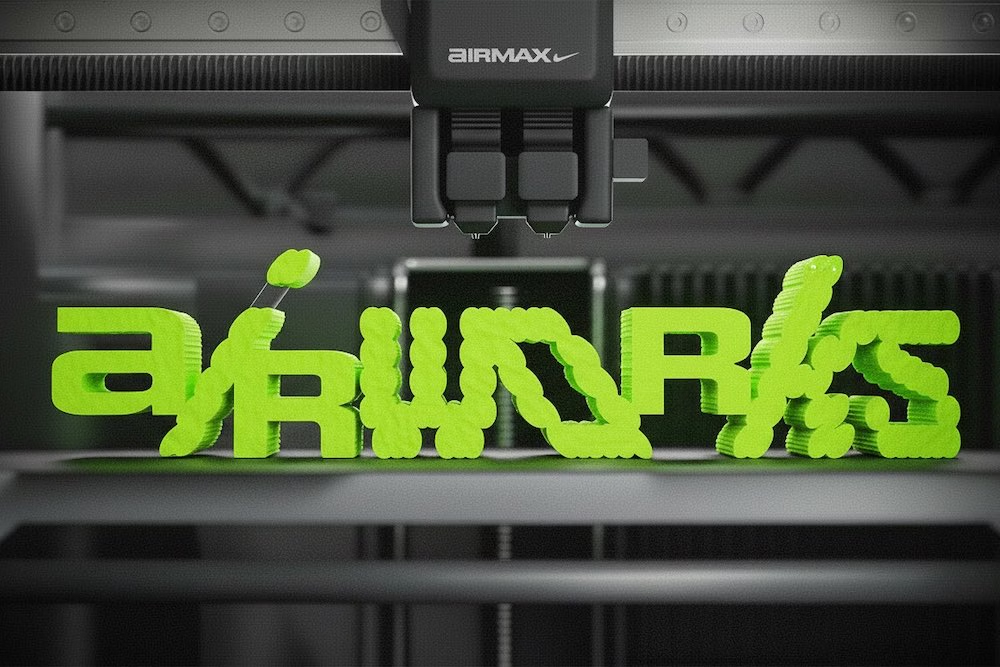
Nike Air Works is a global design and innovation program focused on reimagining Air Max through 3D printing.
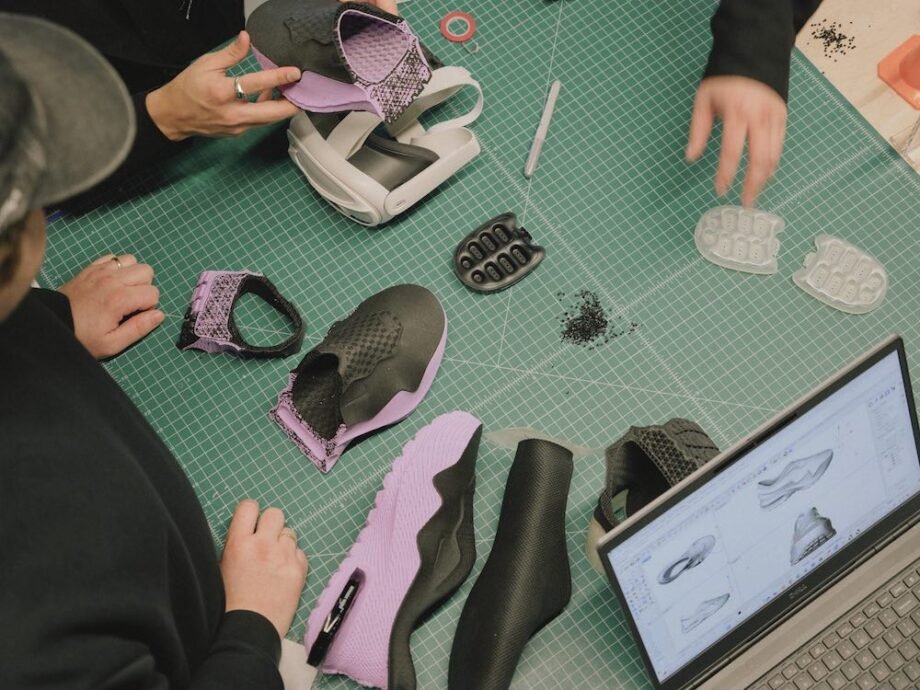
Instead of relying solely on internal teams, Nike is inviting eight designers from eight major global cities to collaborate directly at its headquarters in Beaverton, Oregon.
Key Program Details
- Participants: 8 designers
- Cities represented:
- Beijing
- London
- Los Angeles
- Mumbai
- New York
- Paris
- Shanghai
- Tokyo
- Location: Nike World Headquarters (Philip H. Knight Campus)
- Program dates: May 11–14, 2026
- Output: Limited-run “friends and family” releases
The objective is to create distinctive 3D printed Air Max designs that combine Nike’s heritage with each designer’s local influence.
At the time of writing, Nike has not yet revealed the designers or final designs, signaling a phased rollout strategy.
Why Nike Created Air Works (Strategic Purpose)
Nike Air Works is less about a single product launch and more about redefining the design process itself.
Air Max has represented innovation since the original 1987 release. With Air Works, Nike is extending that legacy into:
- Digital-first design
- Additive manufacturing
- Collaborative creation
Strategic Goals
- Blend culture, community, and technology
- Introduce external creative perspectives into Nike’s ecosystem
- Enable localized design expression
- Evolve Air Max for a new generation of creators
Nike is shifting from a centralized model to a more distributed approach:
Designing for the world → Designing with the world
This aligns with broader trends such as creator-driven products, limited drops, and rapid iteration cycles.
Nike and Zellerfeld Collaboration Explained
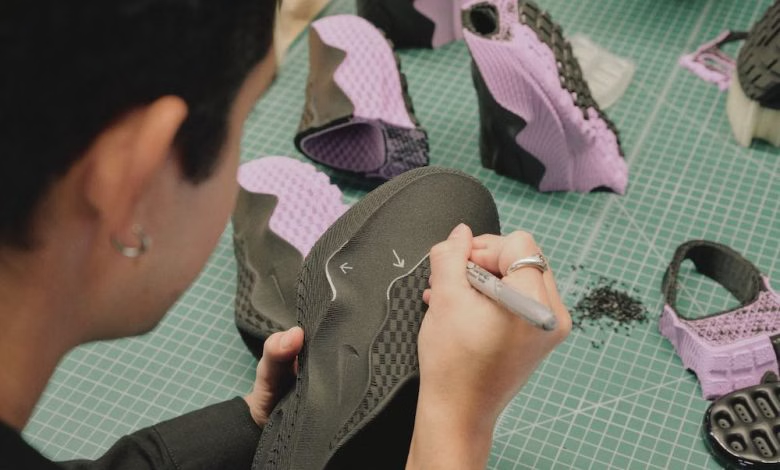
A core component of Nike Air Works is its partnership with Zellerfeld, a company specializing in fully 3D printed footwear.
This collaboration builds on previous projects, including:
- Air Max 1000
- Air Max 95000
These earlier releases demonstrated the feasibility of fully printed sneakers, setting the stage for a program like Air Works.
What Zellerfeld Brings
- Full-shoe additive manufacturing
- Rapid prototyping and iteration
- Scalable 3D printing systems
- Single-material construction approach
Key Material: zellerFOAM®
Zellerfeld’s proprietary TPU-based material enables:
- Flexibility and comfort
- Breathability
- Washability
- Potential recyclability
This approach simplifies production and reduces reliance on multi-material assembly.
How 3D Printed Air Max Sneakers Are Made
The move to 3D printing fundamentally changes how sneakers are produced.
Materials Used
- TPU-based material (zellerFOAM®)
- Engineered for:
- Flexibility
- Durability
- Lightweight performance
Unlike traditional footwear, which uses layered materials, 3D printed shoes can be built from a single material system.
Printing Process
- Layer-by-layer additive manufacturing
- “Print-first” workflow
- Minimal assembly required
This reduces the need for:
- Glue
- Stitching
- Complex component assembly
Nike Project Nectar
Nike’s internal innovation, Project Nectar, focuses on:
- Durability
- Traction
- Integrated structural detailing
Instead of attaching outsole elements later, the system aims to print them directly into the design, improving efficiency and precision.
What Makes Air Works Different from Previous Air Max Releases
Nike Air Works stands apart because it is not just a product—it is a design platform.
Key Differences
- Designer-driven vs Nike-only development
- Community-focused vs global retail launches
- Ultra-limited vs standard limited releases
- Experimental vs product-ready approach
Comparison Overview
| Feature | Air Max 1000 | Air Max 95000 | Air Works |
|---|---|---|---|
| Production | Limited | Limited | Ultra-limited |
| Designers | Nike internal | Nike internal | Global designers |
| Technology | 3D printed | Project Nectar | Not disclosed |
| Release Type | Retail + raffle | Retail | Friends & family |
Air Works represents a shift toward collaborative innovation ecosystems rather than traditional product cycles.
Timeline of Nike Air Works and 3D Printed Air Max Evolution
Understanding Air Works requires looking at Nike’s progression into additive manufacturing.
Key Timeline
- 1987 – Air Max 1 launch
- 2024 – Air Max 1000 debut
- 2025 – Air Max 95000 release
- March 2026 – Air Works announced
- May 2026 – Designer workshop
- 2027 – Expected local releases
This evolution shows a clear progression:
Concept → Product → Platform
Will Nike Air Works Sneakers Be Available to the Public?
This remains one of the most important unanswered questions.
What Is Confirmed
- Designers will release limited “friends and family” versions
- Releases will be localized within their communities
What Is Still Unknown
- Pricing
- Retail availability
- Online distribution
- Production quantities
Additionally:
- Designers have not been announced
- Final shoe designs have not been revealed
This level of uncertainty adds exclusivity but also limits accessibility.
Sustainability and the Future of 3D Printed Footwear
3D printing is often positioned as more sustainable, but the reality is mixed.
Potential Advantages
- Single-material construction
- Reduced manufacturing waste
- Lower inventory requirements
- Potential recyclability
Limitations
- Energy-intensive production
- Limited recycling infrastructure
- Unclear lifecycle impact
Nike has not yet released detailed sustainability data for Air Works, so conclusions remain preliminary.
What Nike Air Works Means for the Future of Sneakers
Nike Air Works signals a broader shift in the footwear industry.
Key Trends
- On-demand production
- Digital-first design workflows
- Localized micro-releases
- Creator-led design ecosystems
Potential Long-Term Impact
- Reduced overproduction
- Faster product development cycles
- Greater designer participation
- Increased personalization (future potential)
This points toward a new model:
Design globally → Produce locally → Release in limited runs
Conclusion
Nike Air Works represents a significant step forward in sneaker innovation.
By combining 3D printing, global collaboration, and limited distribution, Nike is exploring a new framework for how footwear can be designed and released.
However, key details—such as the designers and final products—remain undisclosed, making this an evolving story.
Stay Updated
Nike has indicated that more information will be released over time, including designer reveals and final concepts.
If you’re interested in:
- 3D printed sneakers
- Nike innovation
- The future of footwear
Stay tuned as this program develops.
Sources & Further Reading
- Nike Newsroom – Air Works Announcement: https://about.nike.com/
- VoxelMatters Coverage: https://www.voxelmatters.com/nike-invites-eight-designers-to-3d-print-limited-run-air-max-sneakers/
- Zellerfeld Official Site: https://zellerfeld.com/
- Nike SNKRS Releases (Air Max 1000 / 95000): https://www.nike.com/
- GOAT Editorial on Project Nectar: https://www.goat.com/
All information is based on publicly available sources as of March 2026. Details may evolve as Nike releases additional updates.