

Introduction
3D printing has evolved far beyond rapid prototyping. In the past decade, additive manufacturing has begun transforming how designers think about shape, texture, materials, and production. Instead of cutting fabrics and assembling components, designers can now create complex structures directly from digital models. This shift allows for entirely new aesthetics and manufacturing possibilities that were previously impossible with traditional techniques.
Today, some of the most innovative minds in fashion are using 3D printing not simply as a novelty, but as a core design tool. From sculptural couture dresses to experimental jewelry and bio-based eyewear, additive manufacturing is enabling designers to push creative boundaries while exploring more flexible production methods.
In this article, we explore five designers and brands helping lead the 3D printed fashion revolution in 2026. Their work demonstrates how technology, craftsmanship, and creativity can merge to produce groundbreaking pieces that redefine what fashion can be.
Why Designers Are Turning to 3D Printing in Fashion
Fashion has always been closely tied to manufacturing techniques. Traditional methods rely on cutting, sewing, molding, and assembling components into garments or accessories. While these processes are highly refined, they impose limitations on form and structure.
3D printing removes many of these limitations by building objects layer by layer from digital files. This process allows designers to create intricate geometries, organic shapes, and internal structures that would be extremely difficult to manufacture using conventional methods.
Several factors explain why designers are increasingly embracing additive manufacturing:
- Complex geometry: Designers can produce shapes that cannot be cut from fabric or carved from solid materials.
- Generative design: Algorithms can help create organic patterns and structures inspired by nature.
- Customization: Digital models allow pieces to be tailored to individual body scans or preferences.
- Rapid experimentation: Designers can prototype and test new ideas quickly without expensive tooling.
- Made-to-order production: Pieces can be printed only when needed, reducing inventory waste.
These advantages have made 3D printing particularly attractive to designers working at the intersection of technology and fashion.
Iris van Herpen – The Pioneer of 3D Printed Couture
Dutch designer Iris van Herpen is widely regarded as one of the earliest fashion designers to fully embrace 3D printing as a creative medium. Since launching her fashion house in 2007, she has built a reputation for combining cutting-edge technology with traditional craftsmanship.
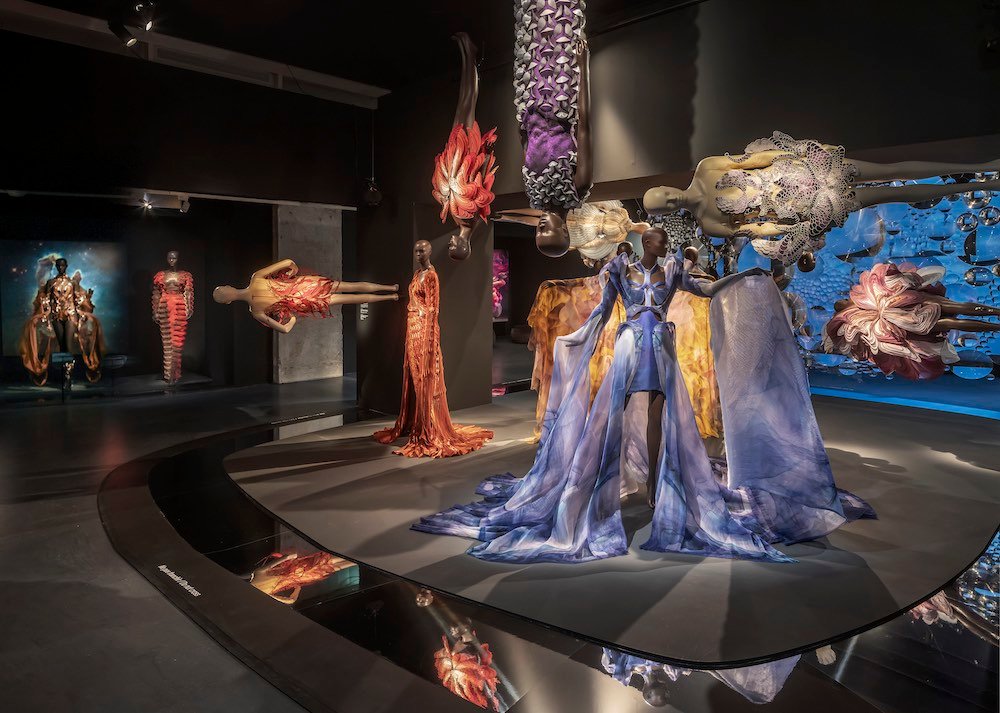
Her breakthrough moment came in 2010 when she introduced one of the first 3D printed dresses to appear on a haute couture runway. Developed in collaboration with engineers and digital designers, the garment demonstrated how additive manufacturing could unlock entirely new forms of fashion expression.
One of her most famous works is the “Skeleton” dress, introduced in 2011 as part of the Capriole collection. The piece was produced using selective laser sintering (SLS), a process that fuses nylon powder with a laser to create complex structures. The resulting design resembles an intricate bone-like lattice wrapping around the body.
The garment quickly became an iconic example of technological couture and was later acquired by a major museum collection. Its preservation has also highlighted an important challenge of 3D printed fashion: materials such as nylon can degrade over time, raising new conservation questions for curators.
Van Herpen continued exploring additive manufacturing through collections such as Escapism and Shift Souls. In one notable project, she created face jewelry generated from 3D scans of the wearer. An algorithm mapped patterns onto the contours of the face, producing pieces that were both custom-fitted and structurally complex.
Through these projects, van Herpen has demonstrated how digital design, science, and couture craftsmanship can work together to redefine fashion.
Boucheron – Reinventing Jewelry with 3D Printed Sand
While many fashion designers experiment with 3D printed garments, luxury jewelry houses are also exploring additive manufacturing. One of the most notable examples comes from the historic French jewelry brand Boucheron.
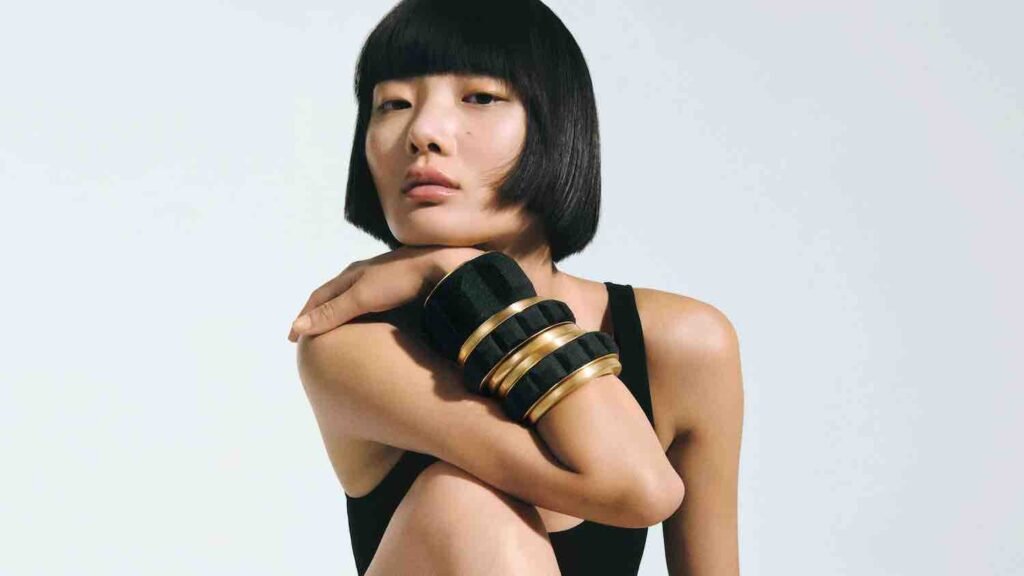
The brand has introduced several experimental pieces that use 3D printing to transform unexpected materials into luxury jewelry. A particularly striking example is the Quatre Sand collection, which reinterprets the brand’s iconic Quatre motif using sand.
Instead of carving the pieces from solid materials, the jewelry is created through a process often described as “3D sand printing.” In this method, thin layers of sand are bonded together with a polymer binder. Layer by layer, the printer builds a solid structure while preserving the natural texture of the sand grains.
The finished cuffs and bangles combine this textured sand material with traditional elements such as gold. The contrast between rough organic surfaces and refined metal creates a unique visual effect that would be difficult to achieve using traditional techniques.
By applying industrial 3D printing processes to luxury jewelry design, Boucheron demonstrates how additive manufacturing can expand the range of materials available to high-end designers.
Gustaf Westman – 3D Printing Meets Playful Design Objects
Stockholm-based designer Gustaf Westman represents a different side of the 3D printing movement. Rather than focusing on couture garments or jewelry, his work explores how additive manufacturing can shape contemporary interior design and functional objects.
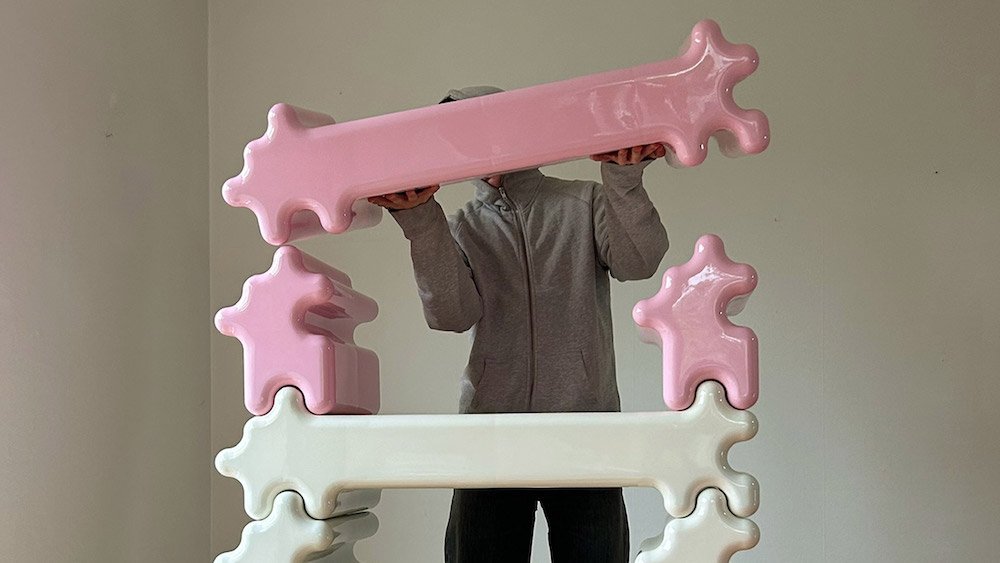
Westman’s studio is known for its colorful, playful aesthetic and its emphasis on made-to-order production. Many of his pieces are produced in collaboration with local fabricators and digital manufacturing specialists.
One of his most recognizable projects is the Puzzle Shelf, a modular shelving system created using 3D printed plastic. The design consists of interlocking components that can be arranged in multiple configurations. After printing, the pieces are coated with a glossy finish that gives them a ceramic-like appearance.
This project highlights one of the key advantages of additive manufacturing: flexibility. Designers can easily modify digital files to create new variations or scale the design to different sizes without needing new molds or tooling.
Westman’s work demonstrates how 3D printing can support a new generation of designers focused on customization, experimentation, and small-batch production.
Susan Fang – Blending Technology with Fashion Accessories
Designer Susan Fang has built a reputation for combining traditional craft techniques with advanced manufacturing technologies. Her work often features intricate textures, translucent materials, and sculptural forms inspired by nature.
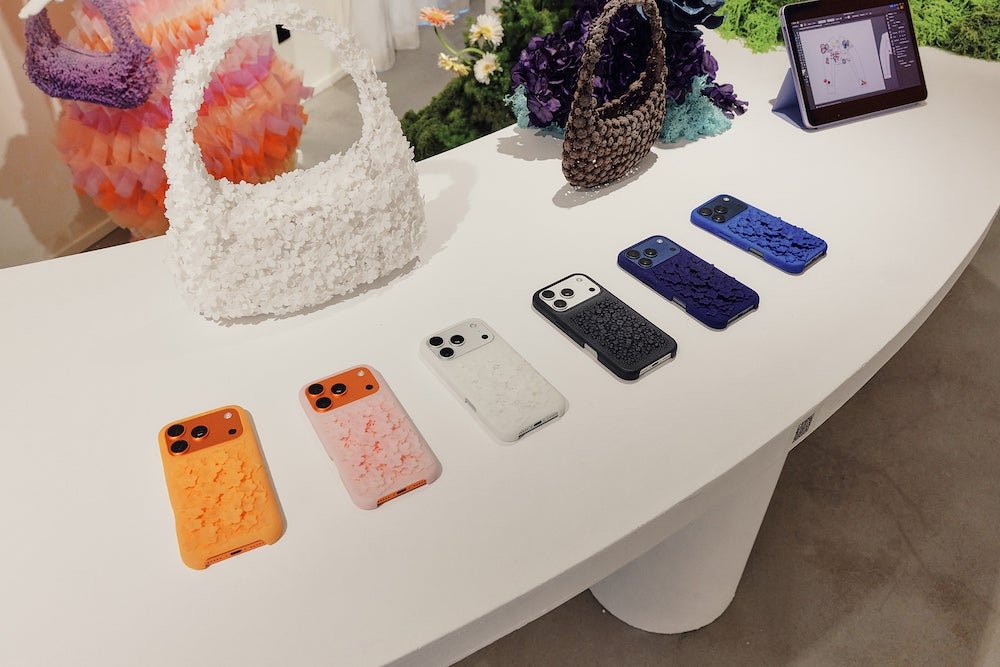
In recent years, Fang has introduced several 3D printed accessories that showcase the potential of flexible materials such as thermoplastic polyurethane (TPU). These accessories include phone cases, handbags, and decorative elements used in runway collections.
One example is her Lucky Clover phone case, which is produced using 3D printed TPU and finished with hand-dyed color treatments. Each piece is manufactured on a made-to-order basis, reflecting a growing trend toward small-scale digital production.
The use of 3D printing allows Fang to create intricate shapes and layered textures that would be difficult to achieve using traditional molding techniques. At the same time, hand finishing ensures that each object retains a sense of craftsmanship and individuality.
Her work illustrates how additive manufacturing can be integrated into fashion accessories while maintaining the artistic identity of the designer.
Issey Miyake – Continuing a Legacy of Technological Innovation
The Japanese fashion house founded by Issey Miyake has long been associated with technological experimentation. Even after the designer’s passing, the brand continues to explore new manufacturing approaches through various product lines.
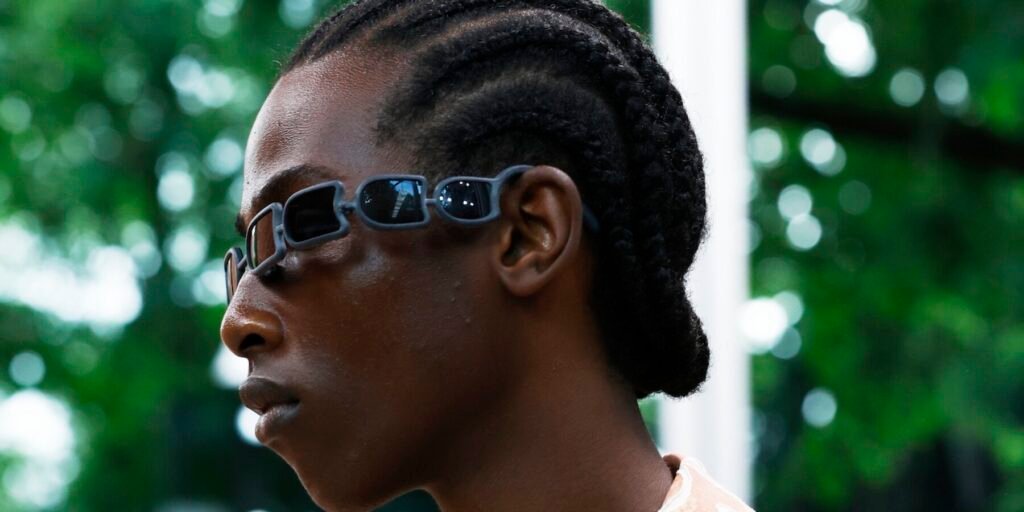
One notable example is the eyewear program developed in collaboration with optical specialists. Several models within this line incorporate 3D printed frames made from advanced polymers.
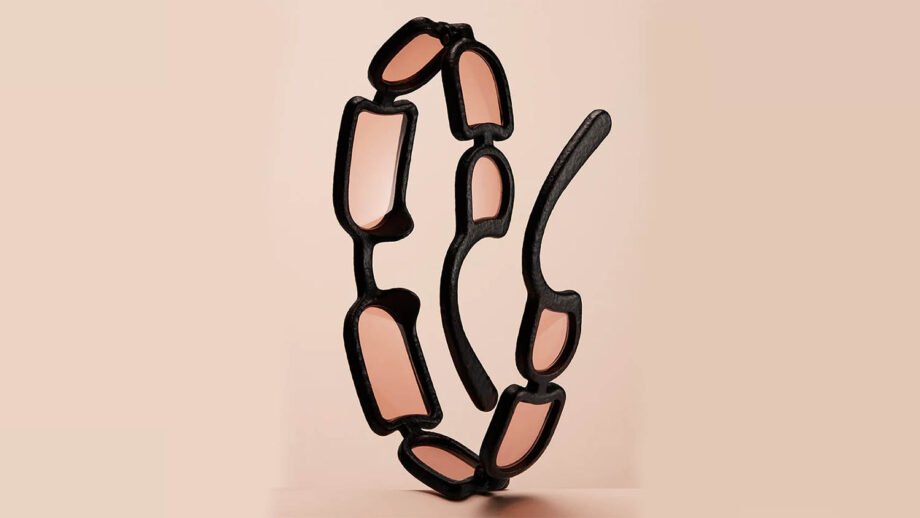
A recent design known as GRIT uses a bio-based polymer derived from castor oil. This material offers durability, flexibility, and resistance to environmental stress while reducing reliance on petroleum-based plastics.
The frames also retain the slightly grainy texture produced during the printing process. Rather than polishing away this surface character, the designers highlight it as part of the product’s aesthetic identity.
Another model introduces complex lens geometry using multiple lenses and advanced finishing techniques. These projects demonstrate how additive manufacturing can be applied to precision products that require both structural strength and visual sophistication.
Key Technologies Powering 3D Printed Fashion
Several additive manufacturing technologies are helping drive innovation across the fashion industry. Each process offers different capabilities depending on the materials and design requirements.
Some of the most important methods include:
Selective Laser Sintering (SLS)
A laser fuses powdered materials such as nylon into solid structures. This technique is commonly used for complex fashion pieces and experimental garments.
Binder Jetting
Liquid binders bond powders such as sand or metal into solid forms. This process enables unusual textures and materials, particularly in jewelry design.
Multi-Material Printing
Some printers can combine multiple materials in a single object, allowing designers to create pieces with varying flexibility, transparency, or color.
Flexible Polymer Printing
Materials such as TPU allow designers to produce wearable accessories that can bend and move with the body.
These technologies continue to evolve rapidly, enabling designers to experiment with increasingly sophisticated structures and materials.
What These Designers Reveal About the Future of Fashion
The designers highlighted in this article illustrate several important trends shaping the future of fashion manufacturing.
First, customization is becoming increasingly important. Digital design tools allow garments and accessories to be adapted to individual measurements, creating more personalized products.
Second, material innovation is expanding the possibilities of design. Bio-based polymers, flexible materials, and hybrid structures are opening new avenues for sustainable fashion.
Third, additive manufacturing supports a shift toward made-to-order production. By printing items only when needed, designers can reduce waste and avoid overproduction.
Finally, 3D printing introduces entirely new visual languages into fashion. Layered structures, lattice patterns, and organic geometries are becoming recognizable signatures of digitally manufactured design.
Conclusion
3D printing is rapidly reshaping the relationship between fashion and manufacturing. What began as experimental couture has grown into a powerful tool used by designers across multiple disciplines.
From Iris van Herpen’s sculptural dresses to Boucheron’s sand-textured jewelry, these designers demonstrate how additive manufacturing can unlock new forms of creativity. At the same time, designers such as Gustaf Westman and Susan Fang show how digital production can support made-to-order objects and accessories.
As materials, software, and printing technologies continue to evolve, the influence of additive manufacturing in fashion will likely expand even further. The designers leading this movement today are helping define what the future of fashion might look like in the years ahead.