


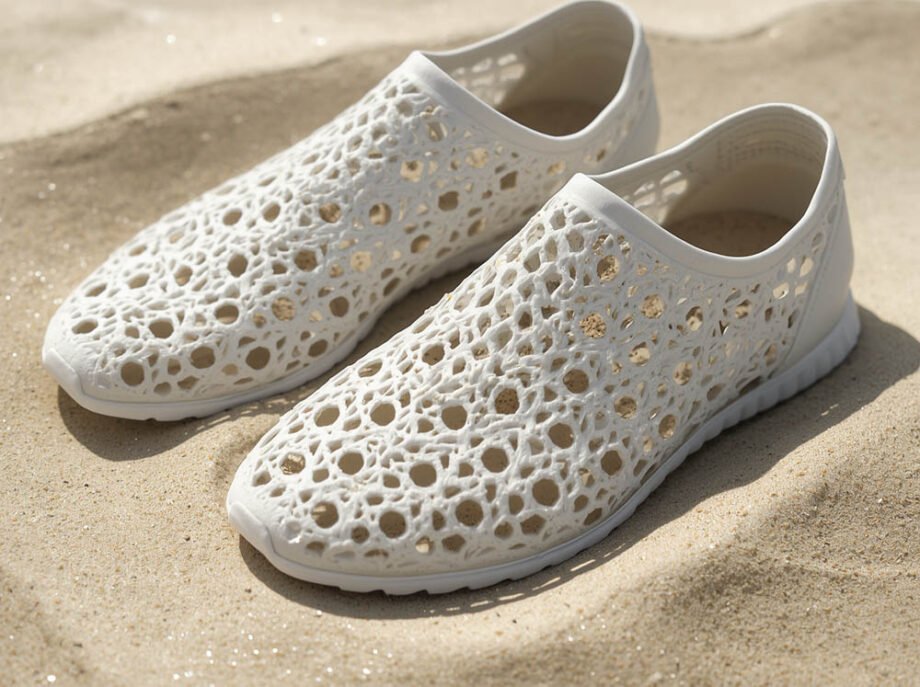
Lattice shoes can feel breathable, flexible, and lightweight, but they also have one practical drawback: sand, pebbles, and dirt can get trapped inside the open structure. If you wear them on the beach, gravel, dusty sidewalks, playground surfaces, or outdoor paths, debris can enter through the lattice holes and stay there longer than expected.
This does not always mean the shoe is poorly designed. In many cases, it is a tradeoff. The same open geometry that gives 3D printed shoes their cushioning, airflow, flexibility, and distinctive look can also create places where loose particles collect.
For anyone dealing with lattice shoes sand problems, the key is understanding where the debris enters, why it gets stuck, and how to clean the shoe without damaging the printed structure.
Direct Answer: Why Lattice Shoes Trap Sand
The short answer
Lattice shoes trap sand because their open 3D printed structure creates small holes, channels, and pockets where loose debris can enter and settle.
Regular sneakers usually have fabric, knit, leather, foam, or rubber layers that block most debris. Lattice shoes are different. Their structure is often more exposed, especially around the midsole, sidewall, footbed, or outsole.
Fine sand can pass through tiny openings. Small pebbles can wedge between thicker printed ribs. Dust can cling to textured surfaces. Once debris gets inside the geometry, it may not fall out with a quick shake.
When sand trapping is most noticeable
Sand and debris buildup is most common in places where the ground is loose, dry, or broken into small particles.
This includes:
- Beaches
- Gravel paths
- Dusty sidewalks
- Outdoor festivals
- Playgrounds
- Parks and trails
- Construction areas
- Parking lots with loose stones
- Wet sidewalks with dirt and grit
The problem can feel worse when the shoes are worn without socks. A small grain of sand that might be tolerable with socks can feel sharp or irritating against bare skin.
Is this a design flaw or normal behavior?
Sand trapping is usually a normal behavior of open lattice footwear, but the severity depends on the design.
Lattice structures are often used for cushioning, rebound, flexibility, ventilation, weight reduction, and visual style. Some shoes only use lattice in the midsole. Others expose it through the upper, sidewall, footbed, outsole, or full shoe body.
The more open and exposed the lattice is, the more likely it is to collect sand, pebbles, and dirt. A tighter lattice or smoother outer shell may reduce debris entry, but it may also change the shoe’s flexibility, airflow, and feel.
How Lattice Shoe Design Lets Sand and Pebbles In
Open holes make debris entry easier
The main reason is simple: lattice shoes have open spaces.
Instead of a solid foam midsole or closed upper, many 3D printed shoes use a web-like structure with visible holes. These openings help the shoe compress, flex, and breathe. They also allow sand and small debris to enter.
On clean pavement, this may not matter much. On sand, gravel, or dry soil, every step pushes the shoe into loose material. That gives debris repeated chances to move into the lattice.
Large holes are the most obvious issue, but small gaps can also trap fine particles. Sand does not need much room to enter. Once it moves into the side structure, outsole channels, or footbed edge, it can stay there until the shoe is shaken, brushed, or rinsed.
Flexible structures can pull debris deeper
Lattice shoes are not rigid. When your foot lands, the printed structure compresses. When your foot lifts, it expands again.
That movement can pull debris deeper into the shoe. A grain of sand may start near the outside surface, then shift inward as the lattice flexes. A small pebble may lodge more firmly as the shoe compresses around it.
This is especially common with softer printed materials. Flexible ribs can bend around a particle and hold it temporarily. With repeated walking, that particle can move farther into corners or internal channels instead of falling out.
Small particles settle into hard-to-reach pockets
Fine sand is harder to manage than larger debris because it spreads easily.
It can settle around lattice intersections, inside outsole grooves, under the footbed edge, and between layers of printed geometry. A quick shake may remove loose surface sand, but deeper grains can remain hidden.
This is why lattice shoes may look clean from the outside but still drop sand later indoors. The shoe flexes again, dried particles loosen, and debris falls out after the walk is already over.
Pebbles can wedge between thicker lattice ribs
Pebbles in 3D printed shoes behave differently from sand. They do not spread through the structure. They wedge.
A small stone can get caught between printed ribs, inside outsole channels, or near the sidewall. If it sits under the foot or near a pressure point, it can make the shoe feel uneven.
Pebbles can also create noise. A loose stone trapped inside a hollow or semi-open section may rattle while walking. A wedged pebble can create pressure, discomfort, or a clicking sensation underfoot.
Why Sand Feels Worse in 3D Printed Shoes Than Regular Shoes
Traditional uppers block more debris
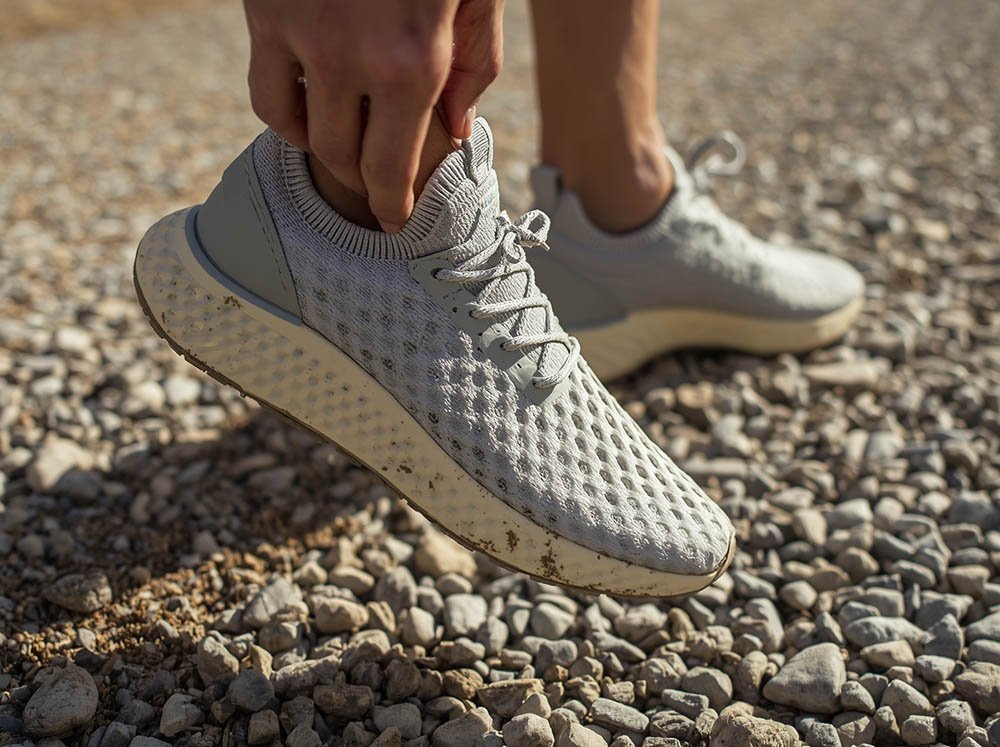
Most regular sneakers use materials that act as barriers. Mesh, knit, synthetic leather, rubber overlays, and foam midsoles limit how much debris can reach the inside of the shoe.
Even breathable mesh is still a layer. It may allow airflow, but it usually blocks larger particles.
A lattice shoe can expose more of its structure directly to the environment. That is why debris lattice shoes collect can feel more noticeable than dirt on a standard sneaker. The debris is not only sitting on the surface. It can move inside the shoe’s geometry.
Lattice shoes have more exposed surface area
A 3D printed lattice has many small surfaces. Instead of one smooth wall or solid foam block, it may have dozens or hundreds of ribs, curves, corners, and intersections.
That creates more places for dirt to touch and more edges where particles can catch.
Sand and dust may also cling to the material, especially if the finish is matte, slightly textured, or soft. This is one reason lattice holes dirt can be annoying to clean. The dirt is not always on a flat surface you can wipe with a cloth. It may sit between structural elements that are hard to reach.
Barefoot or sockless wear makes debris more noticeable
Some 3D printed shoes are designed for casual, sockless wear. That can make trapped sand more irritating.
A small grain of sand inside a regular sneaker may be softened by a sock. In a sockless lattice shoe, the same grain can rub directly against the skin. Over time, this can cause hot spots, rubbing, or discomfort.
Moisture can make the issue worse. Sweat can cause fine dust or sand to stick to the foot or inside of the shoe. Once particles stick, they are less likely to fall out naturally.
Softer printed materials may grip dirt more easily
Many 3D printed shoes use flexible polymer materials. These materials can bend, compress, and rebound, which helps with comfort. But softer surfaces can also hold onto dust, grit, or fine sand more than smooth hard surfaces.
If the material has a slightly tacky or rubbery feel, debris may cling instead of sliding off. Wet dirt can be even harder to remove because it can smear across the lattice and dry inside small openings.
This does not make flexible printed footwear bad. It simply means the cleaning routine is different from what you would use for smooth leather sneakers, knit uppers, or solid rubber sandals.
Real-World Usage: Where Lattice Shoes Collect the Most Debris
Beach and coastal walking
Beach use is where lattice shoes sand problems become most obvious.
Fine grains can enter through side openings, outsole channels, footbed gaps, and exposed lattice holes. Once inside, the sand may settle into the midsole structure or under the foot.
Deep dry sand is especially difficult. Each step pushes the shoe into loose material. Sand surrounds the outsole and moves upward into any open areas. Wet sand may not move as freely, but it can stick more aggressively once it touches the shoe.
For short beach walks, this may be manageable. For long walks on soft sand, open lattice shoes can become frustrating because debris exposure is constant.
Gravel driveways and parking lots
Gravel creates a different problem. Instead of fine sand spreading through the shoe, small stones can wedge into the structure.
Pebbles can get stuck inside outsole grooves, between lattice ribs, or near the lower sidewall. If a stone lodges close to the foot, it can make the shoe feel uneven or uncomfortable.
Outsole design matters here. A smoother outsole may release stones more easily. A deep, angular, open outsole can trap pebbles more often.
Urban sidewalks after rain
City debris is usually a mix of dust, grit, soil, small stones, and dirty water. After rain, this material becomes sticky.
A lattice shoe that stays relatively clean in dry conditions may collect more grime when the pavement is wet. Wet dirt can coat printed ribs and settle into lattice holes. Once it dries, it becomes harder to remove.
Urban grit can also include road dust, oil residue, plant matter, and other particles that may stain or cling to the shoe. Rinsing soon after wet outdoor use is usually better than waiting several days.
Parks, trails, and outdoor paths
Parks and trails expose lattice shoes to mixed debris: dry soil, grass, twigs, bark, gravel, and mud.
Fine soil can settle into tight pockets. Small twigs or grass can catch in larger openings. Pebbles can wedge into outsole channels. If the trail is damp, mud can fill lattice holes and reduce breathability.
Open lattice shoes can work for light park use, but they are not always the best choice for rough, loose, or muddy terrain. A path that feels easy in regular sneakers may create more cleanup work in highly open 3D printed shoes.
Indoor use after outdoor wear
Lattice shoes can also carry debris indoors and release it later.
Sand may stay inside while the shoe is damp, then fall out once it dries. Pebbles may loosen after the shoe flexes again. Dust trapped in lattice holes can drop onto floors, rugs, or car mats.
This is why it helps to shake and brush lattice shoes before bringing them inside, especially after beach, gravel, park, or trail use.
Common Problems Caused by Sand and Debris in Lattice Shoes
Sand can cause foot irritation
Fine sand becomes a comfort issue when it reaches areas that touch the foot.
The problem is not always the amount of sand. Sometimes a small amount in the wrong place is enough. Sand can rub against the heel, arch, toes, or side of the foot. During longer walks, that friction can create hot spots.
This is more likely when the shoe is worn without socks or when the footbed has exposed lattice near the skin. A smooth interior helps reduce the problem. An open or textured interior can make debris easier to feel.
Pebbles can affect comfort
Pebbles can change how the shoe lands.
A small stone under the forefoot, heel, or arch can make each step feel uneven. It may also create pressure against the foot or interfere with how the lattice compresses.
If the pebble is stuck in the outsole, the shoe may feel unstable. If it is trapped near the sidewall, it may press into the foot during movement. If it is loose inside a hollow section, it may rattle.
Remove pebbles early. Do not keep walking with a stone wedged into the structure if it changes comfort, pressure, or balance.
Debris can make the shoe harder to clean
Open lattice shoes usually require more careful cleaning than regular sneakers.
A cloth can wipe a smooth upper, but it cannot reach inside every lattice opening. Dry dust may need brushing. Packed dirt may need rinsing. Sticky grime may need mild soap. Deep pockets may need repeated cleaning after the shoe dries.
The difficulty depends on the geometry. Large, simple openings are easier to clean. Tight, complex, layered lattice structures can hold dirt longer.
Mud can block airflow
One benefit of lattice footwear is airflow. Open structures can help the shoe feel cooler and more breathable.
But when those openings fill with mud, airflow is reduced. Mud can also add weight. A shoe that feels light when clean may feel heavier after wet dirt fills the structure.
If mud dries inside the lattice, it can stiffen parts of the shoe temporarily and make cleaning more difficult. Muddy conditions are usually a poor match for highly open lattice footwear.
Trapped debris may create noise
Small stones, dried mud, and loose grit can create rattling, clicking, scraping, or crunching sounds.
Noise usually means something is moving inside the structure. It may not damage the shoe immediately, but it can become annoying and may signal that debris is stuck somewhere.
If the noise continues after shaking the shoe, inspect the outsole channels, side lattice, heel area, and any hollow sections.
How to Remove Sand From Lattice Shoes
Start by shaking the shoe gently
Turn the shoe upside down and shake it gently.
Do not slam it against the floor or twist it aggressively. The goal is to loosen debris without stressing the printed structure.
Flex the shoe lightly while shaking. This can open the lattice enough for sand to fall out. Rotate the shoe so debris can escape from different angles.
For fine sand, this may only remove the loose particles. Deeper grains may still need brushing or rinsing.
Use a soft brush for dry debris
A soft toothbrush, shoe brush, or small detailing brush works well for dry sand, dust, and dirt.
Brush along the lattice ribs, around intersections, and inside visible holes. For outsole grooves, brush in the direction of the channel. For side lattice, brush gently from multiple angles.
Avoid hard metal tools, stiff wire brushes, or aggressive scraping. Printed ribs may handle normal walking loads well, but sharp tools can scratch or damage the material.
Rinse with low-pressure water
If brushing is not enough, rinse the shoe with low-pressure water.
Gentle water flow can flush fine sand out of internal pockets and narrow channels. Avoid pressure washers or strong water jets. High pressure may force debris deeper into the structure or stress delicate finishes, coatings, or bonded areas.
Rinse from different directions. Water entering from one side may push sand toward another opening. Rotate the shoe while rinsing to help particles escape.
Use mild soap for sticky dirt
For sticky dirt, sweat residue, or urban grime, use mild soap and water.
Apply it with a soft brush or cloth. Focus on dirty areas instead of scrubbing the entire shoe aggressively. After cleaning, rinse thoroughly so soap residue does not remain inside the lattice.
Avoid bleach, strong solvents, harsh detergents, and abrasive cleaners unless the brand specifically confirms they are safe for the material.
Let the shoes dry fully
Air-dry lattice shoes in a shaded, ventilated area.
Avoid direct high heat, hot hair dryers, heaters, or prolonged intense sun exposure unless the manufacturer says the material can handle it. Heat can affect some flexible polymers, coatings, adhesives, or fit characteristics.
Place the shoes where water can drain out naturally. If possible, angle them so trapped water does not sit inside the structure.
Check deep pockets after drying
Some debris only loosens after the shoe dries.
Wet sand may cling to the material, then fall free once dry. Dried mud may crack and become easier to brush out.
After the shoes are fully dry, shake them again and inspect the deep lattice pockets. Use a soft brush to remove any remaining particles. This second pass often works better than trying to remove everything while the shoe is still wet.
How to Prevent Sand and Pebbles From Getting Stuck
Avoid loose sand when possible
The simplest prevention is choosing the right environment.
Highly open lattice shoes are not always ideal for deep sand, loose gravel, dusty trails, or muddy ground. They usually perform better on clean pavement, indoor floors, smooth walkways, and dry urban surfaces.
If you know you will be walking through soft beach sand or loose gravel for a long time, a more closed shoe or simpler sandal may be more practical.
Wear socks if the shoe design allows it
Socks can reduce the irritation caused by sand and grit.
They create a barrier between the foot and the debris. This is especially helpful if the shoe has openings near the footbed or if the lattice sits close to the skin.
Socks will not stop all debris from entering the shoe, but they can make small particles less noticeable. The tradeoff is style, fit, and breathability. Some lattice shoes feel better sockless, while others are more comfortable with thin socks.
Clean them soon after outdoor use
Fresh debris is easier to remove than packed or dried debris.
After beach, gravel, park, or dusty use, shake the shoes before storing them. If they are dirty, brush or rinse them before the debris hardens.
Regular light cleaning is better than occasional deep cleaning. It prevents buildup and keeps dirt from settling deeper into the structure.
Use them in the right environment
Open lattice shoes are often best for clean casual wear, dry pavement, indoor-outdoor movement, light errands, office settings, and controlled urban use.
They are less ideal for deep sand, muddy trails, loose gravel, wet fields, and rough outdoor terrain. The more open the design, the more selective you should be.
This is not only about keeping the shoes clean. It is also about comfort. A lattice shoe that feels excellent on clean pavement may feel annoying on gravel if small stones keep lodging underfoot.
Choose tighter lattice designs for outdoor use
Not all lattice shoes collect debris the same way.
The size, shape, and placement of the openings matter. A tighter lattice may allow less debris to enter. A smoother footbed may prevent sand from contacting the skin. A more closed sidewall may block grit from reaching the interior. A simpler outsole may release pebbles more easily.
If outdoor wear matters, look closely at the hole size, side openings, outsole grooves, and interior surface before buying.
When Sand Trapping Is a Bigger Concern
If you walk long distances outdoors
A small amount of sand may be tolerable during a short walk. Over longer distances, the same debris can become irritating.
Repeated friction is the issue. Sand that rubs against the skin for a few minutes may be minor. Sand that rubs for an hour can create discomfort, especially around the toes, heel, and arch.
For long outdoor walks, the shoe’s ability to block, release, or isolate debris becomes more important.
If you have sensitive skin
Some feet are more sensitive to friction, texture, and pressure points.
For sensitive skin, sand in lattice shoes can become uncomfortable quickly. Sockless wear, heat, sweat, and fine grit can make the problem worse.
If your skin reacts easily to rubbing, choose smoother interiors, wear socks, or avoid loose sand environments.
If the shoe has an open footbed
The footbed design matters as much as the outer structure.
If the area directly under the foot is smooth and closed, debris may be less noticeable. If the footbed exposes lattice channels or textured openings, sand may be easier to feel.
Open footbeds can also be harder to wipe clean because debris sits closer to where the foot makes contact. Before buying, check interior images when available. The outside may look clean, but the inside determines how much trapped debris affects comfort.
If the outsole has deep printed channels
Outsoles with deep grooves, angular pockets, or open printed channels can trap pebbles and packed dirt.
This is especially common on gravel, rough pavement, and trail-like surfaces. A deep outsole pattern may improve grip in some conditions, but it can also collect stones.
If pebbles frequently get stuck, check whether the outsole has narrow channels that match the size of common gravel.
If you use them after rain
Wet debris sticks more than dry debris.
Rain turns dust into paste and soil into mud. Once that mixture enters lattice holes, it can dry into hard residue. Wet conditions can also make the shoe harder to clean later.
If you wear lattice shoes after rain, rinse them before the dirt dries deeply into the structure.
Are Lattice Shoes Bad for Outdoor Use?
They can work outdoors, but not everywhere
Lattice shoes are not automatically bad for outdoor use. Many can handle casual walking, city pavement, dry sidewalks, and light daily wear.
The issue is terrain. Open lattice shoes are usually less practical in loose sand, gravel, mud, and debris-heavy areas. The more exposed the structure, the more likely it is to collect particles.
Lattice shoes can be outdoor-capable, but not every lattice shoe is outdoor-forgiving.
The best use depends on the design
Some 3D printed shoes are more closed and structured. Others are highly open. Some use lattice only in the midsole, while others expose it through the upper, sidewall, outsole, or entire body.
A shoe with a closed upper and lattice midsole may collect less debris near the foot. A fully open printed shoe may collect more debris but offer stronger airflow and a more distinctive look.
Design details matter more than the label “3D printed.” Two lattice shoes can behave very differently outdoors.
Consider the tradeoff
The same features that make lattice shoes appealing can also create the sand problem.
Open geometry can improve airflow, reduce weight, create flexible cushioning zones, and allow distinctive shapes. But open geometry also creates entry points for dirt.
A more closed design may be easier to maintain. A more open design may feel more breathable and visually unique, but it usually requires more cleaning and smarter use.
The right choice depends on where you plan to wear the shoes.
What to Look for Before Buying Lattice Shoes
Check the size and placement of lattice holes
Large openings are more likely to collect visible debris.
Side openings near the sole can allow sand and pebbles to enter from the ground. Holes near the toe or footbed may make debris more noticeable during wear.
Smaller holes may reduce debris entry, but they can still hold fine sand. Placement matters as much as size. Pay close attention to the lower sidewall, outsole edge, heel area, and forefoot flex zones.
Look at the footbed design
A smooth footbed is usually easier to live with.
It creates a cleaner surface between the foot and the structure below. An exposed lattice footbed may feel more breathable or visually interesting, but it can also allow sand to sit closer to the skin.
If you plan to wear the shoes sockless, this detail is important. For comfort, check whether the foot touches smooth material or printed geometry.
Inspect the outsole pattern
The outsole determines how much ground debris gets picked up.
Deep grooves, sharp corners, and open channels can trap pebbles. Smooth or moderately patterned outsoles may release debris more easily.
If you live around gravel roads, rough parking lots, or dusty outdoor areas, outsole design should be part of the buying decision. A shoe can have a clean-looking upper but still collect stones underneath.
Consider where you plan to wear them
Be realistic about your use.
If you mostly walk on clean pavement, indoor floors, malls, offices, or dry sidewalks, open lattice shoes may be practical enough. If you regularly walk through sand, loose gravel, muddy paths, or dusty outdoor areas, a more closed design may be better.
The best lattice shoe is not only the most interesting design. It is the one that fits your real environment.
Read real user feedback
User feedback can reveal debris problems that product photos do not show.
Look for comments about sand, dirt, cleaning, barefoot comfort, pebbles, outsole buildup, and outdoor use. Pay attention to repeated patterns.
Also check the context. A shoe used mostly on pavement may get very different feedback from the same shoe used at the beach, on gravel, or in wet weather.
Practical Advice: Best Way to Use Lattice Shoes Without Frustration
Use them for the environments they handle best
Lattice shoes are easier to enjoy when used in the right setting.
Clean pavement, indoor spaces, dry walkways, and controlled casual use usually create fewer problems. Rougher environments are better suited to shoes with more protection, closed surfaces, or trail-specific outsoles.
This does not make lattice shoes impractical. It simply means the shoe should match the ground surface.
Keep a simple cleaning routine
A good cleaning routine does not need to be complicated.
Shake the shoes after outdoor use. Brush dry debris from the lattice. Rinse gently when sand or mud gets deeper into the structure. Use mild soap only when dirt is sticky. Let the shoes dry fully before storing them.
This routine helps prevent buildup and keeps debris from becoming harder to remove later.
Do not ignore small pebbles
Pebbles should be removed as soon as they affect comfort.
A wedged stone can change pressure underfoot, create noise, or press against the structure. Stop, inspect the outsole and side lattice, and remove the stone carefully.
Avoid sharp metal tools if the pebble is stuck. Try flexing the area gently or using a soft tool first.
Test them on short walks first
Before wearing lattice shoes for a full day, test them in the kind of environment where you plan to use them.
Walk on pavement, light gravel, grass, or sand for a short distance. Check how much debris enters the shoe. Notice whether it affects comfort, creates noise, or takes too long to clean.
This is especially useful for new designs, sockless wear, or shoes with open footbeds.
Treat open lattice shoes differently from regular sneakers
Open lattice shoes need different expectations.
They may breathe better, look more advanced, and use material more efficiently, but they also expose more structure to the environment. That means more attention to where you wear them, how you clean them, and whether socks make sense.
A regular sneaker can often hide dirt until the outside looks dirty. A lattice shoe may collect debris inside the structure even when the upper still looks clean.
FAQ
Lattice shoes collect sand because the open 3D printed structure has many holes, channels, and internal surfaces. Sand can enter through these openings and settle into small pockets instead of falling out immediately.
Small pebbles usually cause discomfort before they cause damage. However, a sharp stone wedged tightly into a lattice opening could scratch the material or stress one area if it is left in place during walking.
Turn the shoe upside down, shake it gently, flex the structure lightly, and brush the lattice with a soft brush. For deeper sand, rinse with low-pressure water, let the shoe dry fully, then shake and brush it again.
They can be worn at the beach, but they are not always ideal for long walks in deep sand. Open lattice holes can collect fine grains quickly. For extended beach use, a simpler sandal or more closed shoe may be easier to manage.
Socks can help reduce rubbing and make trapped sand less irritating. Whether you should wear them depends on the shoe’s fit, style, and footbed design. If the lattice sits close to the skin, socks can improve comfort.
No. Some 3D printed shoes have tighter lattice patterns, smoother interiors, more closed uppers, or simpler outsoles that collect less debris. Highly open designs are more likely to trap sand, pebbles, and dirt.
Mild soap and water are usually the safest option for sticky dirt or grime. Avoid harsh cleaners, bleach, strong solvents, or abrasive scrubbing unless the manufacturer confirms they are safe for the material.