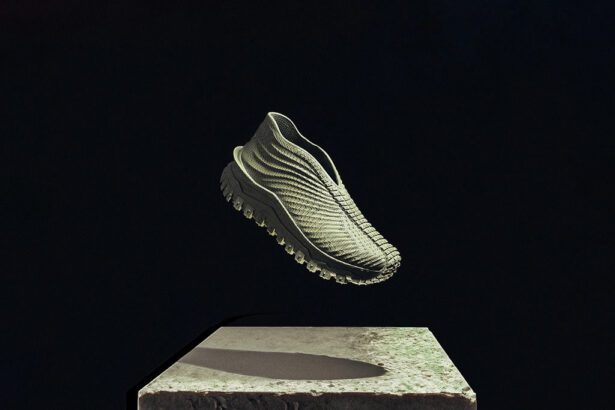


3D printed shoes need a different cleaning routine than regular sneakers. Their open lattice structures can trap sand, dust, mud, sweat, and small pebbles in places that are difficult to reach. A quick wipe may clean the surface, but it will not always remove debris hidden inside the printed structure.
The safest method is simple: remove loose dirt first, rinse with cool water, use mild soap, brush gently, rinse thoroughly, and let the shoes air dry completely.
The goal is not just to make the shoes look clean. Proper cleaning helps protect the printed material, preserve the lattice shape, reduce odor, and prevent trapped debris from affecting comfort.
The Direct Answer: The Safest Way to Clean 3D Printed Shoes
Use mild soap, cool water, and a soft brush
The safest way to clean 3D printed shoes is to hand wash them with cool water, mild soap, and a soft brush.
Start by removing loose dirt before adding water. This matters because dry dust, sand, and grit can turn into a muddy paste once wet. If that paste moves deeper into the lattice, it becomes harder to remove.
Use a small amount of mild dish soap, gentle detergent, or sneaker cleaner mixed with water. Dip a soft toothbrush or sneaker brush into the mixture, then clean the outsole, sidewalls, footbed, and lattice openings carefully.
After brushing, rinse the shoes with cool water until the soap is gone. Leftover soap can make the outsole feel slippery and may leave residue inside small lattice channels.
Pat the shoes with a clean towel, then air dry them fully before wearing them again.
Avoid heat, harsh chemicals, and aggressive scrubbing
Heat is one of the biggest risks when cleaning 3D printed shoes. Avoid hot water, clothes dryers, hair dryers, radiators, and prolonged direct sunlight.
Many printed shoe materials are designed to flex and return to shape. Excess heat can stress the material, affect the finish, or increase the risk of deformation.
Harsh chemicals can also cause problems. Avoid bleach, strong solvents, bathroom cleaners, alcohol-heavy cleaners, and aggressive degreasers unless the brand specifically says they are safe.
These products can dull the surface, discolor the material, weaken thin areas, or leave chemical residue inside the lattice.
Also avoid metal brushes, stiff outdoor scrub brushes, and pressure washers. A pressure washer may seem useful for blasting dirt out of lattice holes, but it can force debris deeper into the shoe or damage thin printed walls.
Clean the lattice slowly instead of forcing dirt out
Lattice shoes need patience. Dirt can sit inside open cells, sidewall cavities, outsole grooves, and underfoot channels.
Trying to scrape everything out quickly can damage the shoe. Work in stages instead:
- Shake out loose debris.
- Dry brush the lattice.
- Rinse from different angles.
- Brush gently.
- Rinse again.
- Repeat if needed.
A controlled cleaning process is safer than using force.
Why 3D Printed Shoes Need Different Cleaning
Lattice structures trap dirt differently than fabric sneakers
Traditional sneakers usually collect dirt on fabric, leather, foam, and rubber. 3D printed shoes often have open lattice geometry, which creates many small spaces where debris can enter.
Sand, small rocks, mud, dust, grass, and street grit can settle inside the printed structure. This is especially common with shoes that have open sidewalls, ventilated midsoles, or fully printed uppers.
Fine sand is difficult because it can move deep into the lattice. Small pebbles can also become lodged between printed struts, especially in the outsole, heel, or forefoot.
TPU and printed materials are washable, but not indestructible
Many 3D printed shoes use flexible polymer materials, often TPU or TPU-like materials. TPU is commonly used because it can bend, absorb impact, and return to shape. That makes it useful for lattice midsoles, sandals, slides, and fully printed shoe bodies.
However, washable does not mean indestructible.
The right cleaning method depends on the shoe’s material, print structure, finish, and construction. Some printed shoes are made from one main material. Others may include removable insoles, straps, glued parts, textile uppers, leather, suede, or coatings.
A fully printed TPU-style shoe may handle water better than a mixed-material sneaker, but it still needs gentle cleaning. Thin lattice walls, flexible joints, and narrow channels should not be scraped, heated, or soaked without care.
Water can pass through the shoe, but drying still takes time
Open lattice shoes often drain better than foam-heavy sneakers because water can pass through parts of the structure. That does not mean they dry instantly.
Water can remain inside dense printed zones, underfoot channels, and tight internal openings. If the shoe is worn while still damp, it may feel uncomfortable, smell bad, or cause rubbing.
Drying is part of the cleaning process. Do not skip it.
Step-by-Step: How to Clean 3D Printed Shoes by Hand
Step 1: Knock out loose sand, dust, and pebbles
Start with dry shoes.
Hold each shoe upside down and shake it gently. Tap the soles together to loosen sand, small rocks, and dry dirt.
If the material allows it, flex the shoe slightly to help release trapped debris. Do not bend it aggressively. A light flex is enough.
Use a dry soft brush before adding water. This removes loose dust and grit more cleanly. If you rinse too early, dry dirt can become sludge and spread deeper into the lattice.
Step 2: Rinse the shoes with cool water
Rinse the shoes with cool or lukewarm water. Avoid hot water because printed shoes rely on material stability and shape retention.
Use gentle running water from a faucet or low-pressure hose. Turn the shoe in different directions so water flows through the lattice from multiple angles.
This helps loosen hidden dirt without forcing it deeper into the structure.
Step 3: Apply mild soap or sneaker cleaner
Mix a small amount of mild soap with water. A strong solution is not necessary.
Too much detergent can leave residue inside lattice gaps and make rinsing harder. Use only enough soap to lift dirt and sweat from the material.
Apply the soapy water with a soft brush or cloth. Focus on dirty areas instead of soaking the entire shoe.
If the shoes have removable insoles, take them out and clean them separately based on their material.
Step 4: Brush the outsole, sidewalls, and lattice openings
Use a soft toothbrush, soft sneaker brush, small detailing brush, or cotton swabs for tight areas.
Work gently around the outsole, sidewalls, heel, toe area, footbed, and visible lattice openings.
Do not press hard into thin lattice walls. The goal is to loosen dirt, not scrape the material.
For outsole grooves, use short brushing motions to lift grit from the edges. If the shoe has a dense lattice midsole, brush from the outside first, then rinse and check whether dirt is still coming out from deeper channels.
Step 5: Flush out hidden dirt from lattice holes
After brushing, rinse the shoe again from several directions.
Aim the water so it pushes debris out of the lattice instead of deeper into the structure. If dirt entered from the outside of the sidewall, rinse from the opposite side when possible. If sand is trapped near the outsole, rinse from the top and sides so gravity helps move debris downward.
This step often needs to be repeated. With lattice shoes, one rinse may not remove everything.
Step 6: Pat dry and air dry in shade
Use a clean towel to pat the shoes dry. Press lightly around the upper, outsole, and printed structure.
Do not twist the shoe or squeeze it aggressively.
Place the shoes in a shaded, ventilated area. Keep them away from dryers, heaters, radiators, and strong sunlight. Airflow is safer than heat.
Do not wear the shoes while they are still damp. Damp printed shoes can feel slippery, cause rubbing, and develop odor if moisture remains inside the lattice.
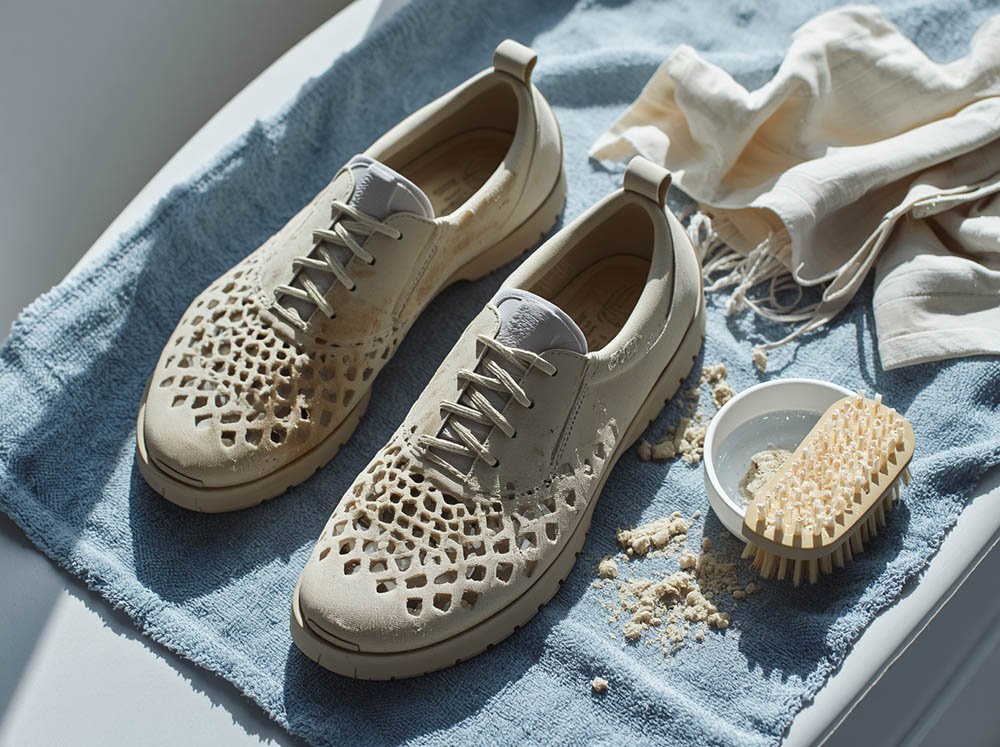
How to Remove Dirt From Lattice Shoes
Start dry before using water
If the shoes are dusty, sandy, or covered in dry dirt, begin with dry cleaning.
Shake the shoes, tap the soles, and brush the lattice while the dirt is still loose. This is especially useful for fine dust and sand.
Once water is added, particles can stick to the material and become harder to remove.
For mud, let thick or sticky mud dry slightly before brushing. Do not leave it for days, but give it enough time to stop smearing.
Use running water from multiple directions
Lattice footwear has many small pathways. Rinsing from one direction is usually not enough.
Rotate the shoe and rinse from the side, bottom, heel, toe, and inner openings when accessible.
The goal is to give dirt an exit path. If water only pushes dirt inward, the shoe may look clean outside while grit remains trapped inside.
For stubborn dirt, alternate between brushing and rinsing:
- Brush gently.
- Rinse.
- Inspect the lattice.
- Repeat as needed.
Use a toothpick or soft pick only when needed
For stuck pebbles or compacted dirt, a soft pick can help. Use light pressure only.
A wooden toothpick, plastic pick, or cotton swab is safer than a metal tool.
Do not gouge the material. Do not widen the lattice holes. Do not scrape printed struts aggressively.
If the debris does not come out easily, rinse again and try to loosen it with water before picking.
Repeat the rinse-and-brush process for deep dirt
Heavily used lattice shoes may need more than one cleaning pass. This is normal.
Dirt can hide inside channels that are not visible at first. After the first rinse, let the shoe drain for a minute and inspect it again.
If dirty water keeps coming out, continue rinsing from different angles. For deep dirt, patience is safer than force.
Can You Machine Wash 3D Printed Shoes?
Machine washing is risky unless the brand specifically allows it
The safest default is to hand wash 3D printed shoes.
Machine washing can expose the shoe to spinning, impact, concentrated detergent, and temperature changes. These conditions are not ideal for thin lattice structures or mixed-material footwear.
Some printed shoes may be machine washable, but only use a washer if the brand clearly allows it. If the care instructions do not confirm machine washing, treat the shoe as hand wash only.
If machine washing is allowed, use the gentlest setup
If the manufacturer says machine washing is safe, use the most cautious setup possible:
- Use cold water.
- Choose a gentle cycle.
- Use mild detergent.
- Place the shoes in a laundry bag.
- Add towels to reduce impact inside the drum.
- Air dry after washing.
Never use a dryer afterward. Drying heat is more risky than the wash itself.
After washing, remove the shoes from the laundry bag, pat them with a towel, and air dry them in a ventilated area.
Do not machine wash shoes with electronics, glued parts, leather, suede, or mixed materials
Not every 3D printed shoe is one printed object.
Some may include textile uppers, glued soles, leather details, suede panels, foam inserts, straps, buckles, removable insoles, or electronics. These parts may react differently to water and agitation.
Do not machine wash shoes with sensors, lights, specialty coatings, leather, suede, or glued construction unless the brand specifically says it is safe.
Even if the printed TPU section can handle water, the other parts may not.
How to Clean TPU Shoes Safely
TPU-style printed shoes usually handle water better than fabric-heavy sneakers
TPU-style printed shoes are often easier to rinse than fabric sneakers because the material does not absorb water the same way woven uppers do.
Open lattice sections can also allow water to pass through, which helps remove surface dirt and debris.
This makes TPU shoes practical for light cleaning after casual wear, gym use, rain, or dusty paths. A quick rinse and brush can often restore the shoe without a full deep clean.
TPU can still be affected by heat and harsh products
TPU is flexible and durable, but it still has limits.
Heat can affect shape, surface finish, and long-term material behavior. Harsh cleaners can dull the surface, create discoloration, or leave residue inside the lattice.
Avoid bleach, solvent cleaners, aggressive degreasers, and strong household chemicals.
For regular dirt, sweat, and street grime, mild soap is usually enough.
Use gentle cleaning more often instead of heavy deep cleaning
The best way to clean TPU shoes is to prevent dirt from building up for too long.
A quick dry brush after sandy or dusty use can stop debris from settling deeper into the lattice. This is especially useful for open lattice uppers and deep midsole geometry.
Frequent light cleaning is safer than rare aggressive cleaning.
Real-World Cleaning Situations
After walking on sand or gravel
Sand and gravel are common problems for lattice shoes.
Fine sand can settle deep inside the structure. Small pebbles can wedge between printed openings, especially near the outsole.
Start by shaking the shoes upside down. Tap the soles gently and listen for loose grit. Use a dry brush before rinsing.
Then rinse from the inside and outside if the shoe design allows it.
Check the outsole grooves carefully. Pebbles often get stuck near pressure points under the heel, forefoot, and outer edge of the sole.
After mud or wet dirt
Mud should be handled in stages.
If the mud is very wet, avoid smearing it deeper into the lattice. Let heavy mud dry slightly until it becomes easier to brush away.
Once the outer mud loosens, brush off the crust. Rinse with cool water, then use mild soap only after the loose mud is gone.
If you apply soap too early, you may spread dirty water throughout the shoe.
For thick mud inside lattice openings, repeat the rinse-and-brush process. Do not scrape aggressively.
After sweaty daily wear
Sweat can create odor, especially if the shoe has dense printed areas, closed footbeds, or removable insoles.
If the insoles are removable, take them out and let them dry separately.
Rinse lightly when needed, especially around the footbed and areas that touch the skin. Use mild soap if there is odor or visible buildup.
Let the shoes air dry completely. Wearing socks can also help reduce sweat, skin oil, odor, and friction during longer wear.
After rain or puddles
Rainwater may rinse off dust, but it does not always clean the shoe.
Puddles can contain street grime, oil residue, mud, and organic debris. After rain exposure, rinse the shoes with clean cool water.
If the outsole or lattice feels dirty, use a small amount of mild soap and brush gently.
Drying is important after rain. Place the shoes in a ventilated area and let air move through the lattice.
Do not store damp shoes in a closed cabinet, gym bag, or shoe box.
After gym, casual wear, or office use
For light daily use, 3D printed shoes may not need a full wash every time.
Wipe visible surfaces with a damp cloth, brush the outsole, and air the shoes out after wearing.
Gym use may require more odor control because of sweat. Casual or office use usually needs lighter maintenance unless the outsole collects dust or street dirt.
Deep clean only when dirt buildup, odor, or visible grime appears.
Common Cleaning Problems and How to Fix Them
Dirt keeps coming out even after rinsing
If dirt keeps coming out, debris is probably hidden inside deeper lattice channels.
This is common after sand, mud, or gravel exposure.
Continue rinsing from multiple angles. Rotate the shoe and let water flow through different openings. Brush lightly between rinses.
If the water stays dirty for several passes, let the shoe drain, inspect it, and continue. Do not increase pressure too much just to finish faster.
Small pebbles are stuck inside the lattice
Small pebbles can wedge between printed struts.
Start by shaking the shoe and tapping the sole. Then rinse around the pebble to loosen any dirt holding it in place.
Use a soft pick, toothpick, cotton swab, or toothbrush to move the pebble gently. Avoid metal tools.
Do not force the lattice open or pry against thin printed walls.
If the pebble is trapped in the outsole, rinse from the opposite side if possible. Water movement can help dislodge it.
The shoes still smell after cleaning
Odor usually comes from trapped moisture, sweat residue, dirty insoles, or incomplete drying.
If the shoes still smell after washing, check whether the insoles are fully dry. Remove them if possible.
Rinse the footbed area again with mild soap, then rinse thoroughly. Let the shoes dry in a ventilated place for longer than usual.
Do not put them in a closed space while damp.
If odor keeps returning, wear socks when possible and air the shoes out after every use.
White or light-colored printed shoes look stained
Light-colored 3D printed shoes show dirt more easily.
Some marks are surface grime. Others may be discoloration from street residue, material contact, or staining.
Start with mild soap and a soft brush. Focus on the stained area without scrubbing too hard. Rinse thoroughly and inspect after drying.
Avoid bleach. It may seem like a quick fix for white shoes, but it can discolor or weaken certain materials and leave uneven marks.
The shoes feel slippery after washing
A slippery feel usually means soap residue is still on the outsole or inside grooves.
Rinse the shoes again with cool water, paying close attention to the bottom. Brush the outsole lightly while rinsing to remove leftover detergent.
Let the shoes dry fully before wearing them. A damp outsole can also feel slick on smooth floors.
What Not to Do When Cleaning 3D Printed Shoes
Do not use a clothes dryer
A clothes dryer is not safe for most 3D printed shoes.
Heat and tumbling can stress the material, deform the shape, or damage the lattice. Air drying is slower, but it is much safer.
Use airflow, not heat.
Do not soak them overnight unless the brand says it is safe
Overnight soaking is not recommended unless the manufacturer specifically allows it.
Long soaking may affect adhesives, coatings, insoles, straps, or non-printed components.
Even with fully printed TPU-style shoes, long soaking is usually unnecessary. A controlled rinse and brush is safer and more efficient.
Do not use bleach or strong bathroom cleaners
Bleach, bathroom cleaners, mold removers, strong degreasers, and solvent-based products are too aggressive for regular shoe care.
They may affect color, texture, flexibility, or surface finish.
Use mild soap first. For most dirt, sweat, and street grime, gentle cleaning is enough.
Do not scrape the lattice aggressively
The lattice is part of the shoe’s comfort and structure. Thin printed walls and flexible cells should not be scraped with hard tools.
Aggressive scraping can create scratches, rough edges, or weak spots.
If dirt is stuck, soften it with water and remove it slowly.
How Often Should You Clean 3D Printed Shoes?
Clean lightly after dusty, sandy, or muddy use
If you wear 3D printed shoes on sand, gravel, dusty roads, grass, or muddy paths, clean them lightly afterward.
This does not always mean a full wash. Shake out debris, dry brush the lattice, and rinse only if needed.
Quick maintenance prevents dirt from becoming harder to remove later.
Deep clean only when dirt is trapped or odor appears
A deep clean is useful when there is visible buildup, trapped debris, odor, or dirty water coming out of the lattice.
If the shoes only have light dust, a quick brush or wipe may be enough.
Deep cleaning too often is not necessary. The better habit is regular light care.
Let the shoe fully dry between wears when possible
Drying matters as much as washing.
If the shoe remains damp inside the lattice, odor can develop. Damp shoes may also feel uncomfortable and increase friction.
When possible, rotate footwear so the printed shoes have enough time to dry completely between wears.
Practical Care Tips to Keep 3D Printed Shoes Cleaner Longer
Wear socks if the shoe allows it
Socks help reduce sweat, skin oil, odor, and rubbing. They also create a barrier between the foot and the printed surface.
Some 3D printed shoes are designed to be worn with socks. Others are styled as sandals or slides.
Choose based on comfort, fit, and how the shoe contacts your skin.
Avoid deep mud, loose gravel, and fine sand when possible
Deep mud, loose gravel, and fine sand are the hardest materials to remove from lattice shoes.
They can settle into openings and stay hidden until rinsing.
If you know the ground will be sandy, muddy, or full of small stones, expect extra cleaning afterward. Lattice footwear can handle real use, but certain environments create more maintenance.
Store shoes in a ventilated area
Do not store damp 3D printed shoes in a closed box, plastic bag, or tight cabinet.
Airflow helps moisture escape and reduces odor.
A dry, shaded, ventilated area is best. Keep the shoes away from direct heat and prolonged sun exposure.
Use a quick brush after outdoor wear
A 30-second dry brush can prevent deeper buildup.
Brush the outsole, sidewalls, and visible lattice openings after outdoor use. This small habit makes future cleaning easier and reduces the need for heavy scrubbing.
Final Cleaning Checklist
Best everyday method
Use this simple process for regular cleaning:
- Shake out loose dirt, sand, and pebbles.
- Dry brush the outsole and lattice.
- Rinse with cool water.
- Apply mild soap only where needed.
- Brush gently with a soft brush.
- Rinse thoroughly from multiple angles.
- Pat dry with a towel.
- Air dry fully in shade before wearing.
Safest rule to remember
Hand wash first. Use machine washing only if the manufacturer clearly says it is safe.
For most 3D printed shoes, the best cleaning method is gentle, controlled, and patient. Cool water, mild soap, soft brushing, and full air drying will clean the shoe without putting unnecessary stress on the printed structure.
FAQs About Cleaning 3D Printed Shoes
Yes. Many 3D printed shoes can be cleaned with cool water. The safest method depends on the material and construction. Avoid hot water and always air dry them fully.
Only put them in the washing machine if the brand specifically says it is safe. Otherwise, hand washing is the better choice because it gives you more control and reduces stress on the lattice.
Shake the shoes upside down, tap the soles gently, and brush them while dry. Then rinse from multiple angles with cool water to push sand out of the lattice holes.
Yes. Mild soap is usually safe for TPU-style shoes. Use a small amount, brush gently, and rinse thoroughly. Avoid bleach, solvents, and strong cleaning chemicals.
The shoes may not be fully dry, or sweat may still be trapped in the footbed, insole, or dense lattice sections. Remove insoles if possible and let the shoes dry in a ventilated area.
Overnight soaking is not recommended unless the manufacturer says it is safe. Long soaking may affect adhesives, coatings, insoles, or non-printed components.
A soft toothbrush or soft sneaker brush is best. Use gentle pressure and avoid stiff brushes that can scratch or damage thin lattice walls.