

Kiprun has entered the 3D printed running shoe market with the limited release of the KIPNEXT 3D in China. Can a Decathlon 3D printed shoe move additive manufacturing closer to practical performance running, or is this still an early retail test for a niche category?
The launch gives 3D printed running shoes a new commercial signal: a major value-driven sports retailer is testing printed midsoles inside an actual running product, not only a concept or exhibition sample.
Kiprun Moves KIPNEXT 3D Into a Limited China Release
Kiprun, Decathlon’s running brand, has launched the KIPNEXT 3D through select Decathlon stores in China. The rollout is limited, making the release more of a market test than a full global product launch.
That distinction matters. A limited drop lets Kiprun study consumer interest, retail handling, durability feedback, and performance perception before committing to wider distribution.
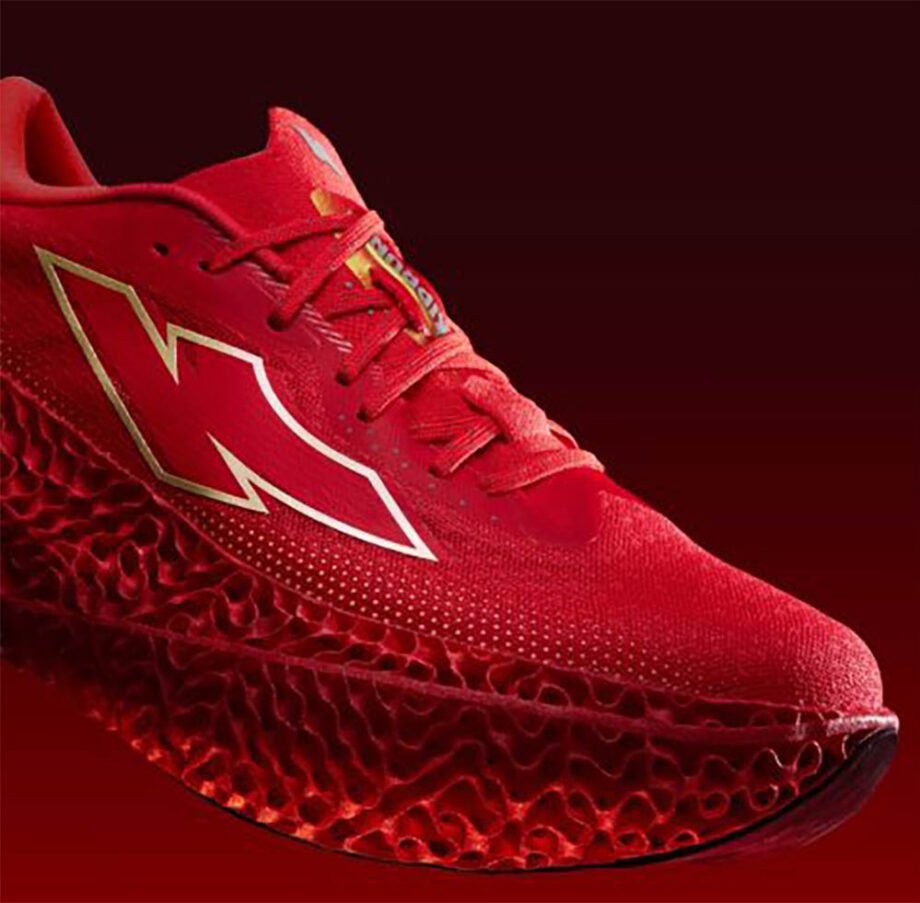
The KIPNEXT 3D is positioned as a performance running shoe built around a 3D printed midsole. It combines a knitted upper with an integrated lacing system and a printed lattice structure designed for cushioning and rebound.
For now, availability remains narrow. There is no confirmed global launch date, and Kiprun has not framed the shoe as a mass-market replacement for its conventional running lineup.
A 3D Printed Running Shoe Built Around a Lattice Midsole
The technical center of the KIPNEXT 3D is its 3D printed lattice midsole. Instead of using a conventional foam block, Kiprun is using a printed structure that can vary geometry, density, and mechanical response across different areas of the sole.
That is the practical reason brands are interested in printed midsoles. The midsole can be tuned through structure, not only through material chemistry.
Kiprun says the KIPNEXT 3D uses HP Multi Jet Fusion technology and a proprietary elastomer material. In simple terms, this makes it an HP MJF shoe built around a flexible printed midsole rather than a standard EVA or supercritical foam platform.
The brand also claims 75% energy return from the shoe. That figure is notable, but it should be treated carefully until more independent performance testing is available.
A lattice midsole running shoe can theoretically offer several advantages:
- targeted cushioning zones
- variable stiffness across the sole
- faster design iteration
- reduced need for traditional tooling
- new visual and structural design options
The important point is not only that the midsole looks different. The deeper shift is that performance characteristics can be adjusted digitally before production, which may shorten development cycles for future models.
Why the China Drop Matters for Decathlon and Kiprun
Decathlon’s role makes this launch more important than a small experimental footwear release. The company is known for broad retail reach, accessible pricing, and practical sports equipment, not for chasing limited-edition sneaker hype.
That gives the KIPNEXT 3D a different kind of industry value. If Decathlon can make printed midsoles work inside its running ecosystem, the category could move closer to everyday retail testing.
The reported price also places the shoe in a notable position. At around US$250, it is not cheap, but it is not priced like an ultra-luxury experiment either.
That middle ground matters. Much of the 3D printed footwear market has been split between experimental design objects, premium collaborations, and early custom-fit platforms. Kiprun is bringing the conversation closer to runners who may compare the product against established performance shoes.
The China-first release also gives Kiprun access to a fast-moving consumer market and a strong manufacturing base. For a new production method, that combination can help test both product demand and supply-chain readiness.
What This Means for 3D Printed Footwear
The KIPNEXT 3D suggests that 3D printed footwear is moving into a more practical phase. The category is no longer only about proving that a shoe can be printed. The harder question is whether a printed shoe can compete on ride quality, cost, consistency, and availability.
For 3D printed footwear, the main signal is platform maturity. Brands are now using additive manufacturing to explore performance structures that would be difficult or inefficient to produce with traditional foam molding.
That does not mean printed midsoles will quickly replace foam. Foam is still proven, scalable, familiar, and cost-efficient across the running industry.
The more realistic outcome is selective adoption. 3D printing may first gain traction in limited performance models, custom-fit programs, regional production tests, and premium shoes where the geometry offers a clear functional reason to exist.
Kiprun’s move is important because it comes from a brand with access to large retail systems. If the KIPNEXT 3D performs well, the next step may not be immediate mass production. It may be more controlled drops, more models, and better integration between digital design and retail inventory planning.
The Reality Check: What KIPNEXT 3D Has Not Solved Yet
The KIPNEXT 3D still leaves several important questions unanswered.
First, real-world durability is not fully established for everyday runners. A printed lattice midsole may perform well in controlled development, but repeated road use, heat, dust, moisture, and long-term compression are practical tests that matter more than launch claims.
Second, availability remains limited. A shoe sold only through select stores in China cannot yet prove broad consumer demand or global distribution readiness.
Third, cost is still a barrier. At roughly US$250, the KIPNEXT 3D sits above many mainstream running shoes, even if it is not at the extreme luxury end of the market.
Fourth, the performance claim needs independent context. Energy return numbers can be useful, but runners also care about stability, transition, weight, durability, comfort over distance, and how the shoe feels after many miles.
Finally, recyclability and end-of-life handling remain important. A 3D printed midsole can support more efficient production, but the sustainability case depends on materials, repair options, collection systems, and whether the product is actually recovered after use.
The practical clarification is simple: KIPNEXT 3D is a serious product signal, not proof that printed running shoes have already solved scale.
What to Watch Next
The next development to watch is whether Kiprun expands KIPNEXT 3D beyond China. A wider rollout would suggest that Decathlon sees enough demand and production confidence to move past limited testing.
Independent reviews will also matter. Runner feedback on comfort, rebound, weight, grip, durability, and ride stability will determine whether the shoe is viewed as a performance tool or mainly as a technology showcase.
The manufacturing side is just as important. If Decathlon and its partners can shorten product development, reduce tooling dependence, and maintain consistent quality, the KIPNEXT 3D could influence how future running shoes are designed and tested.
The broader signal is not that every running shoe will become 3D printed. The more likely shift is that printed midsoles become one more serious option in the performance footwear toolbox, especially when brands want faster iteration, unusual structures, or more localized production.
Mini FAQ
What is the Kiprun KIPNEXT 3D?
The Kiprun KIPNEXT 3D is a 3D printed running shoe from Decathlon’s running brand. It uses a knitted upper and a 3D printed lattice midsole made with HP Multi Jet Fusion technology.
Is the Kiprun 3D printed running shoe available worldwide?
No. The KIPNEXT 3D has been released through select Decathlon stores in China, with no confirmed global launch timeline yet.
What makes the KIPNEXT 3D different from regular running shoes?
Its main difference is the printed lattice midsole. Instead of relying only on conventional foam, the shoe uses a digitally designed structure that can tune cushioning, stiffness, and rebound through geometry.