Buying 3D printed shoes often starts with a simple promise: scan your feet, order online, and receive a better-fitting pair. For buyers, the real question is more practical: how accurate is the scan, and will the shoes actually fit better than regular sizing?
A foot scan for 3D printed shoes can make the fit process more precise than choosing a standard size from a chart. It can capture details such as foot length, width, arch shape, instep height, heel shape, and differences between your left and right foot.
That data can help a brand recommend a better size or produce footwear closer to your actual foot shape. But a scan alone does not guarantee perfect comfort. The final fit still depends on the scan quality, shoe design, material behavior, production process, and how the printed structure feels during real use.
Direct Answer: What Is a Foot Scan for 3D Printed Shoes?
A foot scan is a digital measurement of your feet. It records shape, size, and fit-related details that a normal shoe size cannot fully capture.
For 3D printed shoes, this matters because the product may be designed, adjusted, or selected digitally before production. Instead of relying only on a generic size like US 10 or EU 44, the brand can use more detailed foot data to guide fit.
A foot scan may help with:
- Size recommendation
- Internal shoe volume
- Width and forefoot shape
- Arch and instep fit
- Left and right foot differences
- Custom or semi-custom shoe geometry
Still, the scan is only one part of the process. A shoe can match your measurements and still feel wrong if the material is too firm, the heel is loose, the toe box is too shallow, or the design does not match how your foot moves.
How Foot Scanning Works for 3D Printed Shoes
Step 1: You Capture Your Foot Shape
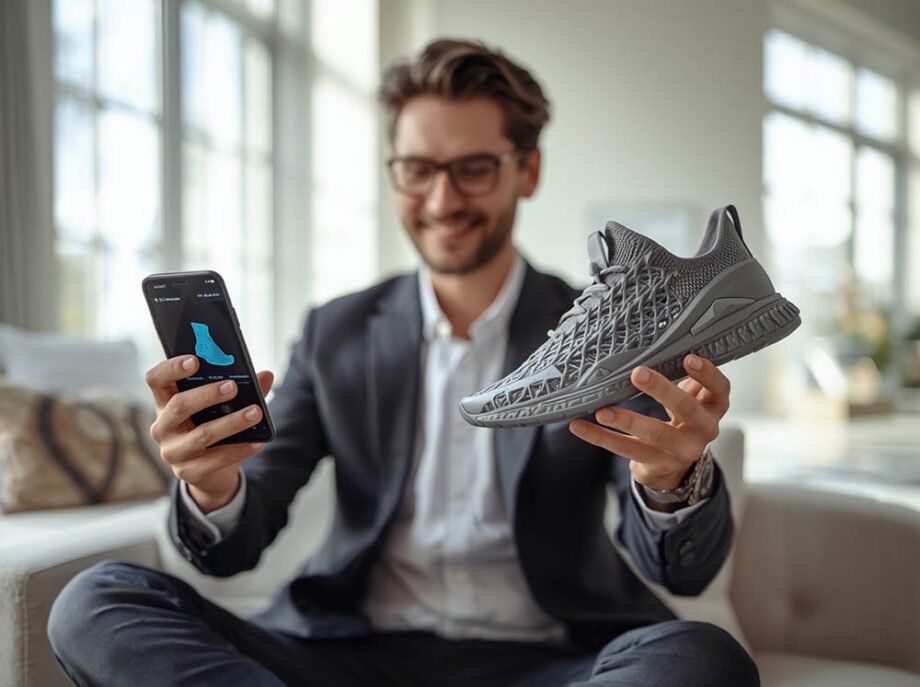
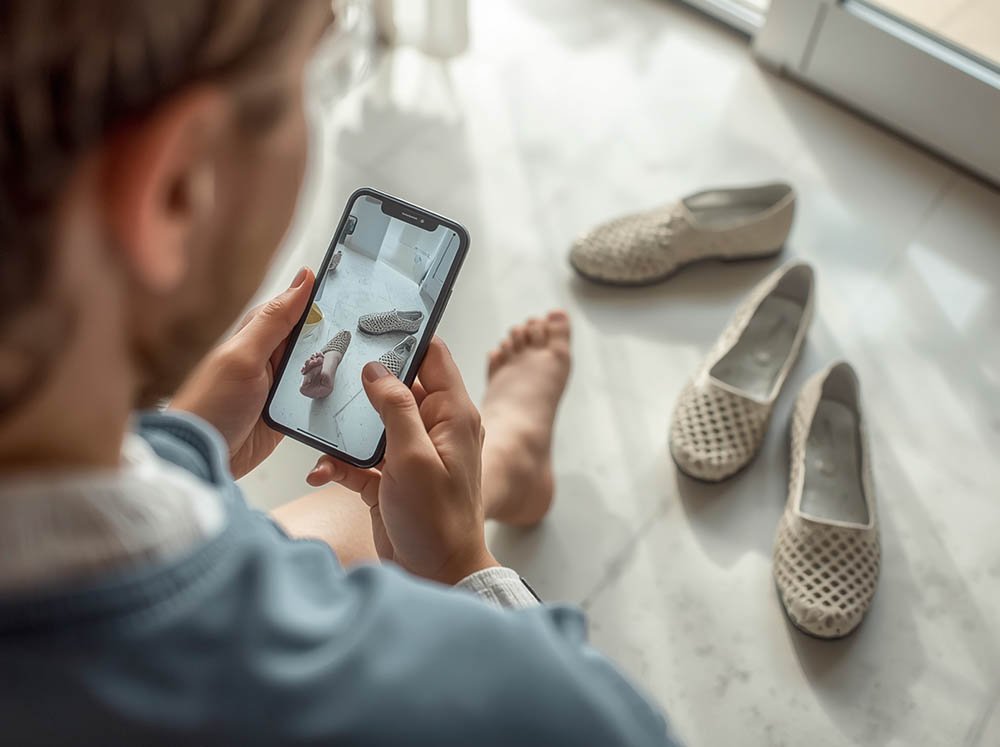
The process usually starts with a phone app, scanning tool, or in-store scanner. For online orders, most buyers complete the scan at home using a smartphone.
The app may ask you to stand on a flat surface, place your feet in a specific position, and capture images or video from different angles. Some systems may require bare feet, while others may allow thin socks.
In retail or clinical settings, a dedicated foot scanner may be used. These setups are usually more controlled because the lighting, camera angle, and foot position are easier to manage.
Step 2: The System Measures Key Foot Data
A useful scan for 3D printed footwear may measure:
- Foot length
- Foot width
- Arch profile
- Instep height
- Heel shape
- Forefoot shape
- Foot volume
- Left and right foot differences
These measurements matter because feet are not flat objects. Two people can have the same foot length but very different width, arch height, instep volume, heel shape, or toe spread.
Step 3: The Scan Becomes a Digital Foot Model
After the scan is captured, the system converts the data into a digital foot model or measurement profile.
This model gives the footwear brand more information than a standard size number. It may show whether your foot is wide, narrow, high-volume, low-volume, tapered, flat, or asymmetrical.
The digital model does not always mean the shoe will be built around every detail of your foot. In some cases, it is only used to recommend the closest size. In more advanced scan to print shoes, it may influence the shoe’s geometry before production.
Step 4: The Brand Uses the Scan for Sizing or Customization
Brands usually use foot scan data in two ways.
The first is scan-assisted sizing. This means the scan helps match your foot to the best available size.
The second is custom shoe scanning. This means the scan helps shape the product itself, especially in made-to-order or fully 3D printed footwear. The shoe may be adjusted for foot proportions, internal volume, or support zones.
These two approaches are not the same. A scan-assisted shoe may still be based on standard sizing. A truly custom shoe should use your foot data more directly.
Step 5: The Shoe Is Printed Based on the Selected Fit
Once the size or custom geometry is confirmed, the shoe is produced. Depending on the brand, this may involve a printed lattice midsole, a printed upper, a full single-piece shoe, or a modular printed structure.
This is where scanning becomes important. Many 3D printed shoes are made after the order is placed. If the fit data is wrong, the mistake can be harder to correct than with regular shoes pulled from inventory.
Why Foot Scanning Matters for 3D Printed Footwear
Standard Shoe Sizes Are Limited
Traditional sizing is built around broad categories. A size number mainly reflects foot length, with some allowance for width. But real fit depends on more than length.
One person may have a long narrow foot. Another may have a short wide foot. Someone else may have a high instep, flat arch, narrow heel, or one foot larger than the other.
A standard size chart cannot fully account for these differences.
3D Printing Can Use More Detailed Fit Data
3D printing gives brands more control over structure and geometry. In some footwear systems, designers can adjust lattice density, cushioning zones, support areas, flexibility, and internal shape.
This does not mean every 3D printed shoe is fully custom. Many still use standard or semi-standard sizes. But when scanning is part of the workflow, the brand has better data to work with before production.
A Scan Can Reduce Sizing Guesswork
Buying shoes online often involves guessing. You choose your usual size, read fit comments, check whether the shoe runs big or small, and hope the pair works.
A foot scan can reduce that uncertainty. It gives the brand measurable information instead of relying only on your size history.
This is especially useful when buying from a brand you have never worn before or when ordering a printed shoe that may not stretch like a traditional knit, mesh, leather, or foam shoe.
Real-World Usage: How Buyers Actually Use Foot Scans
Ordering Fully 3D Printed Shoes Online
For online buyers, scanning usually happens before checkout or during the sizing process. The brand may ask you to scan both feet using your phone, then use the data to recommend a size or confirm the order.
This matters because fully printed shoes often feel different from conventional sneakers. Printed lattice structures may flex differently, and the upper may not break in the same way as fabric or leather.
A scan helps buyers avoid choosing based only on habit.
Getting a Custom Fit From Brands Like Zellerfeld
A Zellerfeld foot scan is commonly associated with made-to-order 3D printed footwear. The scan helps guide sizing and fit before the shoe is produced.
For buyers, the important point is understanding what the scan actually does. It may help with size matching and fit guidance, but it does not automatically guarantee perfect comfort.
Before ordering, buyers should still check the brand’s sizing instructions, remake policy, return terms, production timeline, and fit expectations.
Buying Shoes for Unusual Foot Shapes
Foot scanning can be useful for people who struggle with standard shoes. This includes buyers with:
- Wide feet
- Narrow heels
- High arches
- Flat feet
- High insteps
- Different left and right foot sizes
- Forefoot pressure issues
For example, someone with a wide forefoot and narrow heel may size up to get enough toe room, only to end up with heel slipping. A scan can show that the issue is not just length. It may be a shape mismatch.
This does not mean every 3D printed shoe will solve the problem, but it gives the brand better information than a single shoe size.
Reducing Returns for Made-to-Order Footwear
Foot scanning also matters because made-to-order shoes are harder to handle like regular inventory.
A traditional shoe brand may accept returns and resell the pair. A customized or printed-on-demand shoe may be harder to restock, especially if it was produced for one buyer.
Better scanning can reduce the chance of printing the wrong fit. For buyers, this matters because return, exchange, and remake policies may be stricter with scan-to-print shoes.
Supporting Buyers With Different Foot Needs
Custom shoe scanning can also help buyers who need different fit solutions for each side. This may include people with asymmetrical feet, prosthetic users, or anyone who needs one shoe to accommodate a different shape or volume.
Scanning each foot separately can be more useful than buying a standard pair based on one size.
However, buyers with medical, orthopedic, diabetic, injury-related, or prosthetic-specific needs should be careful. A consumer foot scan is not the same as a clinical fitting or medical footwear assessment.
How Accurate Are Foot Scans for Shoes?
Foot scan accuracy for shoes depends on the scanning method, setup, and software. A controlled scanner can be more consistent than a casual phone scan. A phone-based scan can still be useful, but only when done correctly.
The most important factors include:
- Lighting
- Camera angle
- Foot position
- Floor surface
- Sock thickness
- Whether both feet are scanned
- Whether the system captures enough angles
A scan can measure shape better than a basic size chart, but it is still only a measurement tool. Fit accuracy also depends on how the brand interprets the scan and applies it to the shoe.
A strong fit system can turn scan data into practical footwear decisions. A weak system may collect measurements but still recommend a poor size.
What a Foot Scan Can Measure Well
Foot Length and Width
Length and width are the most basic measurements. A good foot scan can usually capture these more consistently than a manual tape measurement, especially when the scanning process is controlled.
These measurements help determine whether your usual shoe size makes sense or whether you may need a different size, width, or fit profile.
General Foot Shape
A scan can show whether the foot is narrow, wide, tapered, high-volume, low-volume, or unevenly shaped.
This matters because many fit problems are caused by shape mismatch, not just wrong length. For 3D printed shoes, better shape data can help reduce pressure points and improve internal fit.
Left and Right Foot Differences
Scanning both feet can reveal differences that buyers may not notice. One foot may be slightly longer, wider, or higher through the instep.
This matters because a pair that feels right on one foot may feel tight or loose on the other. If the brand supports individual foot data, scanning both feet can improve the final fit decision.
Arch and Instep Profile
Arch and instep shape affect how the foot sits inside the shoe. A high instep may feel tight even when length and width are correct. A low-volume foot may feel loose even in the right size.
A scan can help identify these risks before the shoe is printed.
Pressure or Load Zones
Some advanced systems may capture pressure or weight distribution. This can show where the foot places more load while standing or moving.
This is more common in advanced fitting environments than basic phone scans. When available, it can help guide cushioning, support, or pressure-relief design.
What a Foot Scan Cannot Always Predict
Long-Term Comfort
A scan captures shape, but it does not fully predict how the shoe will feel after hours of walking.
Comfort depends on movement, heat, swelling, surface conditions, material response, and how the printed structure behaves under repeated load.
Material Feel
3D printed shoes often use lattice structures and flexible polymers. The same scan can produce very different comfort results depending on material stiffness and lattice design.
A firm printed structure may feel supportive to one buyer and harsh to another. A softer structure may feel comfortable but less stable.
Foot Swelling
Feet can change size throughout the day, especially after walking, standing, heat exposure, or exercise. A scan captures your foot at one moment.
This is why scanning time matters. A morning scan may lead to a tighter fit than expected later in the day.
Gait and Movement
A static foot scan does not fully capture how you walk. Gait, stride length, foot strike, ankle movement, and pressure transition all affect comfort.
For casual footwear, this may not be a major issue. For running or performance footwear, it becomes more important.
Upper Security
A scan can help with shape, but upper security depends on design. Heel hold, collar shape, lace structure, strap placement, and material flexibility all affect whether the shoe feels locked in.
A shoe can match your foot measurements and still feel unstable if the upper does not hold the foot properly.
Common Problems With Foot Scanning for 3D Printed Shoes
Poor Scan Setup
Bad setup is one of the most common problems. Poor lighting, wrong camera angle, cluttered flooring, movement, or incorrect posture can affect the scan.
This can lead to a poor size recommendation or an inaccurate custom fit.
Incorrect Standing Position
Foot shape changes depending on posture and weight distribution. If you lean forward, shift weight to one side, curl your toes, or stand unnaturally, the scan may not reflect your real walking foot shape.
Stand naturally and follow the scanning instructions exactly.
Phone Scans May Miss Small Details
Phone-based scans are convenient, but they may not capture every small contour. This can matter for buyers with bunions, sensitive pressure points, unusual arch shape, or very specific fit needs.
For general sizing, phone scans may be enough. For medical or highly specialized fit needs, they may not be sufficient.
Custom Does Not Always Mean Medical-Grade
Custom 3D printed shoes are not automatically orthopedic shoes.
A custom fit process may improve comfort, but that does not mean the shoe is designed to treat pain, correct alignment, or replace professional medical footwear.
Buyers with foot pain, injury, diabetes-related foot concerns, or orthopedic needs should seek proper clinical guidance.
Brands Use Scan Data Differently
Not every brand uses scan data the same way.
One brand may use the scan only to recommend a size. Another may use it to adjust the shoe shape. Another may use it to build a more personalized model.
Before buying, check whether the shoe is truly custom, scan-assisted, or simply made-to-order in standard sizes.
Return Policies May Be Stricter
Because scan-to-print shoes may be produced after the order is placed, returns can be more limited. Some brands may offer remakes, credits, or exchanges. Others may have stricter terms.
Buyers should confirm the policy before purchasing, especially if the shoe is expensive or highly customized.
Foot Scan vs Traditional Shoe Sizing
Traditional shoe sizing groups feet into standard ranges. It is simple, familiar, and easy to use, but it misses many details that affect fit.
Foot scanning gives a more detailed view of the foot. It can capture length, width, shape, volume, arch, instep, and asymmetry.
That makes scanning more useful for 3D printed footwear, where digital design and manufacturing can respond to more detailed fit data.
However, standard sizes still matter for many 3D printed shoes. Not every printed shoe is fully custom. Some are printed in standard sizes or semi-custom size ranges.
The best fit decision often combines:
- Your foot scan
- Your usual shoe size
- Shoes you already own that fit well
- Brand size guidance
- Return or remake policy
- Intended use of the shoe
A scan is helpful, but it should not be followed blindly if the result seems far from your real shoe history.
What to Check Before Buying Scan-to-Print Shoes
Is the Shoe Truly Custom or Scan-Assisted?
Find out whether the scan changes the actual shoe design or only helps recommend a size.
Both can be useful, but they are not the same. A truly custom shoe should use your foot data more directly. A scan-assisted shoe may still be based on standard sizing.
Are the Scanning Instructions Clear?
Good brands provide clear instructions for scanning, sizing, and fit expectations. The process should explain how to scan, what to wear, whether to scan both feet, and what to do if the scan result conflicts with your usual size.
Unclear instructions increase the risk of a poor fit.
Are Returns, Exchanges, or Remakes Available?
Return and remake policies matter more with made-to-order footwear. Check whether the brand allows exchanges, fit adjustments, reprints, refunds, or store credit.
Do this before submitting the scan and order.
Does the Scan Measure Both Feet Separately?
Both feet should be scanned whenever possible. This is especially important if one foot already feels different in regular shoes.
If the system only uses one foot or averages both feet, it may not solve left-right fit issues.
How Long Will Production Take?
Scan-to-print shoes may take longer than regular shoes because the product may be printed after purchase.
Check the expected production time, shipping window, and possible delays. This is important if you need the shoes for a specific event, trip, or replacement timeline.
What Do Real Buyers Say About Fit?
Buyer feedback can reveal practical details that scans do not show. Look for comments about whether the shoe feels long, narrow, roomy, firm, soft, secure, or difficult to break in.
This can help you understand how the printed material and design feel in daily use.
What Is the Shoe Designed For?
Different shoes require different fit expectations.
A casual slip-on does not need the same precision as a running shoe. A recovery shoe may prioritize softness and room. A daily walking shoe needs a balance of support, comfort, and durability.
Before buying, make sure the shoe’s purpose matches how you plan to use it.
Practical Advice: How to Get a Better Foot Scan
Scan Later in the Day
Feet often expand slightly during the day. Scanning later can give a more realistic measurement for everyday wear, especially if you plan to use the shoes for walking, work, travel, or long periods of standing.
Use Good Lighting
Even lighting helps the system detect your foot outline. Avoid harsh shadows, dark rooms, reflective floors, and cluttered backgrounds.
A clean floor and clear contrast around the foot can improve scan quality.
Follow the Brand’s Instructions Exactly
Every scanning system is different. Some require bare feet. Others may allow thin socks. Some ask you to stand, while others may require a seated position.
Do not improvise unless the brand gives that option.
Scan Both Feet
Always scan both feet if the system allows it. Your left and right foot may not be identical.
Even a small difference can matter in a printed shoe with less stretch than traditional footwear.
Avoid Thick Socks Unless Required
Thick socks can change the shape and volume of your foot. Unless the brand specifically tells you to wear the socks you plan to use with the shoes, scan barefoot or with the recommended sock type.
Recheck Unusual Results
If the scan recommends a size that seems very different from what you normally wear, re-scan before ordering.
Check your lighting, camera angle, socks, floor surface, and foot position. A surprising result may be correct, but it can also indicate a scanning error.
Compare the Result With Shoes That Already Fit Well
Use your best-fitting shoes as a reality check. If you know a certain size and shape works for you, compare that experience with the scan recommendation.
This helps you avoid relying only on digital data without considering real-world fit history.
Who Should Consider Foot Scanning for 3D Printed Shoes?
Foot scanning is useful for buyers who want a more informed fit process before ordering 3D printed footwear.
It may be especially helpful for:
- People who fall between sizes
- Buyers with wide or narrow feet
- People with high arches or flat feet
- Buyers with narrow heels
- People with different left and right foot sizes
- Buyers ordering made-to-order 3D printed shoes
- Early adopters interested in custom footwear
- Anyone who wants more fit data than a basic size chart provides
For these buyers, custom shoe scanning can make the purchase feel less like guesswork.
Who Should Be More Careful?
Foot scanning can improve sizing, but it is not the right solution for every buyer.
Be more careful if you:
- Need orthopedic or medical footwear
- Have ongoing foot pain
- Have diabetes-related foot concerns
- Are recovering from injury
- Need prosthetic-specific fitting
- Are buying performance running shoes without testing
- Cannot return or exchange made-to-order shoes
- Expect the scan to guarantee perfect comfort
A consumer foot scan is not a medical diagnosis or clinical fitting. It can support better sizing, but it cannot replace professional care when specialized footwear is needed.
Final Takeaway
A foot scan for 3D printed shoes can make sizing more personal and more precise than a standard size chart. It can capture your foot shape, identify left-right differences, and help brands recommend or produce better-fitting footwear.
But the scan is only one part of the fit process. The final result still depends on scan quality, brand fit system, shoe design, printed material, production accuracy, and how the shoe feels during real use.
The safest approach is simple: scan carefully, compare the result with shoes that already fit you well, understand how the brand uses your data, and check the return or remake policy before ordering.
FAQ
Do I need a foot scan to buy 3D printed shoes?
Not always. Some 3D printed shoes are sold in standard sizes and do not require a scan. Others use scanning to recommend a size or create a more personalized fit. If the brand offers scanning, it is usually worth using because it gives more fit information than a basic size chart.
Are foot scans for 3D printed shoes accurate?
They can be accurate, but the result depends on the scanning method and setup. Good lighting, correct foot position, a clean background, and careful instruction-following all matter. Accuracy also depends on how the brand uses the scan data after it is captured.
Can I use my phone to scan my feet for custom shoes?
Yes. Some brands allow phone-based foot scanning. This is convenient for online orders, but the scan must be done carefully. Camera angle, lighting, socks, floor surface, and posture can all affect the result.
Does a Zellerfeld foot scan guarantee the right fit?
A Zellerfeld foot scan can help guide sizing and support the made-to-order fit process, but it does not guarantee perfect comfort for every buyer. Fit still depends on scan quality, shoe design, printed material, and personal comfort preference.
What is the difference between scan-to-print shoes and regular custom shoes?
Scan-to-print shoes use digital foot data as part of sizing, design, or production. Regular custom shoes may involve manual measurements, in-person fitting, or handcrafted adjustments. In 3D printed footwear, scan data can connect directly to digital design and manufacturing.
Do 3D printed shoes fit better than normal shoes?
They can fit better for some buyers, especially when scanning and customization are used well. However, not every 3D printed shoe is fully custom. Some are still based on standard sizes, and comfort depends on design, material, and use case.
What should I do if my foot scan gives a different size than I usually wear?
Recheck the scan first. Make sure the lighting, camera angle, socks, floor surface, and foot position were correct. Then compare the result with shoes that already fit you well. If the brand offers fit support, use it before placing the order.