

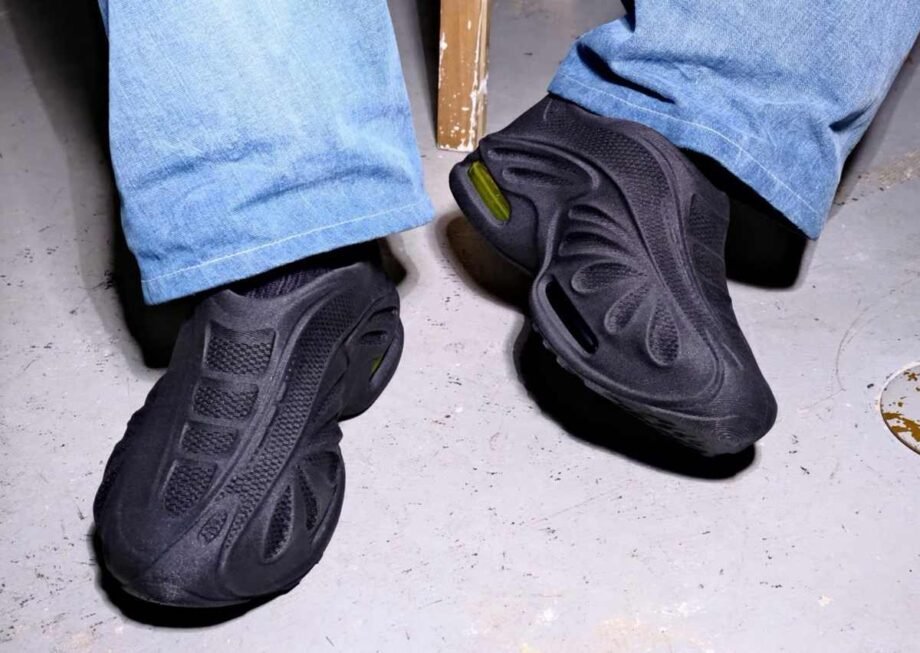
Nike has revealed the first publicly surfaced 3D printed Air Max from its Air Works program, raising a practical question: what happens when outside designers gain access to Nike’s footwear technology and 3D printing capabilities? The first design, created by Tokyo-based designer Motoi Hatsuki with Zellerfeld, offers an early look at how Nike is using additive manufacturing within its broader Air Max development program.
Nike Air Works Brings Its First 3D Printed Air Max Design to Light
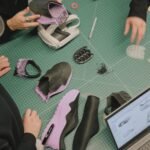
Nike’s inaugural Air Works program brought eight designers from Beijing, London, Los Angeles, Mumbai, New York, Paris, Shanghai and Tokyo to its headquarters in Beaverton, Oregon. The designers worked with Nike mentors and engineers to develop individual 3D-printed Air Max styles, with Zellerfeld serving as the manufacturing partner.
The first design to surface publicly comes from Motoi Hatsuki, a Tokyo-based designer and founder of Blue Room. Hatsuki shared an early look at the shoe at the end of July, making his design the first publicly reported result from the Air Works program.
Nike’s original program schedule identified Hatsuki’s design for July, followed by additional Air Works designers through February 2027.
The sequence is significant because Air Works was designed as an ongoing series rather than a single footwear release.
The 3D Printed Air Max Uses a One-Piece Construction
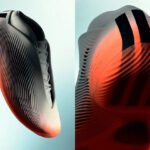
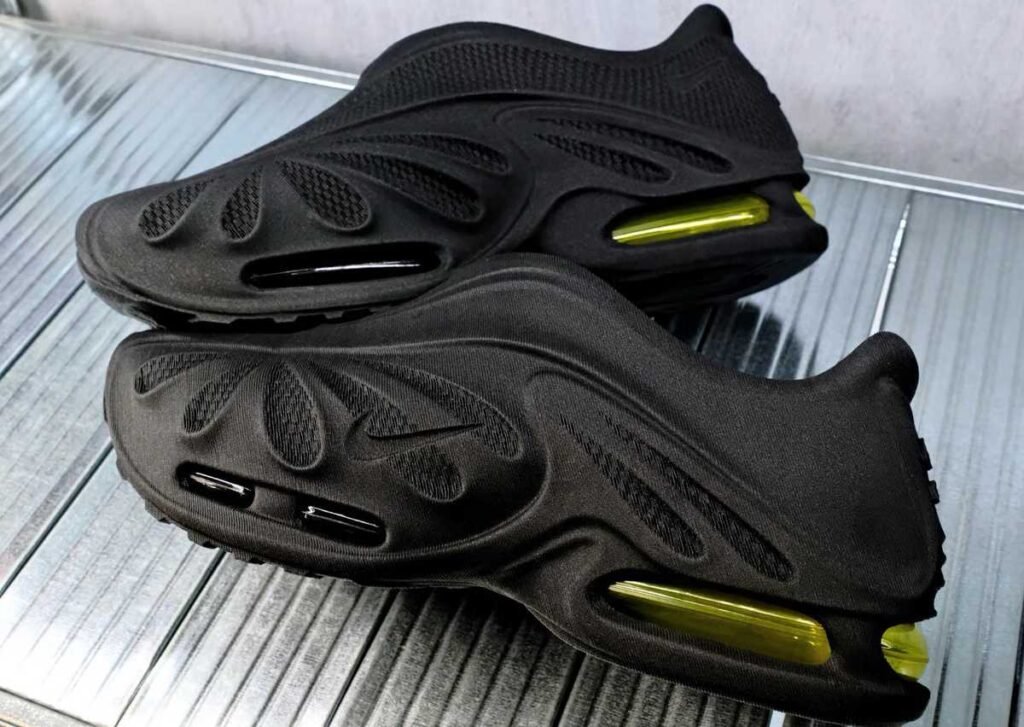
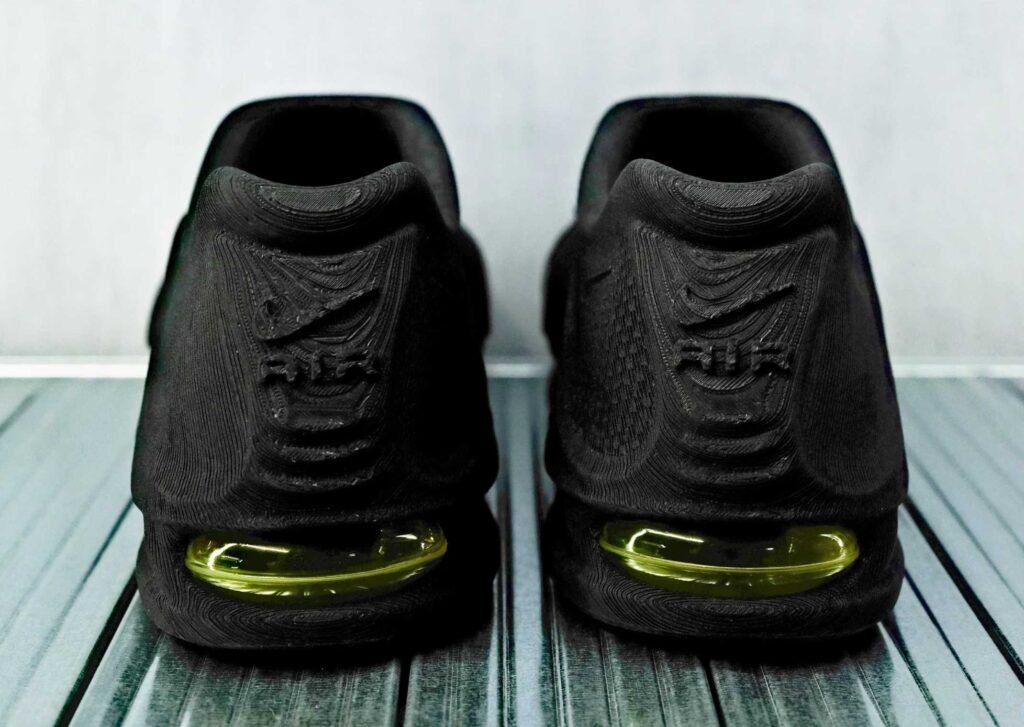
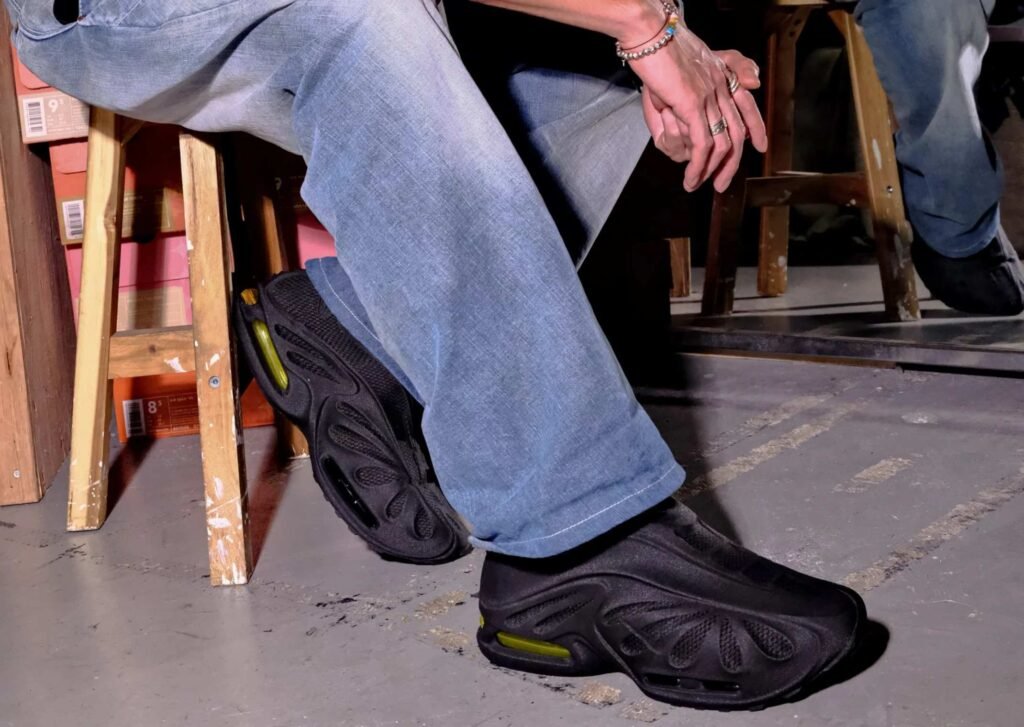
Hatsuki’s unnamed Air Works sneaker uses a one-piece 3D-printed construction with a slip-on profile. The design eliminates conventional stitched panels and overlays, allowing the printed structure itself to define much of the shoe’s form.
The visible design draws inspiration from Nike’s previous Air experimentation, including the Air Max 1000 and Tailwind V. It also features prominent Air units at the forefoot and heel.
The upper uses a wave-like structure across the forefoot, while looping textures appear across the side panels.
The important manufacturing detail is the one-piece construction. Traditional footwear separates the upper into multiple components that must be cut, assembled and joined. A 3D-printing workflow can instead produce complex geometry as part of a single digital design.
That does not mean every component of future footwear will necessarily be printed as one piece. It shows, however, how additive manufacturing can give designers a different starting point for footwear construction.
Zellerfeld Connects Nike Air Works to Additive Manufacturing
Zellerfeld’s involvement is central to the Air Works program.
Nike says each Air Works designer developed a distinctive 3D-printed Air Max style in partnership with Zellerfeld. The company describes the initiative as a research, development and design program rather than simply a conventional product collaboration.
For Zellerfeld, the project extends its relationship with Nike beyond the existing Air Max 1000 series.
The companies have already worked together on multiple 3D-printed Air Max models. Air Works introduces another dimension: instead of developing one standardized shoe, the manufacturing system is being used to produce different designer-led interpretations.
That distinction matters because additive manufacturing becomes particularly useful when production can accommodate multiple digital designs without requiring conventional tooling for every variation.
Nike’s Air Works Program Moves 3D Printed Footwear Into Designer Development
The Air Works program is more significant than the individual sneaker because of the development system Nike has built around it.
The participating designers were not simply asked to submit concepts. Nike brought them into its own development environment, where they worked with company mentors and accessed facilities including the Air Manufacturing Innovation facility, Nike Sport Research Lab, Department of Nike Archives and Bowerman Footwear Lab.
The program therefore connects several parts of Nike’s footwear development process:
- Independent designers
- Nike footwear designers and engineers
- Air Max design heritage
- Nike research facilities
- Additive manufacturing through Zellerfeld
- Limited-run physical production
This is a different model from simply outsourcing the production of an existing shoe to a 3D-printing company.
It gives additive manufacturing a role earlier in the design and development process.
What This Means for 3D Printed Footwear
The most important development is not simply that Nike has produced another 3D-printed sneaker. Nike and Zellerfeld have already demonstrated that capability through the Air Max 1000 family.
The more significant shift is that Nike is using 3D printing to support a multi-designer development system.
That could make additive manufacturing particularly useful for limited production, experimental footwear and culturally specific designs where conventional manufacturing volumes may not make economic sense.
A designer can develop a digital model, test its physical form and potentially manufacture a small run without building the tooling infrastructure normally associated with large-scale footwear production.
The practical limitation is that Air Works remains a controlled experimental program. Nike has not indicated that Hatsuki’s shoe will receive a broad retail release, and recent reporting has not identified a confirmed retail release date for the specific design.
Nike has confirmed that each Air Works designer will receive a limited friends-and-family version of their shoe, with the rollout scheduled from July 2026 through February 2027.
The Air Works Rollout Will Continue Through 2027
Hatsuki’s design is only the beginning of the program’s public rollout.
Nike’s announced schedule is:
- July 2026: Motoi Hatsuki — Tokyo
- August: Tasnim — London
- September: Marc Su — Beijing
- October: Masyn — Los Angeles
- November: Diya Joukani — Mumbai
- December: Jose Wong — Shanghai
- January 2027: Yams — Paris
- February 2027: Omi — New York City
This gives the 3D-printed footwear industry an unusual opportunity to observe the program over several months rather than through a single launch.
Each new design can provide another data point on how Nike and Zellerfeld are applying additive manufacturing to different creative directions.
Limitations and Reality Check
It is important not to interpret the Hatsuki sneaker as evidence that Nike is replacing conventional footwear manufacturing with 3D printing.
Air Works is a limited research, development and design initiative. Nike has not announced mass production of these designer shoes.
There is also no indication that Hatsuki’s model is currently available for general consumer purchase. Current reporting continues to describe the design as part of the limited Air Works rollout.
The program also does not establish that 3D printing is currently the most economical manufacturing method for mainstream Nike footwear.
The more defensible conclusion is narrower: Nike is actively testing additive manufacturing as part of a designer-led footwear development workflow.
That is already a meaningful development for the industry.
What to Watch Next
The next important development will be whether the remaining Air Works designers produce similarly distinct approaches to 3D-printed footwear.
Nike’s confirmed schedule gives the industry several opportunities to examine how different designers use the same manufacturing platform.
Another development worth watching is Nike’s planned Air Max 1000 Nike By You offering. Nike has confirmed that the Air Max 1000 will become available through Nike By You later in 2026, potentially connecting its 3D-printing work with consumer customization.
For now, the Motoi Hatsuki design provides the first public look at what the Air Works program can produce. Its significance lies less in the individual sneaker than in Nike’s decision to place 3D printing directly inside an experimental design and development pipeline.
Mini FAQ
What is the Nike Air Works program?
Nike Air Works is a research, development and design program that brings designers from eight cities together with Nike teams to develop 3D-printed Air Max styles in partnership with Zellerfeld.
Who designed the first Nike Air Works 3D printed Air Max?
The first publicly surfaced design comes from Tokyo-based designer Motoi Hatsuki, who developed the sneaker with Zellerfeld as part of Nike’s Air Works program.
Can you buy the Motoi Hatsuki 3D printed Air Max?
There is currently no confirmed general retail release for Hatsuki’s design. Nike has stated that Air Works designers will receive limited friends-and-family versions of their shoes.
Sources & Credits
NIKE, Inc. — Nike’s Air Works Program Gathers Designers From Around the World to Co-Create the Future of Air Max. May 28, 2026.
Read Nike’s official Air Works announcement
Complex — The First Nike Air Works Sneaker Surfaces.
Hypebeast — A First Look at Nike and Zellerfeld’s 3D-Printed Air Works Prototype. August 2, 2026.