

3D printed shoes can handle rain in the right conditions, but they are not automatically waterproof. Their performance depends on the material, outsole design, tread pattern, upper structure, drainage, and how much wet exposure the shoe is built to handle.
For buyers, the real question is simple: will the shoe keep your feet comfortable, drain properly, dry fast, and grip safely on wet pavement, slick floors, painted crossings, stairs, and puddle-prone sidewalks?
Some 3D printed shoes work well in light rain. Others are better treated as dry-weather shoes that can handle occasional splash. The difference comes down to design.
Quick Answer: Are 3D Printed Shoes Good for Rain?
3D Printed Shoes Can Handle Rain, But Not All Are Waterproof
Yes, 3D printed shoes can be good for rain if the design supports wet use. Many are made with TPU or similar flexible polymers that resist water better than knit, mesh, or foam-heavy materials. TPU does not soak up water like fabric, so some printed shoes are easier to rinse, dry, and reuse after light rain.
But waterproof TPU shoes and rain-ready 3D printed shoes are not the same thing.
A shoe can use water-resistant printed material and still let water inside through open lattice zones, ventilation gaps, seams, exposed sock liners, or the collar opening. If the shoe has large printed openings or a breathable lattice upper, rain and splash can reach your socks quickly.
The printed material may handle water. Your feet may still get wet.
Best for Light Rain, Wet Pavement, and Short Exposure
Most 3D printed shoes are best for light rain, damp sidewalks, quick errands, and short outdoor exposure. They are less ideal for heavy storms, deep puddles, muddy paths, or cold wet weather.
They can work well when you are walking to the car, crossing a wet parking lot, commuting through light drizzle, or dealing with post-rain sidewalks. If the shoe drains quickly and uses water-resistant materials, it may recover faster after getting wet.
But if the upper is open, the insole holds moisture, or the outsole lacks wet traction, rain performance becomes limited.
The Biggest Concern Is Grip, Not Just Water Resistance
Water resistance matters, but wet grip matters more.
A shoe can shed water and still feel unsafe if the outsole slips on smooth surfaces. Rain changes how the shoe contacts the ground. Wet pavement creates a thin layer of water between the outsole and the walking surface. If the tread is too smooth or the printed sole lacks contact edges, the shoe can feel unstable.
For rain use, traction wet 3D printed shoes need more than a water-resistant body. They need a practical outsole with enough surface contact, grooves, edges, and material grip to handle wet ground.
How 3D Printed Shoes Perform in Wet Conditions
TPU Materials Can Resist Water Better Than Fabric
Many 3D printed shoes use TPU because it is flexible, durable, elastic, and suitable for complex printed structures. At the material level, TPU usually handles moisture better than textile uppers or exposed foam structures.
This is why some printed shoes feel practical after light rain. The printed structure may not become heavy and soggy the way fabric-heavy sneakers can. Water can bead, roll off, or pass through the structure instead of being absorbed deeply.
But material resistance is only one part of rain performance. The complete shoe still includes openings, outsole design, sock liner, footbed, collar, and sometimes non-printed parts.
A printed TPU shell may resist water. A fabric tongue, soft insole, collar foam, or sock can still absorb it.
Lattice Structures May Drain Water Quickly
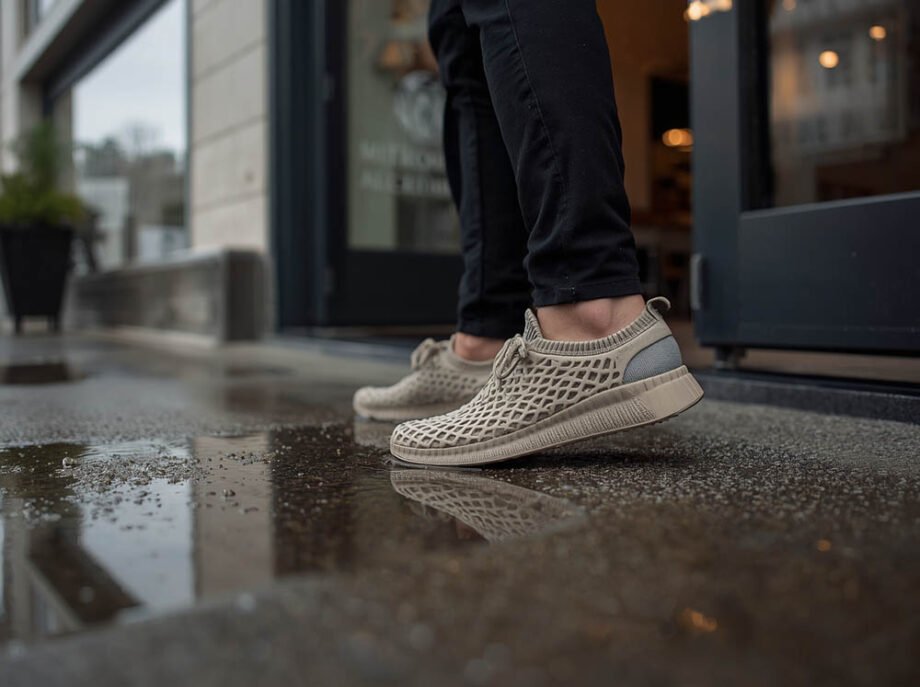
One advantage of lattice footwear is drainage. Open lattice designs can let water pass through instead of trapping it inside a thick foam midsole. This can help the shoe dry faster after rain, rinsing, or splash exposure.
For warm weather, this can be useful. If you step through a shallow puddle or walk on wet pavement, a lattice structure may allow water to escape instead of pooling underfoot.
This is one reason breathable lattice shoes can feel more practical in humid or rainy climates than padded shoes that stay wet for hours.
Wet grip lattice shoes, however, still need the right outsole design. Drainage helps comfort. It does not guarantee traction.
Open Designs Can Also Let Water In
The same open structure that helps water drain can also let water enter.
That is the trade-off with lattice footwear. The design may improve airflow, reduce water absorption, and speed up drying, but it usually does not create a sealed barrier. If rain hits the upper directly, or if splash comes from the side, water can pass through the openings.
Drainage is not waterproofing.
A quick-drying 3D printed shoe may be good for warm rain, wet sidewalks, or casual summer use. It may be a poor choice if you want your socks to stay dry during a storm.
Printed Midsoles May Stay Functional When Wet
A well-made printed midsole can keep its cushioning and support after getting wet. Because the support comes from printed geometry, not only soft foam, the structure can continue to compress and rebound even after moisture exposure.
This is one of the strengths of 3D printed footwear. Lattice midsoles can be engineered with zones of compression, rebound, stiffness, and flexibility. Water exposure does not automatically ruin that geometry.
Comfort can still change when the shoe is wet. Socks may shift. Insoles may become damp. The foot may slide slightly inside the shoe. Dirt or grit may enter lattice openings. The outsole may feel less stable on slick surfaces.
So while the printed midsole may remain functional, the full wearing experience can still be affected by rain.
Are 3D Printed Shoes Waterproof?
Water-Resistant Is More Common Than Fully Waterproof
Most 3D printed shoes should be considered water-resistant or quick-drying rather than fully waterproof.
Waterproof means the shoe is designed to block water from reaching the foot under normal wet conditions. That usually requires sealed materials, minimal openings, controlled seams, and construction that prevents water from entering through the upper.
Water-resistant means the shoe can handle some moisture, light rain, or splash exposure, but water may eventually get inside.
Quick-drying means the shoe may get wet but is designed to release moisture and dry faster than traditional absorbent footwear.
Many 3D printed shoes fall into the water-resistant or quick-drying category. They may handle water well as a structure, but that does not mean they keep the foot dry.
Full-Shell Printed Shoes May Block More Water
Some 3D printed shoes use more closed surfaces, shell-like uppers, or minimal openings. These designs can block more water than open lattice shoes.
A full-shell or semi-closed printed design may be better for rain if it has fewer ventilation holes, a covered toe box, a higher sidewall, a closed or protected upper, minimal gaps near the foot, and a proper outsole for wet grip.
This type of construction gives water fewer entry points. It may not perform like a rain boot, but it can offer better protection than a highly ventilated lattice design.
Lattice Shoes Are Usually Not Fully Waterproof
Lattice shoes are usually built around airflow, flexibility, cushioning, weight reduction, and visual structure. Those strengths often work against full waterproofing.
If the shoe has open cells across the upper, midsole, or sidewall, rain can enter. If the lattice wraps around the foot or sits close to the sock, water can reach the foot quickly. If the outsole has open channels, water and dirt may collect in the gaps.
This does not make lattice shoes bad. It means they should be judged correctly.
A lattice shoe may be excellent for breathability, warm weather, quick drying, and light wet use. It is usually not the best choice when the priority is keeping your feet dry.
Socks and Insoles Can Still Get Wet
Even when the printed body does not absorb much water, the inner parts of the shoe can still hold moisture.
The sock is usually the first thing you notice. If water enters through the upper, sidewall, collar, or toe area, the sock gets damp and comfort drops quickly. The insole can also absorb water, depending on its material.
This matters because a shoe can look rain-friendly from the outside but still feel uncomfortable after real use.
Before buying 3D printed shoes for rain, check whether the product has a removable insole, washable footbed, water-resistant lining, or open interior structure that can dry easily.
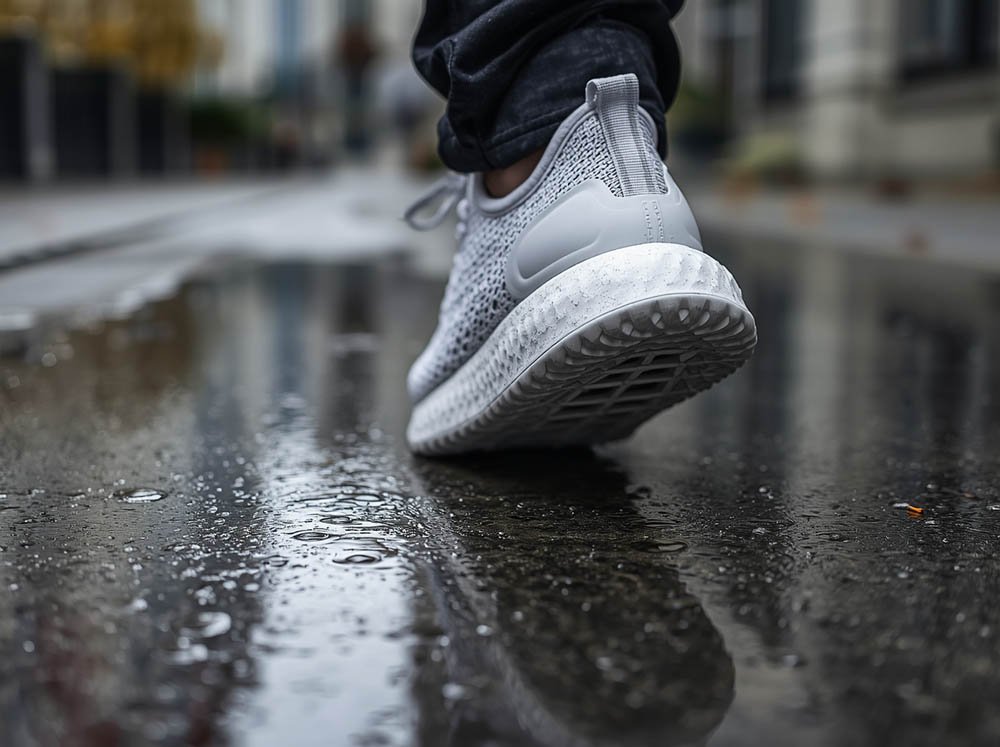
Wet Grip: Do 3D Printed Shoes Slip in the Rain?
Wet Grip Depends on Outsole Geometry
Wet traction depends heavily on outsole geometry. A good wet-weather outsole needs contact edges, grooves, channels, and surface texture to manage the water layer between the shoe and the ground.
For traction wet 3D printed shoes, the outsole needs to maintain contact with the ground, move water away from contact zones, create grip edges, avoid becoming too smooth under load, and stay stable when turning, stopping, or stepping down.
This is why outsole design matters more than the fact that the shoe is 3D printed. A printed shoe with a thoughtful tread pattern can feel secure in light rain. A printed shoe with a flat or slick bottom can feel risky.
Smooth Printed Soles Can Feel Slippery
Smooth printed soles can become slippery on wet surfaces, especially when the ground is already slick.
Common risky surfaces include wet tile, polished concrete, painted crosswalk lines, metal stairs, metal grates, glossy mall floors, train station floors, convenience store entrances, wet ramps, and smooth stone walkways.
These surfaces reduce friction, and water makes the problem worse. A sole that feels fine on dry pavement may feel unstable when stepping from a rainy sidewalk into a tiled lobby.
Slip resistance printed shoes need outsole texture and a compound that grips well under wet contact. Without that, the material’s water resistance does not matter much.
Flexible TPU Can Help, But Design Matters More
Flexible TPU can help wet grip because softer materials can conform slightly to the walking surface. More contact can improve traction, especially on uneven pavement.
But material softness is not enough by itself.
If the outsole is too smooth, too hard, too flat, or poorly shaped, it may still slip. If the shoe has large open lattice areas underfoot without enough ground-contact rubber or tread, the grip may feel inconsistent.
The best rain-friendly printed footwear combines material flexibility with practical outsole engineering. The sole should have a tread pattern designed for real surfaces, not only a visually interesting printed shape.
Wet Lattice Grip Is Not Always Predictable
Wet grip lattice shoes can behave differently depending on the surface. On textured pavement, the structure may feel stable. On smooth indoor flooring, it may feel slick. On wet stone or painted surfaces, it may lose confidence.
Water, dust, mud, oil, and worn tread can all change traction. Lattice structures may also trap small debris that affects how the shoe contacts the ground.
Wet grip is not only about the shoe. It is about the shoe, the surface, the water layer, and how the outsole behaves under body weight.
Real-World Usage: When 3D Printed Shoes Work Well in Rain
Walking on Damp Sidewalks
Damp sidewalks are one of the most realistic rain use cases for 3D printed shoes.
If the shoe has decent outsole traction and the rain is light, printed footwear can work well for short walks around the city, neighborhood errands, or moving between buildings. The printed structure may resist water better than fabric-heavy sneakers, and lattice areas may dry faster after minor splash exposure.
This is where 3D printed shoes rain performance can feel practical: wet ground, brief exposure, and no deep water.
Quick Errands in Light Rain
For quick errands, 3D printed shoes can be convenient. Walking from the house to the car, going into a shop, grabbing coffee, or crossing a parking lot in drizzle usually does not require full waterproof footwear.
A water-resistant printed shoe can handle this type of use if the outsole has enough grip. The main concern is not usually the printed material breaking down. The main concern is whether water gets into the shoe and whether the sole feels stable on wet entrances.
If the route includes slick tile or polished floors, walk carefully until you know how the shoe behaves.
Commuting With Occasional Rain Exposure
3D printed shoes may work for commuting if the rain exposure is occasional and the route is predictable.
They are more practical when you mostly walk on textured pavement, avoid deep puddles, wear moisture-wicking socks, and can let the shoes dry after use. A printed shoe with decent upper coverage, a grippy outsole, and removable insoles is a better option than a highly open design with a smooth bottom.
They are less practical when your commute includes long walks in heavy rain, wet train platforms, tile-heavy stations, or cold weather where damp socks become uncomfortable.
Warm Weather Rain
Warm rain is one area where some 3D printed shoes make sense.
In hot and humid conditions, breathable lattice shoes can feel better than sealed waterproof footwear. If your feet get wet anyway, quick drainage and airflow can be more comfortable than a heavy shoe that traps water and heat.
This does not mean every lattice shoe is good for rain. It means the trade-off can be acceptable in warm weather: less waterproofing, but faster drying and more breathability.
In cold rain, that same design can feel uncomfortable because water entering the shoe cools the foot quickly.
Post-Rain Pavement
Rain performance still matters after the rain stops.
Sidewalks, entryways, tiles, stairs, and painted surfaces can stay wet for hours. A shoe that handles light drizzle may still feel slippery on a wet lobby floor or a painted pedestrian crossing.
This is where wet traction becomes more important than waterproofing. Even if your feet stay dry, poor outsole grip can make the shoe feel unsafe.
If you plan to wear 3D printed shoes after rain, check the outsole carefully. Smooth bottoms are not ideal for wet pavement.
When 3D Printed Shoes Are Not Ideal for Rain
Heavy Rain or Storm Conditions
Heavy rain can overwhelm most casual 3D printed shoes, especially open lattice designs.
During sustained rain, water can enter from the top, sides, collar, toe area, or exposed lattice zones. Even if the printed material itself does not absorb water, your socks and footbed may become soaked.
Heavy rain also increases slip risk. Water builds up on walking surfaces, visibility drops, and you may step faster or less carefully. If the outsole was not designed for wet traction, the shoe may feel unstable.
For storms, rain boots or waterproof hiking-style footwear are still better choices.
Deep Puddles
Most 3D printed shoes are not built like rain boots. They do not usually have tall waterproof sidewalls, sealed shafts, or full water-blocking construction.
If you step into a deep puddle, water may enter quickly through the side, front, or collar. Open lattice shoes are especially vulnerable because water can pass directly through the structure.
A printed shoe may dry faster afterward, but that does not help much if your foot gets soaked during use.
Cold Wet Weather
Cold rain exposes one of the biggest weaknesses of open 3D printed shoes.
Breathability is useful in warm conditions, but in cold weather, airflow and water entry can make the shoe uncomfortable. Wet socks lose warmth. Open lattice structures may allow cold air to move around the foot. Damp insoles can stay unpleasant for hours.
If you live in a colder climate or expect winter rain, choose more protective footwear. A breathable printed shoe may not provide enough insulation or weather protection.
Slippery Indoor Floors
Indoor floors can be more dangerous than outdoor pavement.
A printed shoe may feel secure on rough concrete but slippery inside a mall, office lobby, convenience store, or transit station. Smooth wet tile gives the outsole fewer places to grip. If the shoe has a flat printed bottom or minimal tread, the risk increases.
This is especially important because rain often creates wet indoor zones near entrances. People track water inside, and polished floors can become slick.
Slip resistance printed shoes should be judged on these real surfaces, not only on dry outdoor walking.
Mud, Sand, and Debris
Rain often brings dirt with it.
Lattice openings, grooves, and printed channels can trap mud, sand, small stones, and grit. This can affect comfort and traction. Small debris in the outsole may reduce ground contact. Mud inside lattice gaps can dry and become harder to remove.
If you wear 3D printed shoes in wet parks, muddy paths, construction areas, beach roads, or puddle-heavy streets, cleaning becomes part of ownership.
Printed shoes with complex lattice structures may need rinsing after wet use.
Problems and Limitations to Know Before Buying
Water Can Enter Through Open Lattice Areas
Open lattice areas are not sealed. They are built for airflow, cushioning, flex, weight reduction, or visual structure. That means they can also provide a path for water.
If the lattice is placed around the upper, toe box, sidewall, or midfoot, rain and splash can reach the foot. If the lattice is mainly in the midsole, water may pass through the structure but not always reach the foot directly.
Look closely at where the openings are. A lattice midsole and a lattice upper are very different for rain use.
Traction Can Change as the Sole Wears Down
Wet traction can decline as the outsole wears.
Edges become smoother. Grooves become shallower. Printed texture can flatten. Contact points may round off. Once that happens, the shoe may feel less secure on wet surfaces than it did when new.
This is true for regular sneakers too, but it matters more when the outsole design starts with limited tread. If a printed shoe already has a minimal or smooth bottom, wear can make rain performance worse.
Check the outsole regularly if you use printed shoes in wet conditions.
Some Printed Shoes Lack Aggressive Tread
Not every 3D printed shoe is designed for performance. Some are designed for fashion, concept appeal, recovery wear, casual walking, or limited use.
These shoes may have interesting geometry but little real wet-weather grip. A sculptural outsole can look advanced while still being poor on wet tile or smooth pavement.
For rain use, do not judge only by the side profile. Look underneath the shoe. The bottom tells you more about grip than the upper view.
Wet Shoes May Feel Noisy or Squeaky
TPU and rubber-like materials can squeak on smooth wet floors. This is common when moisture gets between the outsole and polished surfaces.
Squeaking does not always mean the shoe is unsafe, but it can be annoying. It may also signal that the outsole is sliding slightly or struggling to maintain clean contact with the floor.
If you plan to wear 3D printed shoes in offices, malls, schools, or indoor public spaces, wet-floor noise is worth considering.
Cleaning May Be Needed After Wet Use
Rain can pull dirt into the shoe’s structure. Lattice channels, grooves, and printed voids may trap debris more easily than a smooth leather or rubber upper.
After wet use, mud and grit are easier to remove before they dry. Once dirt hardens inside lattice openings, cleaning takes more effort.
A rain-friendly printed shoe should be easy to rinse and dry. If the geometry is too complex, maintenance may become frustrating.
What to Look for in 3D Printed Shoes for Rain
Check the Outsole Tread Pattern
The outsole is the first thing to inspect.
Look for visible grooves, traction zones, contact edges, and surface texture. The shoe should not look completely flat underneath if you plan to use it in rain. Tread does not need to be aggressive like a hiking boot, but it should provide enough structure to manage wet pavement.
A good rain-capable outsole should have channels that move water away, edges that grip during push-off, enough rubbery contact area, texture across high-pressure zones, and stability under the heel and forefoot.
If the outsole looks smooth, treat it as a dry-weather shoe unless the brand provides clear wet traction information.
Look for Closed or Semi-Closed Upper Designs
Upper coverage matters if you want your feet to stay dry.
A closed or semi-closed printed upper can block more splash than a fully open lattice design. More coverage around the toe box, sidewalls, and midfoot reduces direct water entry.
This does not guarantee waterproofing, but it improves practical rain resistance.
For everyday wet conditions, a semi-closed design is usually more useful than a highly ventilated upper with large openings.
Choose Shoes With Drainage if You Expect Splashing
If you expect the shoe to get wet, drainage can be a benefit.
A shoe that drains well may feel better in warm rain, summer walking, or environments where quick drying matters more than keeping water completely out. This is especially relevant for printed lattice structures because they can let water escape instead of trapping it inside.
But drainage works best when paired with quick-drying socks and removable insoles. If the shoe drains but the sock and footbed stay soaked, comfort remains limited.
Avoid Smooth Bottoms for Wet Pavement
Smooth bottoms are not ideal for rain.
They may slide on wet tile, polished concrete, painted surfaces, and metal. Even if the upper is water-resistant, poor outsole grip makes the shoe a bad rain choice.
For wet grip lattice shoes, the outsole should be practical, not only visually interesting. Look for tread zones under the heel, ball of the foot, and toe-off area. Those are the places where slipping often happens during walking.
Read Real User Feedback About Wet Grip
Before buying, look for real feedback about rain, slipping, wet floors, puddles, traction, and daily use.
Pay attention to specific comments. “Comfortable” does not always mean rain-friendly. “Water-resistant” does not always mean safe on wet floors. “Easy to clean” does not always mean waterproof.
Useful feedback usually mentions walking in rain, wet pavement, slippery floors, commuting, puddles, drying time, sock wetness, and outsole wear.
If no one mentions wet grip, be cautious about assuming the shoe can handle rain well.
Practical Tips for Wearing 3D Printed Shoes in the Rain
Wear Moisture-Wicking Socks
Moisture-wicking socks can reduce discomfort if water enters the shoe. They will not make the shoe waterproof, but they can help manage dampness better than thick cotton socks.
Cotton holds water and can feel heavy, cold, and uncomfortable. Synthetic or wool-blend socks usually handle moisture better.
If you expect light rain, sock choice can make a noticeable difference.
Avoid Painted Lines, Metal Surfaces, and Wet Tiles
Some surfaces are risky in almost any shoe, and they can be especially risky if the outsole has limited tread.
Be careful on painted crosswalks, road markings, metal drain covers, metal stairs, smooth tiles, polished concrete, wet ramps, and glossy stone floors.
These surfaces reduce grip. Step slower, avoid sharp turns, and test the shoe’s traction before walking normally.
Dry Them Properly After Use
After wet use, let 3D printed shoes air dry. Remove the insoles if possible. Loosen the shoe opening so air can circulate.
Avoid high heat unless the manufacturer specifically says it is safe. Excessive heat can affect some materials, adhesives, liners, or non-printed components.
Do not place printed shoes directly beside a strong heater or under harsh sunlight for long periods. Gentle airflow is usually safer.
Rinse Out Dirt Before It Hardens
If the shoe picks up mud, sand, or grit, rinse it before the debris dries inside the lattice or outsole grooves.
Use water and a soft brush where needed. Focus on the outsole, sidewalls, and any open lattice channels. Let the shoe dry fully before wearing it again.
This helps preserve traction and keeps the structure from collecting hardened debris.
Test Grip Carefully Before Heavy Use
Do not assume a new pair of 3D printed shoes will behave well in rain.
Test them carefully on safe wet surfaces first. Walk slowly. Try light turns. Step on damp pavement, not slippery hazards. Pay attention to heel strike, toe-off, and lateral movement.
If the shoe feels unstable during a simple wet test, do not rely on it for long rainy commutes or slick indoor spaces.
Are 3D Printed Shoes Better Than Regular Sneakers in Rain?
They May Dry Faster Than Foam-and-Fabric Sneakers
Some 3D printed shoes dry faster than traditional sneakers because the printed structures absorb less water. Open lattice designs can also allow airflow around the shoe, helping moisture escape.
This can be useful after light rain, rinsing, or splash exposure. A printed shoe may feel less soggy than a padded textile sneaker.
For warm weather, this is a real advantage.
They May Let More Water In Than Traditional Uppers
The drawback is that many printed designs have openings. A traditional sneaker with a closed synthetic or leather-like upper may keep splash out better than a breathable lattice shoe.
So the comparison depends on the specific shoe.
A closed 3D printed shoe may resist water better than a mesh running shoe. An open lattice shoe may let in more water than a standard casual sneaker.
Grip Depends on the Specific Shoe, Not the Category
Neither 3D printed shoes nor regular sneakers are automatically better in rain.
The deciding factor is the outsole. A regular sneaker with strong wet traction can outperform a printed shoe with a smooth sole. A printed shoe with a well-designed outsole can outperform a casual sneaker with poor grip.
For rain, judge the shoe by its outsole, upper coverage, drainage, and real wet use feedback.
Rain Boots Still Win for Heavy Wet Conditions
For heavy rain, deep puddles, mud, and cold wet weather, rain boots still win.
They are designed to block water, protect the foot, and handle wet ground. Most 3D printed shoes are not built for that level of weather protection.
Think of 3D printed shoes as potentially rain-capable casual footwear, not a full replacement for waterproof boots.
Final Verdict: Should You Wear 3D Printed Shoes in the Rain?
Good for Light Rain if the Shoe Has Proper Grip
3D printed shoes can be good for rain when the conditions are light and the design is right. The best candidates use water-resistant materials, have enough upper coverage, drain well when wet, and include a practical outsole with real traction.
For damp sidewalks, short errands, warm drizzle, and post-rain pavement, they can work well.
Not Ideal for Heavy Rain, Deep Water, or Slick Floors
They are not ideal for storms, deep puddles, cold wet conditions, or slick indoor floors unless the shoe is specifically designed for that use.
Open lattice shoes may dry quickly, but they can also let water in quickly. Smooth printed soles may look clean but feel unsafe when wet. Socks and insoles can still hold moisture even when the printed shell resists water.
Buy Based on Use Case, Not Just Material Claims
The best way to judge 3D printed shoes rain performance is to look at the full design.
Check the outsole. Check the upper. Check the drainage. Check the insole. Check real user feedback about wet grip and slipping. Do not rely only on the word TPU or water-resistant.
If you want a shoe for light rain and quick drying, a well-designed 3D printed shoe can make sense. If you want dry feet through heavy rain, choose waterproof footwear built specifically for that purpose.
FAQ
Most 3D printed shoes are not fully waterproof. Some printed materials resist water, especially TPU-based structures, but open lattice areas, seams, socks, and insoles can still let water in or hold moisture.
They can slip if the outsole is smooth or lacks proper tread. Wet grip depends more on outsole design, contact pattern, and surface texture than on whether the shoe is 3D printed.
TPU 3D printed shoes can be good for light rain because TPU generally handles moisture well. But the full shoe still needs proper upper coverage, drainage, and wet traction to perform safely.
You can wear lattice shoes in light rain, especially in warm conditions, but they may let water reach your feet through the open structure. They are usually better for quick drying than full waterproof protection.
Many 3D printed shoes dry faster than foam-and-fabric sneakers because the printed structures absorb less water. However, socks, insoles, and non-printed upper parts may still take longer to dry.
Wet tile, polished concrete, painted crosswalks, metal grates, stairs, ramps, and smooth indoor floors can be risky if the outsole lacks strong slip resistance.
Buy 3D printed shoes for rainy weather only if they have proven wet traction, a practical outsole pattern, and enough upper coverage for your needs. For heavy rain or deep water, waterproof boots are still the safer choice.