

Zellerfeld’s investment in Volumental puts new focus on custom 3D printed shoes and the fit technology behind them. Can foot scanning shoes make personalized footwear more reliable for real buyers?
The move points to a current shift in 3D printed footwear: the category is not only about printing shoes, but about capturing better foot data before production begins.
Zellerfeld Strengthens Its Fit Technology With Volumental
Zellerfeld has invested in Volumental, the Swedish foot scanning and footwear fit technology company. The relationship matters because Zellerfeld’s model depends on turning individual foot data into made-to-order footwear.
Volumental remains an independent company. That distinction is important because this is not a full acquisition or a closed technology stack. Instead, it appears to be a closer link between a 3D printed footwear platform and a company already active in retail fit technology.
For Zellerfeld, the investment strengthens one of the most important parts of its customer experience: the scan. A printed shoe can only be as personal as the data used to design or size it.
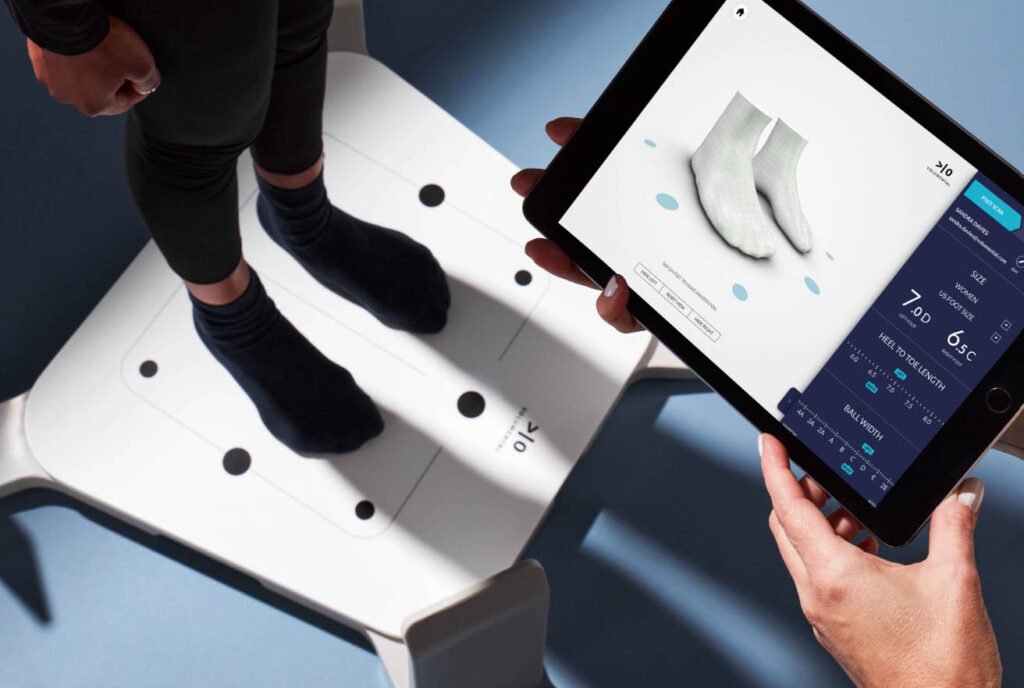
Volumental’s system is built around 3D foot scanning, AI-powered fit recommendations, and retail data. The company says its technology is used across thousands of stores and has scanned more than 66 million feet.
That scale gives the investment a larger industry meaning. It connects physical foot data, online sizing, retail behavior, and 3D printed production into one broader fit system.
Custom 3D Printed Shoes Move Closer to Scan-to-Fit Retail
Custom 3D printed shoes have long promised a better fit than standard sizing. The harder question is whether a customer’s foot can be captured accurately, consistently, and quickly enough for the model to work at scale.
That is where Volumental fits into the story.
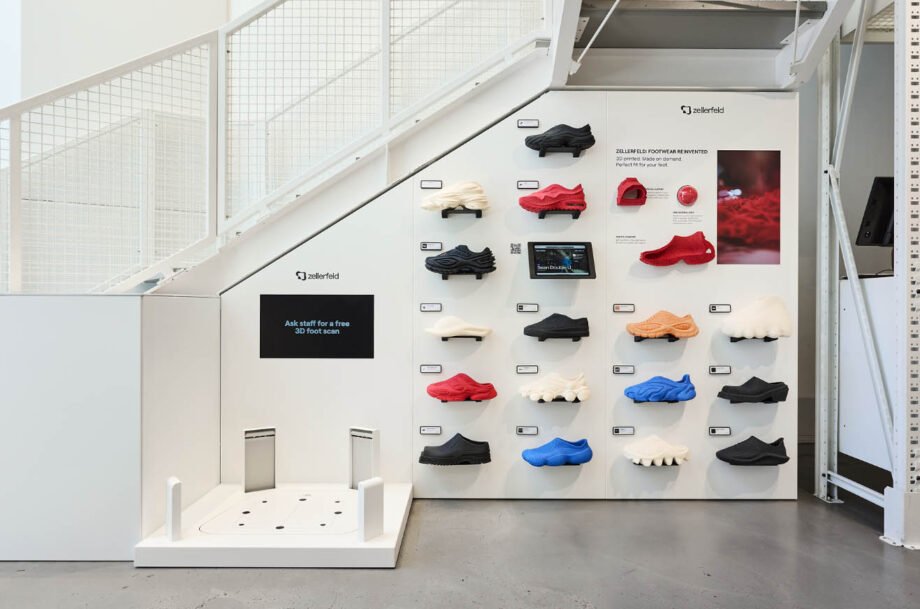
Instead of relying only on traditional shoe sizes, foot scanning can collect measurements such as length, width, arch shape, and other dimensional data. In practice, this creates a more detailed profile than selecting a standard shoe size from a dropdown menu.
For Zellerfeld, that matters because its footwear is not made through conventional molds and stock inventory. Its shoes are digitally produced, which makes the data layer central to the product.
A scan-to-fit shoes model can support several practical improvements:
- better size recommendations before production
- fewer fit-related returns
- more confidence for online shoppers
- stronger personalization for made-to-order products
- a clearer bridge between physical retail and digital manufacturing
The practical limit is also important. Scanning does not automatically make every shoe perfect. It improves the input data, but the final result still depends on design, material behavior, print quality, comfort testing, and production control.
Foot Scanning Shoes Add Data to a Long-Running Fit Problem
The footwear industry has a long-standing fit problem. Two people can wear the same nominal size and still need different shoes because of width, arch height, toe shape, gait, or personal comfort preference.
Foot scanning shoes address part of that problem by replacing guesswork with measurable data. Volumental’s approach combines scanning with recommendation software, allowing retailers and brands to match shoppers with footwear based on more than size alone.
For traditional footwear brands, this can help customers choose from existing inventory. For personalized 3D printed footwear, the implications are broader. The scan can become part of the product creation process itself.
That is the more important shift.
If a standard brand uses a scan to recommend the closest existing size, the customer is still being fitted into a pre-made system. If a 3D printed footwear company uses scan data before production, the shoe can theoretically be adapted around the customer from the beginning.
This does not mean the industry has solved mass customization. It means the link between measurement and manufacturing is becoming more direct.
In retail terms, the scan becomes more than a sizing tool. It becomes part of the product infrastructure.
Why the Zellerfeld Volumental Deal Matters
The Zellerfeld Volumental investment matters because it focuses on one of the least visible but most important problems in 3D printed footwear: fit reliability.
Many 3D printed shoe stories focus on the visible product. Lattices, silhouettes, limited drops, designer collaborations, and printed midsoles often get the attention. But for customers, the deciding question is simpler: does the shoe fit well enough to keep wearing?
A better fit system could help Zellerfeld in three practical ways.
First, it can improve the buying experience. Customers are more likely to order made-to-measure or made-to-order shoes if the scan process feels simple and trustworthy.
Second, it can reduce uncertainty around returns. Custom products are harder to resell, so fewer fit mistakes can matter directly to margins.
Third, it can improve product learning over time. A large foot-scan dataset can help companies understand how real feet vary across regions, genders, sizes, widths, and use cases.
That last point may become especially valuable. The more foot data a platform can interpret, the better it can design future footwear systems around actual anatomy rather than generic size charts.
The realistic view is that data alone is not a permanent advantage. Other footwear companies can also invest in scanning, fit engines, and AI recommendation systems. Zellerfeld’s advantage depends on whether it can connect those scans to a better printed product and a smoother customer experience.
What This Means for 3D Printed Footwear
This investment suggests that 3D printed footwear is moving from product experimentation toward system building.
The early phase of the category was largely about proving that shoes could be printed, worn, and sold. The next phase is more operational. Brands need dependable scanning, predictable fit, repeatable production, customer support, and a clear reason for shoppers to choose printed shoes over conventional options.
That is why the Volumental connection matters. It supports the idea that the future of custom 3D printed shoes may depend less on the printer alone and more on the full digital workflow around the shoe.
That workflow includes:
- capturing accurate foot data
- translating that data into fit decisions
- adapting design files when needed
- producing the shoe consistently
- collecting feedback after wear
- improving future recommendations
This is where 3D printed footwear can become more commercially serious. The shoe is only the final output. The system behind it determines whether the product can scale beyond limited drops and early adopters.
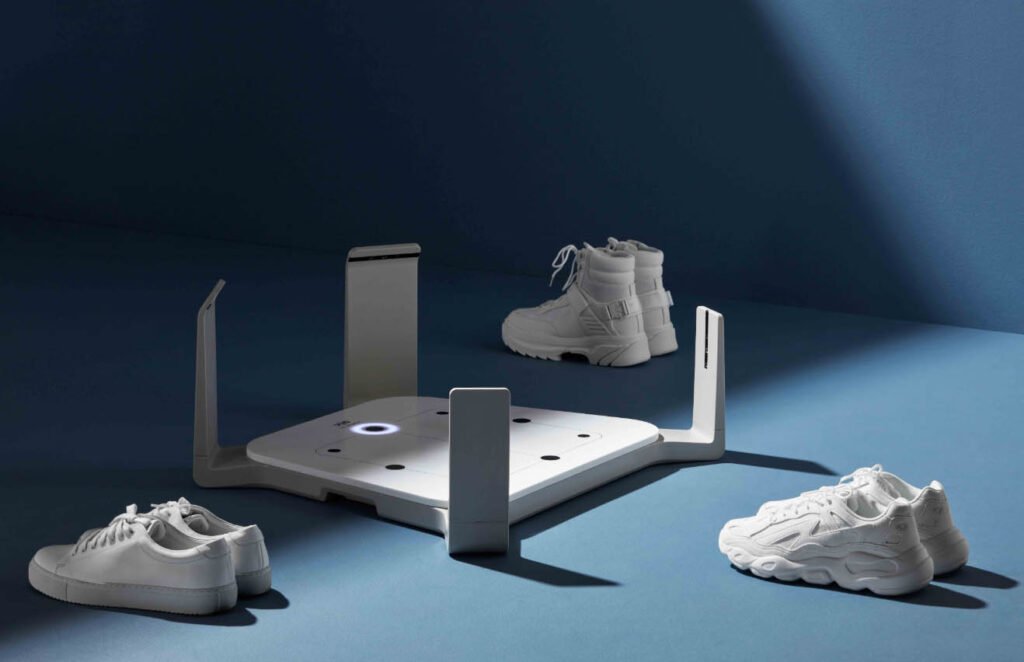
There is also a retail implication. If scanning becomes easier in stores and online, 3D printed footwear companies may gain a stronger path into hybrid retail. Customers could scan in-store, order online, and receive a made-to-order product without the brand holding deep inventory.
That model is attractive, but it is not proven at mass scale. Retailers still need reliable turnaround times, clear return policies, staff training, customer education, and strong quality control.
The Reality Check for Personalized 3D Printed Footwear
The Zellerfeld Volumental investment does not solve every problem facing personalized 3D printed footwear.
Fit is only one part of adoption. Customers also care about comfort, durability, price, style, delivery speed, and confidence in the return or replacement process.
Several questions remain:
- Can phone-based scans deliver enough accuracy across different lighting, devices, and user behavior?
- Can printed shoes maintain comfort over long-term wear?
- Can production scale without long wait times?
- Can custom footwear be priced competitively enough for repeat buyers?
- Can brands explain scan-to-fit shoes without making the process feel complicated?
The practical issue is customer tolerance. A niche buyer may accept extra steps to get a custom product. A mainstream buyer may not.
There is also a material challenge. Even with accurate foot data, printed footwear still has to manage cushioning, rebound, flexibility, heat, sweat, traction, and wear patterns. A better scan cannot compensate for a shoe that feels stiff, wears out quickly, or looks too experimental for everyday use.
This is why the investment should be treated as a meaningful infrastructure move, not a guarantee of mass adoption.
What to Watch Next
The next signal to watch is whether Zellerfeld uses Volumental’s technology to improve the customer journey in a visible way.
That could include faster scanning, clearer fit guidance, fewer size-related complaints, better personalized product pages, or more confidence around custom orders. If the scan becomes smoother, the buying process becomes easier to trust.
Another area to watch is retail expansion. Volumental already has a presence across physical footwear stores, while Zellerfeld is built around digital production. A stronger connection between those two models could create new ways for shoppers to scan in person and order printed shoes remotely.
The third area is product performance. The industry will need more than a better fitting process. It will need evidence that custom 3D printed shoes can deliver comfort, durability, and value over repeated wear.
For now, the investment is best read as a strategic fit move. Zellerfeld is not only investing in footwear production. It is investing in the data layer that could make personalized 3D printed footwear more practical.
Mini FAQ
Custom 3D printed shoes are footwear products made using digital production methods, often with sizing or design data adjusted around the buyer.
Foot scanning shoes use 3D scan data to measure a person’s feet and support better fit recommendations or made-to-order footwear production.
It matters because it connects 3D printed shoe production with foot scanning data, which could improve fit, sizing confidence, and personalization.