3D Shoes 3D Shoes
  • News
  • Innovation
  • Design
  • Companies
  • Shoes
Reading: Battery‑Free Implants? How RMIT’s 3D‑Printed Diamond–Titanium Device Generates Power Inside the Body
Follow 3DShoes on LinkedIn
Font ResizerAa
3DShoes3DShoes
  • Home
  • About
  • Shoes
  • Companies
  • Innovation
  • Design
  • News
  • Guides
  • Shoes

Zellerfeld Has Launched a Platform for 3D Printed Footwear

R_Shoes R_Shoes June 27, 2024
5.9kLike
4kFollow
3.7kPin
3.7kFollow
  • 3D Printed Shoes
  • 3D Companies
  • About
  • STL Files
  • Buy Shoes
© 2026 3DShoes.com. All Rights Reserved.
Innovation & Trends

Battery‑Free Implants? How RMIT’s 3D‑Printed Diamond–Titanium Device Generates Power Inside the Body

R_Shoes
Last updated: October 4, 2025 1:36 pm
By R_Shoes 9 Min Read
Share
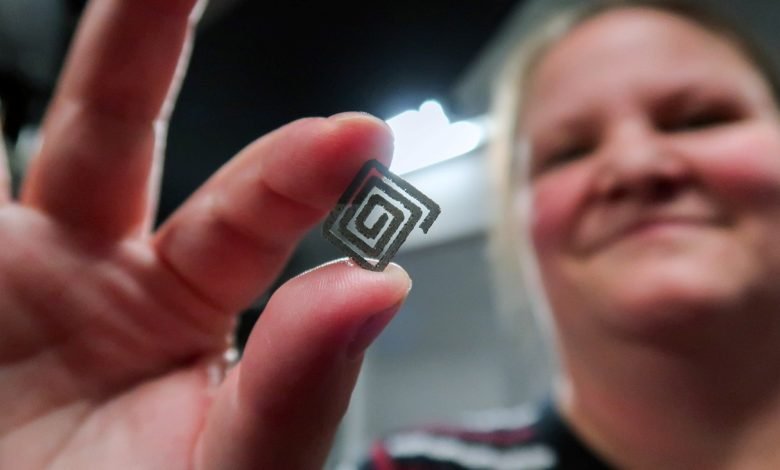
Credit: Shu Shu Zheng / RMIT University.
SHARE

Imagine a future where implanted medical devices—stents, neural stimulators, or drug‑release systems—never need a battery replaced. Where the implant itself harvests energy from your own body’s fluids and receives wireless power through tissue. That is the bold vision behind a newly reported breakthrough from researchers at RMIT University, who have 3D‑printed a diamond–titanium hybrid implant that can both convert flowing liquid into electricity and receive external wireless power.

Table of Contents
The RMIT Breakthrough: A New Kind of Implant That Harvests EnergyHow It Works: From Flowing Liquid to Electrical PowerThe Triboelectric EffectThe Tribovoltaic EffectWhy Diamond and Titanium Are the Perfect Pair3D Printing with Laser Metal DepositionWireless Energy Through TissueReal-World ApplicationsChallenges and the Road AheadThe Future of Battery-Free ImplantsReferences

This article takes you inside the science, the challenges, and the transformative potential of this “battery‑free implant” concept. We’ll explore how it works, why diamond and titanium make a powerful combination, how the device is fabricated, what applications lie ahead, and what hurdles remain before this becomes clinical reality.


The RMIT Breakthrough: A New Kind of Implant That Harvests Energy

In 2025, RMIT researchers developed a 3D‑printed diamond–titanium device that can generate electricity from flowing liquid and receive wireless power through tissue—without embedding active electronics in the implant portion itself.

Dr. Arman Ahnood of RMIT’s School of Engineering explained their motivation: one of the biggest limitations in implant technology is the battery—batteries take up space, eventually degrade, and often require surgical replacement. In lab experiments, flowing saline over the hybrid surface produced a small but steady electrical signal. Embedding semiconductive diamond particles into a titanium matrix transforms what would be a passive structural component into something structural, biocompatible, and electrically active.

That combination—mechanical strength, biocompatibility, and dual energy harvesting + wireless reception—marks a significant step forward for next-generation medical implants.


How It Works: From Flowing Liquid to Electrical Power

To understand how this implant can generate electricity from liquid flow, we must look at two related physical phenomena: the triboelectric effect and the tribovoltaic effect.

The Triboelectric Effect

The triboelectric effect is what you see when you rub a balloon on your hair and it picks up charge: two different materials exchange electrons upon contact and separation, creating a potential difference. In triboelectric nanogenerators, micro-structured surfaces and pairing of materials enhance this effect to produce measurable currents.

In the RMIT implant, a flowing liquid—such as saline or blood—slides across the diamond–titanium surface, causing local charge interactions between the fluid and the hybrid material. Because diamond and titanium differ in electron affinity, charge transfer can occur under flow.

The Tribovoltaic Effect

The tribovoltaic effect occurs at semiconductor interfaces. Under mechanical friction, charge carriers are driven across the interface, generating a direct current. Because diamond (when doped) can act as a semiconductor, friction between the fluid and diamond–titanium interface can drive electron flow without requiring full contact-separation cycles.

This mechanism often yields lower impedance and higher current density compared to pure triboelectric designs. Combined, the two effects allow the implant to convert the motion of bodily fluids into continuous electrical output.
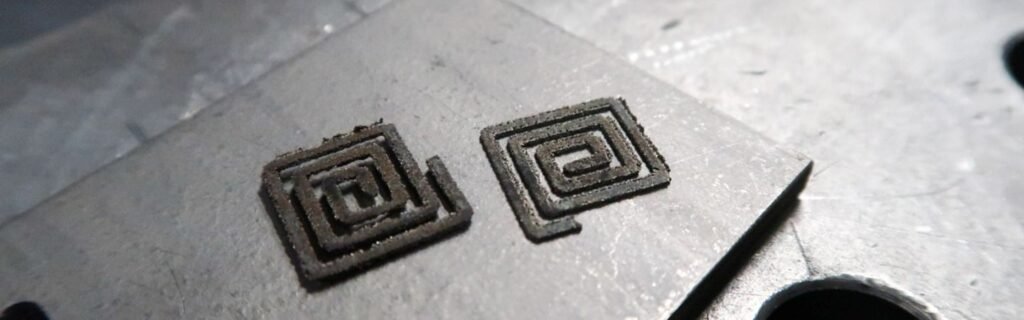

Credit: Shu Shu Zheng / RMIT University.

Why Diamond and Titanium Are the Perfect Pair

The choice of materials is central to the success of this design.

  • Titanium is a well-established implant material: strong, lightweight, corrosion-resistant, and highly biocompatible. It acts as the structural backbone.
  • Diamond is chemically inert and extremely durable. When doped (e.g. with nitrogen or boron), diamond can exhibit semiconductive properties.

By embedding diamond particles inside titanium, the composite becomes an active, multifunctional platform. Dr. Ahnood notes the diamonds “transform titanium from a passive structural material into one capable of scavenging energy, sensing flow, and receiving wireless power.”

The resulting hybrid remains durable and biocompatible, while improving cell adhesion and reducing bacterial adhesion. Surface analysis by the research team confirmed that the diamond particles remain stably embedded within the titanium matrix.


3D Printing with Laser Metal Deposition

To manufacture the implant, the researchers used a TRUMPF TruLaser Cell 7020 system via a process known as laser metal deposition.

A powder mixture of titanium and diamond (commonly a 30:70 diamond-to-titanium ratio) is fed into a laser focus. The laser melts the titanium, which encapsulates the diamond particles, building the structure layer by layer. After printing, microscopic analysis confirmed that the diamond particles remained intact and well distributed within the titanium matrix.

Professor Kate Fox of RMIT emphasized a key advantage: this method allows the fabrication of patient-specific implant geometries that combine mechanical support with sensing and energy functionality.


Wireless Energy Through Tissue

Harvesting energy from fluid flow is promising, but not always sufficient. To support greater energy demands, the implant also allows wireless power transfer via non-radiative capacitive coupling.

In this scheme, conductive plates on opposite sides of the tissue form a capacitor. Oscillating voltages applied externally drive displacement currents through the tissue, which generate current in the implant’s conductive elements.

The RMIT team demonstrated powering an LED through a 5 mm tissue-equivalent layer at 20 MHz. They also fabricated resonant coils (~825 MHz) and drove them at 1.14 GHz, producing a 3 °C temperature rise—a potential avenue for controlled heating in drug release or therapy.

This external wireless link can supplement harvested energy from fluid flow, enabling dual-mode power management.


Real-World Applications

There’s a wide range of potential applications for this innovation:

  • Smart stents / vascular implants: monitor blood flow in real time and detect blockages autonomously.
  • Neural interfaces / brain stimulators: provide electrical recording or stimulation using integrated conductive surfaces.
  • Drug-release systems: use local heating or electrical triggering to release therapies precisely.
  • Prosthetics / bone scaffolds: embed sensors or feedback within load-bearing implants.
  • Industrial sensing in remote or harsh environments: where replacing batteries is impractical.

Although these applications remain largely speculative at present, they point to a future of self-powered, intelligent implants.


Challenges and the Road Ahead

While the results are promising, many hurdles remain:

  • Power Output & Efficiency: Current electrical output is modest. The team must improve surface design, diamond doping, and geometry.
  • Long-Term Biocompatibility & Stability: Implants must withstand biological conditions, mechanical stresses, and immune responses over time.
  • Wireless Safety & Heating: Energy transfer must avoid harmful heating of tissue; regulatory constraints on electromagnetic exposure will apply.
  • Integrating Electronics: Devices must include ultra-low-power electronics that can operate within the limited energy budget.
  • Manufacturing & Scalability: Ensuring consistent material quality, defect reduction, and cost-effective production is crucial.
  • Regulatory & Clinical Testing: Before human use, the technology must pass rigorous in vitro and in vivo testing, then safety and regulatory approval.

The RMIT team is actively seeking collaborations with medical device manufacturers and translational partners to move this technology from the lab toward real-world applications.


The Future of Battery-Free Implants

The RMIT diamond–titanium hybrid marks a shift: from passive structural materials to active, energy-managing biomaterials. By harvesting both bodily fluid motion and external wireless energy, implants might one day operate autonomously—without battery replacements, fewer surgeries, and greater longevity.

As Dr. Ahnood put it, the vision is for implants that last a lifetime. The human body itself becomes the power source.


References

  1. RMIT University News – “Diamond power could be a medical implant’s best friend”
  2. Advanced Functional Materials – “Additively Manufactured Diamond for Energy Scavenging and Wireless Power Transfer in Implantable Devices”
  3. 3D Printing Industry – “RMIT research points to diamonds as ‘medical implant’s best friend’”
  4. VoxelMatters – “RMIT researchers 3D print diamond–titanium implants”
  5. Electronics Online – “3D‑printed diamond device powers medical implants”
TAGGED:3D printed medical devicebattery-free implantdiamond titanium implantenergy harvesting implantFeaturedneural interfaceself-powered implantsmart stenttriboelectric nanogeneratorwireless power transfer
Share This Article
Facebook Twitter Pinterest Whatsapp Whatsapp LinkedIn Reddit Telegram Email Copy Link Print

Launching something like this?

If you're working on a product, platform, or business, I design fast, SEO-structured WordPress websites built for real results..

Start Your Project
100+ websites built • 15+ years experience

Stay Up To Date!

Sign up for 3DShoes.com's mailing list where you will stay up-to-date with latest trends, drops, and more.

loader

Website Help

Need a website for your project?

I build clean, fast, SEO-structured WordPress websites for real business results.

Start Your Project
100+ websites built • 15+ years experience

Trending

Nike Air Works
Inside Nike Air Works: The 3D-Printed Air Max Program Explained
July 10, 2026
Image to 3D print workflow using Meshy and MakerWorld showing image conversion to 3D model and final printed object
Image to 3D Print Workflow Explained: What Meshy + MakerWorld Makes Possible
March 21, 2026
adidas Project R.A.P 3D-printed performance footwear concept
What Is adidas Project R.A.P? The Future of 3D-Printed Performance Footwear Explained
March 25, 2026
adidas Project RAP football boot concept performance testing
Inside adidas’ 3D-Printed Football Boot: What We Know (and What’s Missing)
April 10, 2026

3D Printed Shoes →

3D Printing Companies →

Topics

  • Innovation
  • Design
  • News
  • Guides
  • Products
Follow 3DShoes on LinkedIn

Affiliate links on 3DShoes may earn us a commission. Learn more.

News

Vivobarefoot Launches Custom Fit 3D Printed Tabi Gen 02 Sandals

Vivobarefoot Tabi Gen 02 custom fit 3D printed sandal. Image courtesy of Vivobarefoot.

Are custom fit 3D printed sandals moving from limited experiment to practical footwear product? Vivobarefoot’s new Tabi Gen 02 shows the company continuing to develop scan-to-print footwear through VivoBiome, its…

May 3, 2026 News

Your may also like!

Fontos 3D printed Shoes
Innovation & Trends

Independent Makers Advance 3D Printed Shoes Through Multi-Material Engineering

R_Shoes July 9, 2026
Terrell Owens played a direct role in helping shape the vision behind the project. Syntilay
News

Syntilay Launches Custom 3D Printed Recovery Shoe With Terrell Owens

R_Shoes June 29, 2026
The Zellerfeld HERON01 is releasing again this week. Via Zellerfeld
News

Heron Preston Revives 3D Printed Sneaker With Zellerfeld HERON01 Release

R_Shoes June 27, 2026
Zellerfeld retail display with 3D printed shoes and a foot scanning station for custom footwear.
News

Zellerfeld Invests in Foot Scanning Technology for Custom 3D Printed Shoes

R_Shoes June 23, 2026

Editor's Shoe Picks

👟 Everyday Pick
🏃 Running Favorite
🚶 Walking Comfort
🌿 Minimalist Choice
🥾 Trail Adventure
💎 Premium Performance
Product
Nike Men's Air Force 1 '07 Sneaker
Brooks Men's Ghost 15 Neutral Running Shoe
Skechers Women's Go Walk Joy Upturn Lace-up Sneaker
WHITIN Men's Wide Minimalist Barefoot Sneakers | Zero Drop Sole |...
Merrell Men's Moab 3 Hiking Shoe
Hoka Womens Clifton 10
Image
Nike Men's Air Force 1 '07 Sneaker
Brooks Men's Ghost 15 Neutral Running Shoe
Skechers Women's Go Walk Joy Upturn Lace-up Sneaker
WHITIN Men's Wide Minimalist Barefoot Sneakers | Zero Drop Sole | Optimal Relaxation
Merrell Men's Moab 3 Hiking Shoe
Hoka Womens Clifton 10
Price
$101.50
$99.00
$45.37
$39.99
$104.96
$146.17
More information
Buy on Amazon
Buy on Amazon
Buy on Amazon
Buy on Amazon
Buy on Amazon
Buy on Amazon
👟 Everyday Pick
Product
Nike Men's Air Force 1 '07 Sneaker
Image
Nike Men's Air Force 1 '07 Sneaker
Price
$101.50
More information
Buy on Amazon
🏃 Running Favorite
Product
Brooks Men's Ghost 15 Neutral Running Shoe
Image
Brooks Men's Ghost 15 Neutral Running Shoe
Price
$99.00
More information
Buy on Amazon
🚶 Walking Comfort
Product
Skechers Women's Go Walk Joy Upturn Lace-up Sneaker
Image
Skechers Women's Go Walk Joy Upturn Lace-up Sneaker
Price
$45.37
More information
Buy on Amazon
🌿 Minimalist Choice
Product
WHITIN Men's Wide Minimalist Barefoot Sneakers | Zero Drop Sole |...
Image
WHITIN Men's Wide Minimalist Barefoot Sneakers | Zero Drop Sole | Optimal Relaxation
Price
$39.99
More information
Buy on Amazon
🥾 Trail Adventure
Product
Merrell Men's Moab 3 Hiking Shoe
Image
Merrell Men's Moab 3 Hiking Shoe
Price
$104.96
More information
Buy on Amazon
💎 Premium Performance
Product
Hoka Womens Clifton 10
Image
Hoka Womens Clifton 10
Price
$146.17
More information
Buy on Amazon

NEWSLETTER

Stay Updated on 3D Footwear Innovation

Get the latest insights, breakthroughs, and industry updates delivered to your inbox.

loader

No spam. Just relevant industry updates.

3D Shoes

3DShoes tracks the evolution of 3D-printed footwear—covering design, technology, and manufacturing to help make sense of where the industry is heading.

Quick Links

  • 3D Printed Shoes
  • 3D Companies
  • About
  • STL Files
  • Buy Shoes

Legal

  • Privacy Policy
  • Cookie Policy (EU)
  • Disclaimer
  • Terms & Conditions
  • Contact

Socials

Our website stores cookies on your computer. They allow us to remember you and help personalize your experience with our site. Read our privacy policy for more information.

© 2026 3DShoes – All Rights Reserved. Hosted & Developed by PixelCrafted.Dev.

Manage Consent
To provide the best experiences, we use technologies like cookies to store and/or access device information. Consenting to these technologies will allow us to process data such as browsing behavior or unique IDs on this site. Not consenting or withdrawing consent, may adversely affect certain features and functions.
Functional Always active
The technical storage or access is strictly necessary for the legitimate purpose of enabling the use of a specific service explicitly requested by the subscriber or user, or for the sole purpose of carrying out the transmission of a communication over an electronic communications network.
Preferences
The technical storage or access is necessary for the legitimate purpose of storing preferences that are not requested by the subscriber or user.
Statistics
The technical storage or access that is used exclusively for statistical purposes. The technical storage or access that is used exclusively for anonymous statistical purposes. Without a subpoena, voluntary compliance on the part of your Internet Service Provider, or additional records from a third party, information stored or retrieved for this purpose alone cannot usually be used to identify you.
Marketing
The technical storage or access is required to create user profiles to send advertising, or to track the user on a website or across several websites for similar marketing purposes.
  • Manage options
  • Manage services
  • Manage {vendor_count} vendors
  • Read more about these purposes
View preferences
  • {title}
  • {title}
  • {title}
Stay Up To Date!

Sign up for 3DShoes.com's mailing list where you will stay up-to-date with latest trends, drops, and more.

loader

Zero spam, Unsubscribe at any time.
adbanner
AdBlock Detected
Our site is an advertising supported site. Please whitelist to support our site.
Okay, I'll Whitelist
Welcome Back!

Sign in to your account

Lost your password?